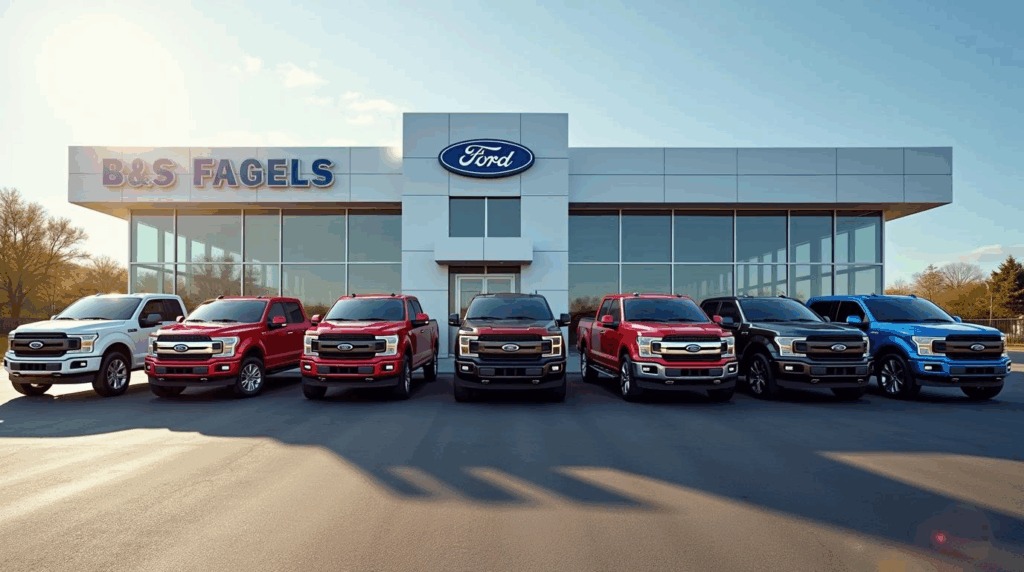
The Ford F150 capacity ranges from 5,000 to 14,000 pounds for towing and 1,520 to 3,315 pounds for payload, depending on engine configuration, cab style, and equipped packages. Understanding these specifications is crucial for selecting the right pickup truck for your work and recreational needs. For detailed specifications and current inventory, visit F150 Capacity information at your local dealership.
Ford F150 Towing Capacity by Engine Options
The towing capacity of Ford’s flagship pickup varies significantly across its engine lineup. Each powerplant delivers different performance characteristics that directly impact how much weight your truck can pull. The 2024-2025 Ford F-150 offers six distinct engines, from the efficient 3.3L V6 to the powerful 3.5L High-Output EcoBoost V6.
Maximum towing capacity reaches 14,000 pounds when properly equipped with the 3.5L EcoBoost engine and Max Trailer Tow Package. This combination requires specific axle ratios and the integrated trailer brake controller. The base 3.3L V6 provides 8,200 pounds of towing capability, suitable for lighter loads and everyday tasks.
EcoBoost Engine Performance and Capability
The 2.7L EcoBoost V6 generates 325 horsepower and 400 lb-ft of torque, enabling up to 10,100 pounds of towing capacity. This engine strikes an excellent balance between fuel efficiency and power for most drivers. The turbocharged design delivers impressive low-end torque for confident acceleration when hauling cargo or pulling a trailer.
The 3.5L EcoBoost takes performance further with 400 horsepower and 500 lb-ft of torque in standard configuration. When optioned in the Raptor or with the High-Output variant, this engine produces 450 horsepower and 510 lb-ft of torque. These specifications translate to class-leading towing numbers when paired with the proper equipment and automatic transmission.
PowerBoost Hybrid Specifications
The PowerBoost hybrid combines a 3.5L EcoBoost V6 with an electric motor, delivering 430 horsepower and 570 lb-ft of torque. This innovative powertrain provides 12,700 pounds of maximum towing capacity while offering Pro Power Onboard capability for job site power needs. The hybrid system enhances fuel economy without sacrificing the work capability truck buyers demand.
Models equipped with PowerBoost include integrated generator functionality, providing up to 7.2kW of exportable power. This feature transforms your vehicle into a mobile power station, perfect for contractors needing electricity at remote locations or recreational users powering camping equipment.
Payload Capacity Across the Lineup
Payload capacity represents the maximum weight of passengers and cargo your Ford F-150 can safely carry in the bed and cab. The highest payload rating of 3,315 pounds comes from Regular Cab models with the 5.0L V8 engine and Heavy-Duty Payload Package. This configuration includes upgraded springs, wheels, tires, and a higher-capacity rear axle.
SuperCrew models typically offer between 1,520 and 2,445 pounds of payload capacity, depending on engine choice and options. The four-door configuration adds weight that reduces payload, but provides room for five passengers comfortably. XLT and Lariat trims balance features with capability, while King Ranch and Platinum models prioritize luxury appointments.
SuperCrew Configuration Details
The SuperCrew body style remains the most popular choice among pickup buyers, offering four full-size doors and spacious rear seating. Available with either a 5.5-foot or 6.5-foot box, these trucks accommodate both family and work duties. The longer bed option slightly reduces towing capacity due to the extended wheelbase but provides additional cargo space.
Each SuperCrew configuration affects weight distribution and overall vehicle dynamics. The 6.5-foot bed adds approximately 150 pounds to curb weight compared to the 5.5-foot option. This additional weight impacts both payload and towing numbers, though the difference is typically less than 200 pounds in either specification.
Understanding Axle Ratios and Their Impact
Axle ratio selection significantly influences towing capability and fuel economy. The 3.73 electronic-locking rear axle maximizes towing capacity for most engine options, while the 3.31 ratio prioritizes fuel efficiency. Heavy-duty pickups often feature the 3.73 or optional 4.10 ratio for maximum pulling power.
The electronic-locking differential enhances traction in challenging conditions, distributing power equally between both rear wheels. This feature proves invaluable when launching boats, navigating construction sites, or traversing slippery surfaces with heavy loads.
Comparing XL XLT and Lariat Capabilities
The XL work truck provides maximum payload capacity due to its minimal features and lighter weight. These models excel at fleet service and commercial applications where capability trumps comfort. The XLT adds convenience features while maintaining strong specs for both towing and hauling.
Lariat models introduce leather seating, advanced technology, and premium appointments that add weight but enhance the driver experience. Despite luxury additions, these trucks maintain impressive capability with proper equipment selection. The choice between trims depends on balancing work requirements with desired amenities.
Essential Towing Equipment and Accessories
Proper towing requires more than just engine power and transmission strength. The Max Trailer Tow Package includes an integrated trailer brake controller, upgraded radiator, and transmission oil cooler. These components ensure safe, confident towing even in demanding conditions. Additional accessories like weight-distributing hitches and sway control systems further enhance stability.
Modern F-150 models feature Pro Trailer Backup Assist and dynamic hitch assist technology. These systems simplify trailer maneuvering for drivers of all experience levels. The onboard scales provide real-time weight information, helping ensure loads remain within safe limits.
Selecting the Right Model for Your Needs
Choosing among Ford’s extensive inventory requires understanding your specific requirements. Consider typical loads, frequency of towing, passenger needs, and fuel economy priorities. Visit your local dealership for personalized guidance and to explore current sales incentives. The service team can explain how different configurations affect real-world capability.
Fleet buyers often select Regular Cab or SuperCab models with V8 engines for maximum payload. Recreational users typically prefer SuperCrew configurations with EcoBoost power for versatility. The PowerBoost hybrid appeals to those seeking efficiency without sacrificing capability. Whatever your needs, there’s an F-150 configuration delivering the right balance of features and performance.
Frequently Asked Questions About Ford Pickup Capacity
Many customers ask about the difference between GVWR and GCWR when evaluating trucks. GVWR represents the maximum weight of the vehicle when fully loaded, while GCWR includes both the truck and trailer weight combined. Understanding these ratings ensures safe operation and compliance with regulations.
Another common question concerns the impact of four-wheel drive on capacity. The 4×4 system typically reduces both payload and towing by 200-300 pounds due to additional drivetrain components. However, the enhanced traction often justifies this trade-off for drivers encountering varied terrain or weather conditions. Buyers should also consider that tire selection, from all-terrain to highway designs, affects both capability and ride quality. The Ford Mustang Mach-E may offer electric performance, but the F-150 remains the ultimate solution for those needing genuine truck capability with plenty of power for any task.