Introduction
Private aviation is often associated with luxury, exclusivity, and efficiency. But beyond plush seating and personalized itineraries, one element that truly elevates the experience is food. Over the years, private aviation food services have transformed from simple convenience meals to full-scale culinary excellence, rivaling the world’s finest restaurants. This evolution not only enhances passenger comfort but also reflects the growing demand for personalization, wellness, and memorable dining experiences at 40,000 feet.
The Evolution of Dining in the Sky
In the early days of private aviation, food options were limited to pre-packed snacks or reheated meals. The emphasis was on practicality rather than quality. However, as private jet travel grew into a lifestyle symbol, clients began to expect more than just speed and privacy—they wanted the same culinary indulgence in the air as they enjoyed on the ground.
This demand gave rise to inflight catering specialists, who now craft gourmet meals that respect dietary preferences, cultural requirements, and global culinary trends. Today, the industry is no longer about simply feeding passengers; it is about delivering a fine-dining experience that begins the moment they board.
What Defines Modern Private Aviation Food Services?
- Customization
Personalized menus are at the heart of private aviation dining. Whether a passenger requests vegan delicacies, halal-certified meals, or a Michelin-inspired multi-course spread, customization is the norm rather than the exception. - Quality Ingredients
Chefs partner with local farms, fisheries, and artisanal producers to source the freshest ingredients. Seasonal produce, organic meats, and specialty items like truffles or caviar are often part of the offering. - Global Reach
With passengers flying across continents, inflight catering providers must adapt to global tastes. A passenger flying from Dubai to Paris may request Middle Eastern mezze, followed by classic French patisserie—all served seamlessly in flight. - Health and Wellness
Today’s travelers are increasingly health-conscious. Gluten-free, low-sodium, keto, or plant-based meals are now standard options. Some private jet services even employ nutritionists to ensure meals align with passengers’ wellness goals.
Behind the Scenes: How Inflight Catering Works
Delivering gourmet meals at altitude is not as simple as loading food onto an aircraft. Several behind-the-scenes processes ensure safety, freshness, and quality:
- Menu Planning: Chefs and nutritionists collaborate with passengers or flight managers days before departure.
- Preparation & Packaging: Meals are cooked fresh, then packaged to withstand cabin pressure and reheating.
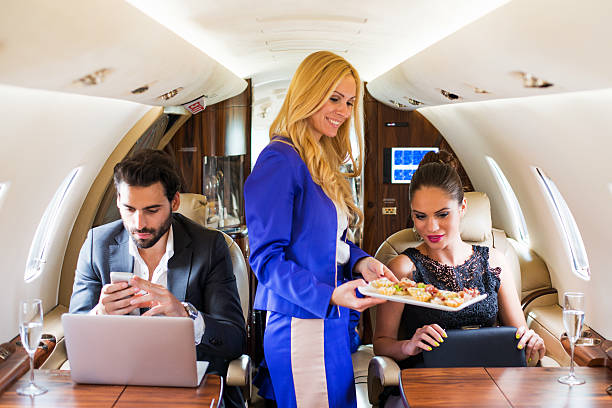
- Onboard Presentation: Flight attendants, often trained in fine-dining service, plate meals with attention to detail.
- Technology Adaptation: Since taste buds change at high altitudes, recipes are adjusted—seasoning and textures are adapted to ensure flavors remain vibrant in the air.
This meticulous process highlights why private aviation food services are considered a sophisticated branch of the culinary industry.
Culinary Partnerships and Michelin Influence
An increasing trend in the sector is collaboration with Michelin-starred chefs and luxury hospitality brands. Private jet operators partner with world-renowned restaurants, allowing passengers to enjoy curated menus that mirror those in flagship dining establishments.
For example, a New York-based passenger could request Nobu’s signature black cod, while a Paris-bound traveler might indulge in Pierre Hermé’s exquisite macarons—all without leaving their jet. These partnerships have blurred the line between air travel and gastronomy.
Sustainability in the Skies
As the aviation industry faces pressure to adopt greener practices, sustainability has also reached inflight dining. Many providers are embracing eco-friendly practices such as:
- Sourcing local and seasonal produce to reduce carbon footprint.
- Using biodegradable or recyclable packaging.
- Minimizing food waste by offering pre-selected menus based on passenger preferences.
This focus not only appeals to environmentally conscious passengers but also aligns private aviation with global sustainability goals.
The Role of Technology in Enhancing Experiences
Digital tools have also influenced how inflight catering is managed. Passengers can now browse curated menus on mobile apps, pre-order dishes, and even interact with chefs before their journey. Artificial intelligence is being used to track passenger preferences across multiple flights, ensuring consistent personalization.
Some providers also integrate wine pairing algorithms, recommending the perfect vintage that balances cabin air conditions and altitude effects on taste perception.
The Future of Private Aviation Food Services
Looking ahead, the industry will continue to push boundaries:
- Hyper-Personalization: Menus may soon adapt in real time, adjusting for passengers’ biometric data such as hydration levels or blood sugar.
- Wellness Integration: Expect functional foods enriched with probiotics, adaptogens, or energy-boosting nutrients.
- Virtual Chef Experiences: Passengers may interact live with chefs via video call, customizing dishes on the spot.
- Expanded Culinary Diversity: With global travel increasing, inflight menus will likely feature even more regional cuisines, from Ethiopian injera to Peruvian ceviche.
These innovations promise to take luxury travel dining beyond what passengers currently imagine possible.
Why Culinary Excellence Matters in Private Aviation
For high-net-worth individuals, corporate executives, and discerning travelers, time and comfort are paramount. Food is not just about sustenance; it is a key part of the travel experience. A thoughtfully designed menu can set the tone for a business deal, celebrate a milestone, or simply enhance relaxation during a long-haul flight.
By offering world-class dining in the air, private jet companies differentiate themselves and build lasting loyalty. In fact, many clients cite gourmet meals as one of the top reasons for choosing one operator over another.
Conclusion
The transformation of private aviation food services from mere convenience to culinary excellence reflects the broader evolution of luxury travel. No longer limited to reheated meals, passengers today can indulge in bespoke, health-focused, and globally inspired dining experiences that rival five-star restaurants.
With the continued innovation in inflight catering, sustainability practices, and technology-driven personalization, the future promises even greater heights of indulgence. For travelers who demand the best, fine dining at 40,000 feet is no longer a dream—it is the standard.