Trees do much more than enhance the beauty of our surroundings. They are vital elements in both urban and suburban environments, contributing significantly to public health, property value, and social well-being. Whether you are a homeowner or a community leader, understanding the importance of tree health can transform your approach to landscape management and community planning. For those looking to maintain or improve their local landscape, professional services such as tree trimming Orlando play a critical role in keeping trees healthy, safe, and thriving.
From filtering harmful air pollutants to creating vibrant, engaged neighborhoods, healthy trees provide benefits that go beyond their visual appeal. Their presence can directly improve your daily life, reduce utility bills, and foster stronger community bonds.
Improving Air Quality
Trees are vital for healthy air, filtering pollutants like carbon monoxide, sulfur dioxide, nitrogen oxides, and ground-level ozone. According to the EPA, urban trees improve air quality and reduce respiratory issues, making tree care crucial, especially in dense areas. Healthy trees also trap dust, pollen, and smoke, aiding allergy sufferers and respiratory conditions. Neighborhoods with many trees report better air and health, especially benefiting children who are more vulnerable. Investing in tree planting and preservation offers a natural way to improve environmental health.
Enhancing Property Values
Homes with mature, healthy trees generally have higher property values. Trees provide shade, privacy, and beauty, increasing appeal. The New York Times says flourishing trees on streets and yards can boost home values by up to 15 percent, making tree care an investment in resale value. A leafy neighborhood also suggests stability, attracting buyers. Healthy trees improve curb appeal, often leading to quicker sales. Many homeowners’ associations now promote or require tree preservation for financial benefits.
Providing Energy Savings
Trees regulate local climate by providing shade and windbreaks, reducing heating and cooling costs. The U.S. Department of Energy states that trees can cut household energy use by up to 25%. Well-maintained trees help homeowners save energy without sacrificing comfort. Community tree-planting also eases power grid demand during heat waves by cooling streets and buildings, decreasing air conditioning needs and outages. Overall, tree care supports eco-friendly living and urban planning.
Supporting Mental Health
Access to green spaces and tree canopy profoundly benefits mental health. Harvard research shows that interactions with nature lower stress, improve attention, and boost emotional well-being. Parks, gardens, and yards help people relax, reduce feelings of isolation, and recover faster from stress. Spending time among trees is linked to lower depression and anxiety. Activities like walking, gardening, or sitting in nature offer mindfulness benefits. For urban communities, parks and treed areas are essential retreats that promote restorative and meditative experiences. Ensuring access to green space is a key public health strategy.
Promoting Physical Health
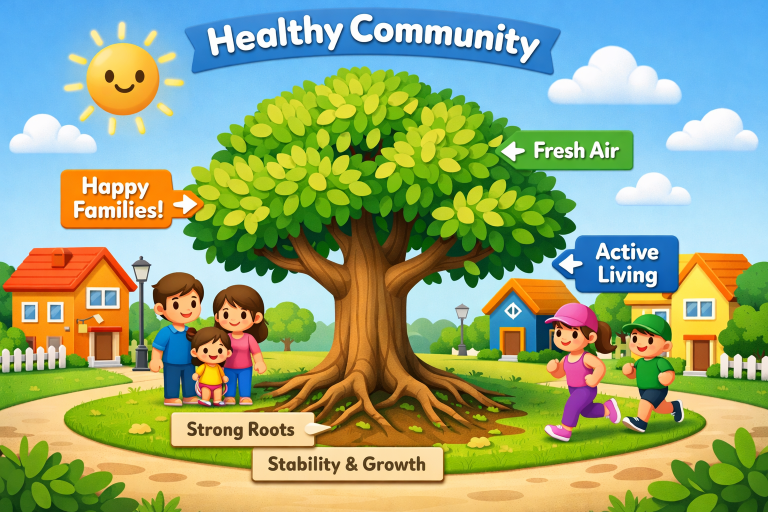
Trees do more than improve mental health; they create environments that promote physical activity. Green, shaded streets encourage walking, running, and cycling. According to the CDC, neighborhoods with more trees see higher daily exercise levels, lowering obesity, heart disease, and diabetes risks. Safe green spaces motivate outdoor activity, benefiting health. Tree coverage reduces UV exposure by providing shade, making outdoor activities safer. Community events like yoga, walking groups, or fun runs in treed parks support active lifestyles for all ages.
Fostering Community Engagement
Parks, gardens, and tree-lined streets naturally unite people. These spaces serve as hubs for events, outdoor activities, and socializing, strengthening community bonds. The Urban Institute reports that neighborhoods with more trees and parks show higher civic engagement, trust, and social cohesion. Investing in trees fosters a thriving, connected community. Community tree-planting programs allow neighbors to collaborate, beautify neighborhoods, and foster pride. Children engage more with their environment through hands-on activities, cultivating lifelong appreciation for nature.
Contributing to Climate Change Mitigation
Trees help fight climate change by sequestering carbon, absorbing CO2 during photosynthesis, and storing it in their structures. This process greatly reduces greenhouse gases. The U.S. National Park Service emphasizes trees’ key role in carbon cycling and climate mitigation. Planting and caring for trees is a simple, effective way to take climate action.
Apart from capturing carbon, trees cool urban areas and lessen the heat island effect, making cities more livable amid rising temperatures. Policies that protect and expand urban trees are vital for community resilience. Every tree planted is an investment in a safer, cooler, and sustainable future.
Reducing Stormwater Runoff
Trees improve soil health and reduce the risk of flooding and erosion by increasing soil permeability and stabilizing the ground with their root systems. Their canopy also helps slow down the rate at which rain hits the ground, allowing more water to be absorbed and less to run off into storm drains. This natural process protects waterways from pollution and decreases the risk of urban flooding, according to the https://businesstarget.co.uk/.
With more communities facing severe weather, trees act as a frontline defense against costly property damage and environmental harm. Municipalities and homeowners benefit from investing in tree care to protect landscapes from future storms. Well-maintained urban forests are vital for stormwater management and water quality. Healthy trees provide benefits beyond beauty, such as cleaner air, higher property values, lower energy costs, and healthier communities. Prioritizing tree care helps build a healthier, sustainable future. The growth, maintenance, and protection of urban and suburban forests is a shared responsibility, crucial for our current quality of life and future resilience.
Conclusion
Trees are more than aesthetic features; they are vital for healthier communities. They improve air quality, cut energy costs, boost property values, and enhance mental and physical health, offering benefits that impact daily life. Trees encourage community engagement, fight climate change, and manage stormwater, acting as natural infrastructure protecting people, property, and the environment. Prioritizing tree care through planting, maintenance, or professional services ensures these benefits grow, making investing in trees key to a sustainable, vibrant future for neighborhoods, families, and the planet.