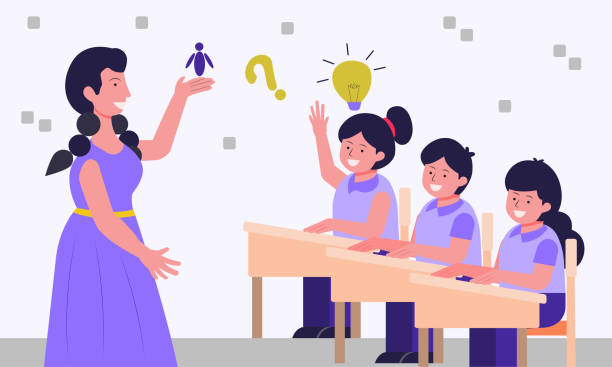
Education is usually described through big things. Big lessons, big tests, big policies, big outcomes. People talk about curriculum, standards, and achievement scores as if learning is mostly built through major events. But anyone who has spent real time in a classroom knows something else is happening underneath all of that. Students often decide whether a class feels safe, motivating, or worth trying in a series of tiny moments that barely register on paper.
That is why micro moments matter so much. A teacher remembering a student’s name. A quick nod that says, “I see you.” A calm response to a wrong answer instead of a dismissive one. A short conversation at the door. A pause before correcting behavior. These interactions may last only seconds, but they often shape whether students lean in or shut down. That matters whether students are in elementary school, high school, college, or preparing for professional goals like degrees in hospital administration.
Seen this way, education is not only about delivering content. It is also about the emotional climate that makes learning possible. Micro moments build that climate piece by piece. They create trust, belonging, and a sense that effort is worth making. In classrooms, the smallest interactions often carry the biggest emotional weight.
Small interactions do more than seem nice
It is easy to treat micro moments like extra kindness, something pleasant but optional. In reality, they do real academic work. Students learn better when they feel that adults in school care about them as people, not just as names on a roster. The American Psychological Association describes school connectedness as students’ belief that adults and peers at school care about their learning and about them as individuals. That is not a soft side issue. It is part of the foundation that supports engagement and persistence.
This is where micro moments matter. Students rarely form trust because of one dramatic speech. Trust is usually built through repetition. A teacher notices who looks lost. A professor answers a worried email with respect. An instructor gives a student a chance to recover after a rough start. None of those moments may look huge alone, but together they shape the emotional meaning of school.
Trust is built in seconds, not semesters
A lot of people assume trust takes a long time, and sometimes it does. But the first ingredients of trust often appear very quickly. Students are constantly reading classrooms for cues. Am I welcome here? Will I be embarrassed if I get this wrong? Does this teacher assume I can improve? Do I have to protect myself in this room, or can I focus on learning?
The APA has also highlighted the importance of improving students’ relationships with teachers, noting that strong teacher student relationships have positive and lasting implications for students’ academic and social development. That matters because it suggests that relationship building is not separate from learning. It is one of the conditions that helps learning take hold.
Micro moments are where that relationship building often begins. A student who gets a respectful answer instead of a sarcastic one remembers that. A student whose effort gets noticed before their mistake gets corrected remembers that too. These are small social signals, but they tell students whether the classroom is a place where growth is possible.
Belonging changes how students use their energy
One of the most overlooked effects of micro moments is how they change the way students spend mental energy. When students feel disconnected or on edge, they often burn attention trying to manage embarrassment, uncertainty, or self-protection. That is energy they cannot fully give to the lesson.
When small interactions create belonging, that energy gets freed up. Students become more willing to ask questions, attempt hard tasks, and recover from mistakes. The Learning Policy Institute has written that relationship centered schools can promote safety, belonging, and the trustful relationships that support student learning and well-being. Its work on cultivating relationships in secondary schools shows that these conditions are not accidental. They are built through structures and repeated interactions that help students feel known and valued.
That idea matters because belonging is often created in small doses. A student gets greeted at the door. A teacher checks in after an absence. A quick joke lowers tension. An adult notices effort that other people might miss. These moments do not replace rigorous instruction, but they help make rigorous instruction more reachable.
Micro moments shape behavior before discipline ever starts
Another reason these moments matter is that they often influence behavior long before a formal intervention is needed. When students feel respected, they are more likely to stay engaged and less likely to experience every correction as a personal attack. That does not mean classrooms become perfect. It means the social foundation is stronger.
A short pause before responding to misbehavior can change the whole tone of an exchange. So can a private check in instead of a public callout. So can a teacher using curiosity before judgment. These are not just classroom management tricks. They are relationship choices. And relationship choices affect whether students see adults as allies or adversaries.
This is part of what makes micro moments powerful. They often prevent bigger problems by shaping the emotional climate early. A room built on frequent small respect tends to handle stress better than a room that only tries to repair trust after something goes wrong.
Students remember how a room felt
Ask adults what they remember from school, and many will mention a teacher who made them feel capable, or one who made them feel small. They may not remember every assignment, but they remember the atmosphere. That tells you something important. Education is not experienced only as information. It is experienced as feeling.
Micro moments create that feeling. A teacher can communicate belief in a student in under ten seconds. They can also communicate dismissal just as quickly. The emotional memory of those exchanges often lasts longer than people expect.
This is especially important for students who are already unsure whether they belong in a certain academic space. For them, a small signal of respect or confidence can matter far more than outsiders realize. The moment may look ordinary to the teacher, but to the student it can feel like permission to keep trying.
How educators can use micro moments on purpose
The encouraging part is that micro moments do not require a total overhaul of teaching. They require intention. Learn names quickly. Acknowledge effort out loud. Correct with dignity. Ask follow-up questions that show real attention. Give students a second to think before assuming they do not know. Notice when someone has been quiet for too long. Offer brief, specific encouragement rather than generic praise.
These moves are small enough to repeat, which is exactly why they matter. Big gestures are memorable, but daily patterns build culture. A classroom becomes trustworthy when students can count on being treated with steadiness and respect over and over again.
It also helps to remember that micro moments are not only verbal. Tone, posture, eye contact, patience, and timing all communicate something. Students are reading all of it. Often, the message they receive has as much to do with how something is said as with the actual words.
The small things are often the real thing
The power of micro moments in education comes from the fact that they do not look powerful at first. They are brief, ordinary, and easy to overlook. But those are often the exact conditions under which culture gets built. A classroom rarely becomes trusting, connected, or motivating because of one huge event. It becomes that way because of what happens in the small spaces between formal instruction.
That is why micro moments deserve more attention. They foster trust, emotional connection, and a stronger learning climate precisely because they happen so often and so quickly. Students carry those signals with them, and over time those signals shape confidence, participation, and willingness to keep trying.
In education, the smallest interactions are often doing the deepest work.