Planning the perfect wedding means creating visual harmony between every element, and nothing impacts your photos quite like mismatched florals. Wedding flowers can either elevate your bridal party’s look or create unfortunate clashes that you’ll notice in every image. Couples typically allocate around 8% of their total wedding budget to flowers , making it essential to maximise this investment through thoughtful coordination.
This blog reveals how to create stunning bridal party outfits that work harmoniously with your floral choices.
Colour Psychology Fundamentals for Wedding Flowers and Bridal Party Outfits
Understanding colour theory transforms good floral choices into extraordinary ones. By choosing wedding bouquet flowers that complement skin tones and enhance dress colours, you can create the perfect backdrop for photographs that you’ll treasure forever.Warm and cool tones create dramatically different moods in wedding floral arrangements. Warm flowers like coral peonies, orange marigolds, and yellow roses pair beautifully with champagne, peach, and gold dress colours. These combinations feel sunny and romantic, perfect for spring and summer celebrations.
Cool-toned blooms such as lavender, blue delphiniums, and white hydrangeas complement navy, dusty blue, and silver gowns. They’re particularly striking for autumn and winter weddings, creating an elegant, sophisticated atmosphere.
Monochromatic vs. Complementary Colour Schemes for Bridal Bouquet Styles
Monochromatic schemes use varying shades of the same colour family. Think blush roses with dusty pink ribbon against soft pink dresses – it’s foolproof and timeless. B like this create depth without overwhelming the eye.
Complementary schemes use opposite colours on the colour wheel. Purple dresses with yellow flowers create vibrant contrast that photographs beautifully, though they require careful balance to avoid looking too bold.
Seasonal Colour Palettes That Enhance Bridal Party Coordination
Each season offers natural colour inspiration. Spring celebrates pastels – soft yellows, mint greens, and coral pinks. Summer embraces bold, saturated colours that won’t fade in bright sunlight. Autumn calls for rich burgundies, burnt oranges, and deep purples, whilst winter welcomes jewel tones and metallic accents.
Now that you understand the science behind colour harmony, let’s explore how fabric and texture choices influence your floral decisions.
Matching Flowers with Dresses Based on Fabric and Texture
The fabric of your bridal party outfits should guide your floral selections just as much as colour does. Different textures call for different bloom types to create visual balance and tactile harmony.
Delicate Blooms for Flowing Chiffon and Tulle Gowns
Lightweight fabrics need equally delicate flowers to maintain proportion. Sweet peas, baby’s breath, and spray roses won’t overpower ethereal chiffon dresses. These matching flowers with dresses combinations feel romantic and dreamy.
Consider the movement factor too – flowing fabrics pair beautifully with loose, organic arrangements that mirror the dress’s natural drape. Avoid rigid, structured bouquets that fight against the fabric’s fluidity.
Bold Statement Flowers for Structured Satin and Silk Outfits
Structured fabrics can handle dramatic blooms without looking unbalanced. Large peonies, dinner plate dahlias, and full garden roses complement the weight and formality of satin beautifully. The substantial nature of these flowers matches the dress’s presence.
Satin’s sheen reflects light similarly to glossy flower petals, creating a cohesive visual texture throughout your bridal party.
Rustic Wildflower Combinations for Bohemian and Outdoor Weddings
Bohemian styles call for organic, unstructured arrangements. Wildflowers, herbs, and foliage-heavy bouquets complement flowing, unstructured dresses perfectly. Think eucalyptus, lavender, and field flowers for that effortless, natural look.
These combinations work particularly well for outdoor venues where the natural setting reinforces the organic aesthetic.
Beyond fabric considerations, today’s couples are embracing contemporary bouquet styles that break traditional rules whilst maintaining sophisticated coordination.
Modern Bridal Bouquet Styles That Complement Contemporary Outfit Trends
Contemporary wedding fashion is evolving rapidly, and floral design must keep pace. Mismatched bridesmaid dresses (+10% to LY) have been having a moment, whether the colours vary from dress to dress or the style itself. This trend requires fresh approaches to floral coordination.
Asymmetrical Arrangements for Non-Traditional Bridal Party Looks
Asymmetrical bouquets suit modern, unconventional dress styles beautifully. These arrangements work particularly well when bridesmaid dresses vary in style but share a colour palette. The organic, unstructured look complements mixed hemlines and necklines without competing for attention.
Consider cascading arrangements that flow naturally, creating movement that works with diverse dress silhouettes.
Minimalist Single-Stem Bouquets for Sleek Modern Dresses
Sometimes less truly is more. Single-stem bridal bouquet styles create striking simplicity that complements sleek, modern dress designs. Large blooms like king proteas or oversized roses make powerful statements without overwhelming clean lines. This approach works brilliantly for contemporary venues and couples who prefer understated elegance.
Cascading Bouquets for Dramatic Ball Gown Silhouettes
Traditional ball gowns can handle substantial floral arrangements. Cascading bouquets that flow downward complement the dress’s volume whilst creating dramatic visual impact for photographs. These arrangements work particularly well for formal venues and traditional ceremonies where grandeur is appropriate.
As modern couples increasingly prioritise environmental responsibility, eco-friendly floral choices can enhance your wedding’s aesthetic whilst aligning with your values.
Sustainable and Trendy Wedding Flower Options for Eco-Conscious Couples
Environmental consciousness doesn’t mean compromising on beauty. Sustainable wedding flowers can be even more striking than traditional options whilst supporting your values.
Dried Flower Arrangements That Never Clash with Any Outfit
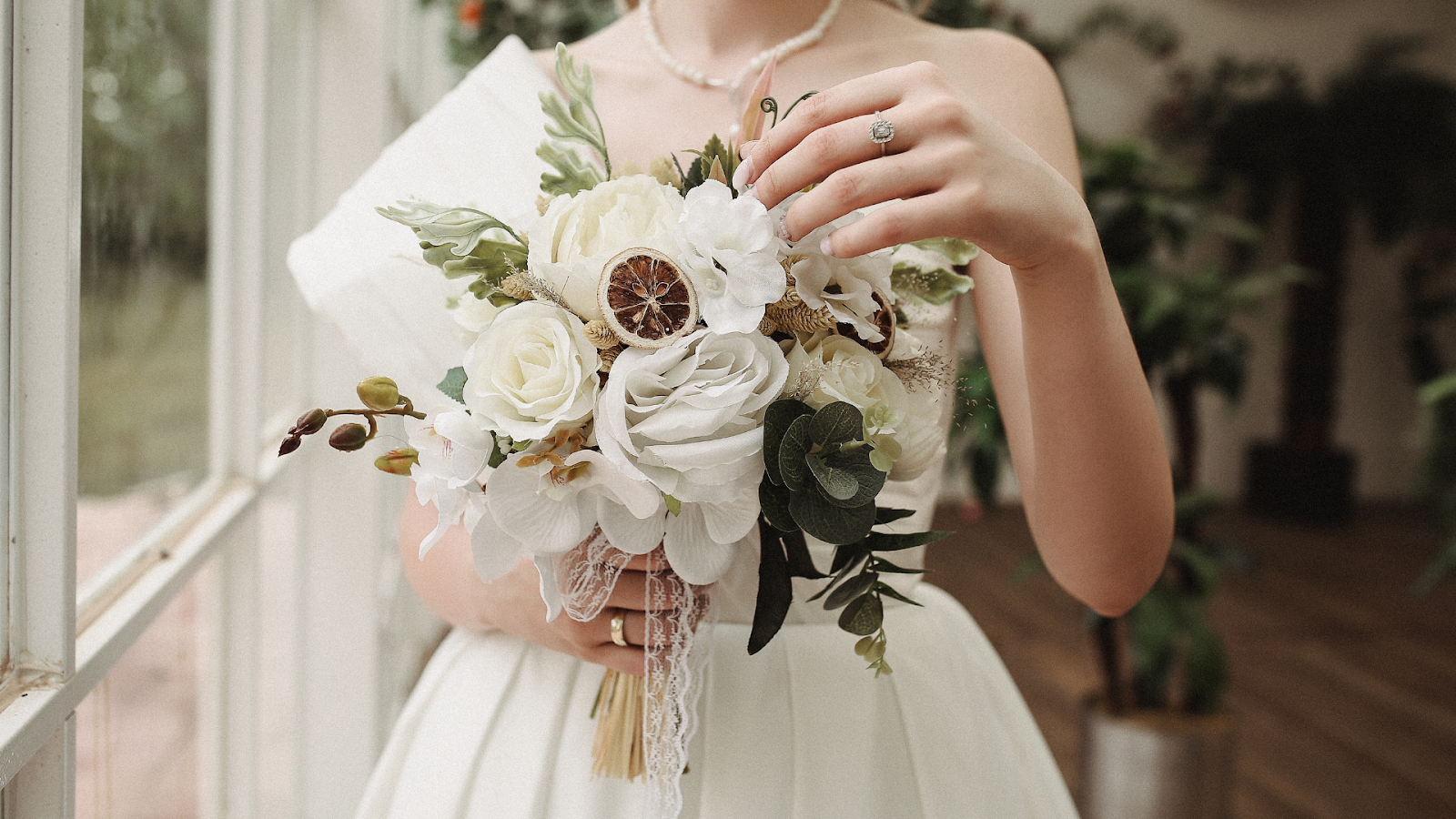
Dried flowers offer incredible versatility. Their muted, earthy tones complement virtually any dress colour without overwhelming delicate fabrics. They’re also practical – no wilting concerns during long photo sessions or outdoor ceremonies.
Pampas grass, dried lavender, and preserved eucalyptus create sophisticated arrangements that last well beyond your wedding day.
Local Seasonal Blooms for Authentic Regional Wedding Themes
Choosing flowers that naturally grow in your area during your wedding season ensures freshness whilst supporting local growers. This approach often yields unexpected colour combinations that feel authentic and unique.
Spring weddings might feature locally grown daffodils and tulips, whilst autumn celebrations could showcase seasonal dahlias and chrysanthemums.
Potted Plant Alternatives for Zero-Waste Wedding Ceremonies
Living plants serve double duty as wedding décour and gifts for your bridal party. Small potted herbs, succulents, or flowering plants can replace traditional bouquets whilst providing lasting memories.
These alternatives work particularly well for casual, outdoor weddings where sustainability is a priority.
Smart budgeting ensures you have beautiful flowers without overspending, and strategic coordination can maximise your floral impact.
Budget-Smart Strategies for Maximum Floral Impact
Creating stunning wedding floral arrangements doesn’t require unlimited funds. Strategic choices can stretch your budget whilst maintaining beautiful coordination with your bridal party’s look.
High-Impact Filler Flowers That Stretch Your Wedding Flower Budget
Inexpensive filler flowers can create full, lush arrangements when mixed strategically with premium blooms. Baby’s breath, solidago, and seasonal greenery add volume without adding significant cost.
These fillers also help unify different dress colours by providing consistent green elements throughout all arrangements.
Repurposing Ceremony Arrangements for Reception Centrepieces
Design ceremony arrangements that can transition to reception tables. This doubles their use whilst maintaining visual consistency throughout your celebration.
Consider arrangements in attractive containers that work in both settings rather than traditional floral foam designs.
DIY Flower Crown and Corsage Tutorials for Bridal Party Members
Simple accessories like flower crowns or wrist corsages can extend your floral theme to every bridal party member without requiring professional florist time for each piece.
These personal touches photograph beautifully whilst keeping costs manageable.
Beyond budgeting, selecting combinations that photograph beautifully ensures your wedding memories look as stunning as your actual day.
Photography-Perfect Flower and Outfit Combinations
Your wedding flowers will appear in countless photographs, so choosing combinations that look stunning in images is crucial for lasting memories.
Colours That Pop in Digital Photography and Social Media
Certain colour combinations photograph more vibrantly than others. Deep jewel tones against neutral dresses create striking contrast, whilst monochromatic schemes in pastels feel romantic and dreamy.
Consider how your choices will look in both professional photography and candid social media posts.
Avoiding Floral Patterns That Create Visual Chaos in Group Photos
Busy floral patterns can compete with patterned dresses or create visual confusion in group shots. When matching flowers with dresses, consider the overall composition rather than individual elements.
Solid-coloured flowers often photograph more cleanly than heavily variegated blooms.
Golden Hour Lighting Considerations for Outdoor Wedding Flowers
Outdoor lighting changes throughout the day, affecting how flower colours appear. What looks perfect in harsh midday sun might appear washed out during golden hour photography.
Test your colour combinations in various lighting conditions if possible.
Understanding these visual principles helps create wedding memories that you’ll love reviewing for years to come.
Common Questions About Wedding Flower and Outfit Coordination
How to coordinate wedding party outfits?
Common ways to coordinate your bridesmaids and groomsmen would be using your primary colour for the bridesmaid dresses and the groomsmen accessories such as a tie, pocket square, and even socks! You want to make your primary wedding colours shape the overall aesthetic.
Who pays for the bridal party flowers?
Bride’s bouquet: The bridal bouquet is paid for by the groom or groom’s family. Bridesmaids’ bouquets: The bride or bride’s family pays for the bridesmaids’ bouquets (and flower girl bouquet, if applicable).
What flowers work best with navy bridesmaid dresses?
White peonies, blush roses, eucalyptus, and dusty miller create elegant contrast with navy. Burgundy dahlias and deep purple flowers add rich depth whilst maintaining sophisticated colour harmony.
Final Thoughts on Wedding Flower Coordination
Perfect floral coordination transforms good weddings into unforgettable celebrations. By understanding colour theory, considering fabric textures, and planning strategically, you’ll create stunning harmony between your wedding flowers and bridal party outfits. Remember that the best combinations feel effortless whilst photographing beautifully. Your thoughtful coordination will ensure every image captures the cohesive beauty you’ve worked so hard to create. The investment in proper planning pays dividends in memories that last a lifetime.