Hormonal acne has a way of showing up at the worst possible time and staying longer than it should. Deep, painful breakouts along your jawline, chin, or lower cheeks? Classic signs. If it always seems to flare up around your period, after a stressful week, or randomly in your 30s and 40s, you’re not imagining it. All this means you need to know how to treat hormonal acne.
It doesn’t always play by the usual skincare rules, either. What works for surface-level pimples doesn’t always touch this type of breakout. That’s where benzoyl peroxide is worth a try. It’s a product that’s helped thousands manage flare-ups without going full prescription.
Knowing How to Treat Hormonal Acne Matters
Hormonal acne is mostly driven by a spike in androgens (things like testosterone) that ramp up oil production. That extra oil clogs your pores, feeds acne bacteria, and leads to those deep, inflamed breakouts. While teenagers often get hit first, plenty of adults (especially women) end up having to learn how to treat hormonal acne well into their 30s and 40s.
It’s not about having dirty skin, either, or eating a chocolate bar. It’s got everything to do with your hormones, which are among the most powerful chemicals in the human body. So, let’s take a look at our step-by-step guide on how it’s done.
Step 1: Pick the Right BP Wash
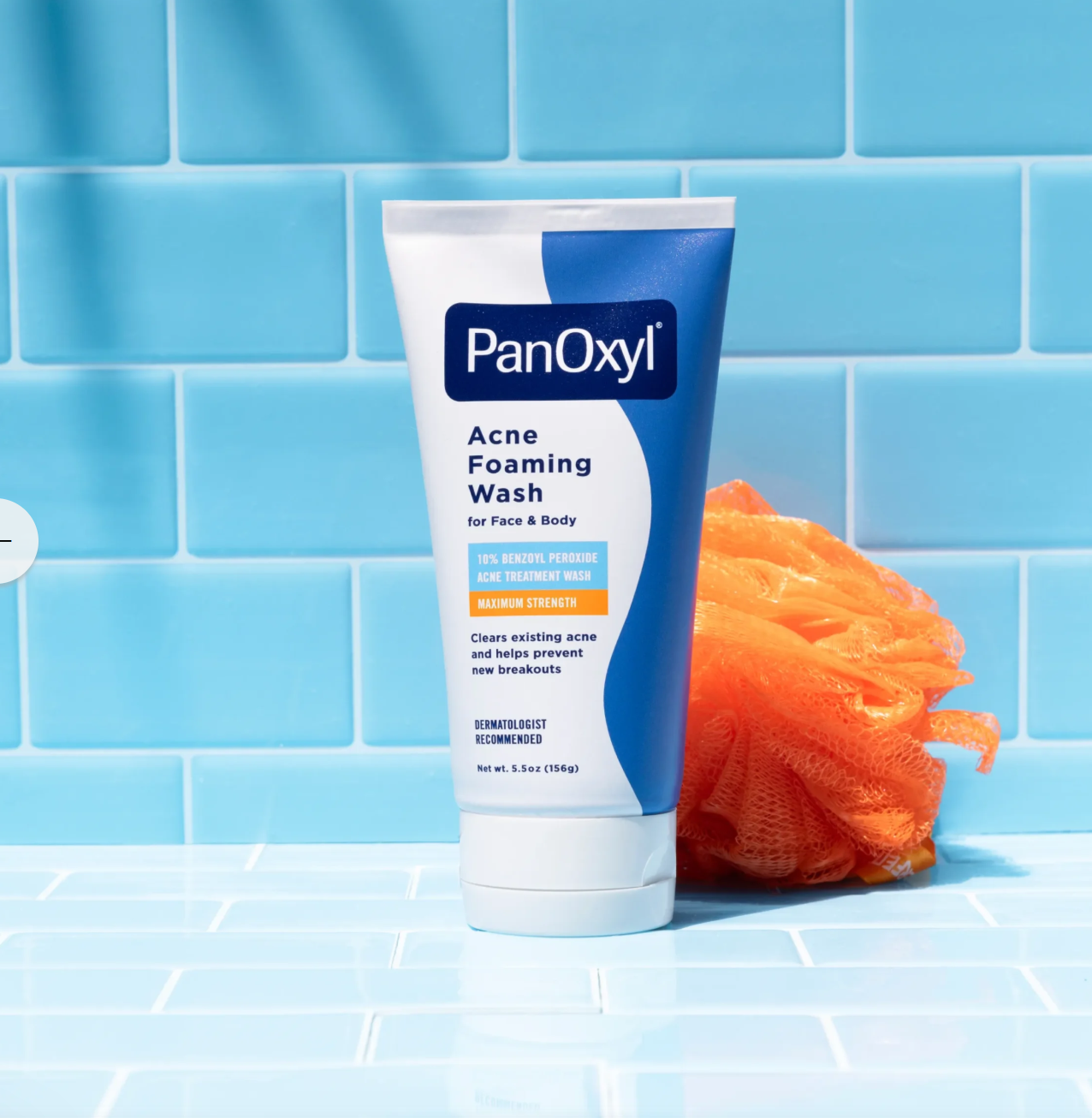
Go for a benzoyl peroxide wash that’s designed to hit acne hard without overstripping your skin. PanOxyl’s 10% foaming wash is a good bet for hormonal breakouts because it:
- Kills acne bacteria fast
- Clears clogged pores
- Calms inflammation
- Doesn’t linger or over-dry if rinsed quickly
This wash-off format makes it gentler than leave-on BP creams, while still getting the job done.
Step 2: Start Slow. Once a Day Is Enough
Start by using it once a day, at night. Wet your face, lather it up in your hands (don’t apply it directly to dry skin), and gently massage for about 20–30 seconds. Rinse well. Don’t scrub or leave it on too long, as this is definitely a case of less being more.
If your skin adjusts after a few days, and things are still flaring up, you can try using it in the morning too. Just be patient and pay attention to what your skin is telling you.
Step 3: Moisturize, Every Time
Even though benzoyl peroxide clears breakouts, it can dry you out. That’s why you need a good moisturizer. And yes, even if your skin is oily! Look for one that’s fragrance-free and non-comedogenic. Ingredients like ceramides and hyaluronic acid are your friends here, as moisturized skin tends to heal better and stay calmer.
Step 4: Don’t Overload Your Skin
For the first couple of weeks, skip the extras. That means no scrubs, no AHAs or BHAs, and definitely no retinoids unless a dermatologist told you otherwise. Give your skin room to adjust to the BP first. Once things settle, you can revisit the rest of your routine.
Step 5: Stick With It
This isn’t a one-and-done fix. Hormonal acne often takes 4–8 weeks to show real improvement. That doesn’t mean it’s not working. Keep going. Sudden stops can bring flare-ups back fast. Consistency beats intensity every time.
What If It’s Still Not Enough?
If your skin hasn’t improved after a couple of months (or things are getting worse), it might be time to speak to a doctor. You may need a different strength, a prescription treatment, or something that targets the hormonal root (like spironolactone or certain birth control pills).
Learn How to Treat Hormonal Acne – the Easy Way
Dealing with hormonal acne can feel like you’re playing a long game, but the first step doesn’t have to be hard. Starting with a simple 10% foaming wash puts you in control and firmly on a path back to clear, balanced skin. Offering a format that deals with the problem without overwhelming your skin, it’s an option that’s well worth a look.
Just one product, once a day, and you’re already doing more than most people ever will. So, why not take the first step and try something new today? Your skin deserves that much.