Table of Contents
- Benefits of Sustainable Roofing
- Popular Sustainable Roofing Materials
- Integrating Solar Energy
- Green Roofs and Vegetative Systems
- Cool Roofs and Reflective Coatings
- Recycled and Recyclable Materials
- Certifications and Standards
- Conclusion
As sustainability becomes a driving force in the construction industry, commercial property owners must explore roofing options that support both environmental initiatives and building performance. Opting for advanced solutions such as energy-efficient membranes, reflective coatings, and green roofs enables businesses to improve energy efficiency while demonstrating a commitment to ecological responsibility. Enhancing your roofing strategy benefits your property. It aligns your business with a modern, environmentally aware future. Discover how implementing these systems can deliver long-term operational advantages by learning from industry leaders like Farmers Commercial Roofing. Today’s market makes sustainable roofing crucial for operational costs, corporate image, and regulation compliance. Eco-friendly roofs lower carbon footprint, boost indoor quality, and cut energy costs, supporting wellness and attracting eco-conscious tenants. Green roofing and recycled materials are transforming commercial construction, offering quick ROI via lower bills, repairs, and higher property value. Solar panels and certification standards promote a resilient, responsible real estate sector. By understanding sustainable roofing options, owners can customize solutions to their needs and climate.
Benefits of Sustainable Roofing
Sustainable roofing options bring a host of advantages that contribute to building longevity and enhanced environmental performance. The primary considerations for most commercial property owners are lower operating costs and greater energy efficiency. By using reflective roof membranes and advanced insulation, buildings experience less heat gain, reducing reliance on air conditioning and lowering energy bills.
Beyond financial savings, eco-friendly roofs have a meaningful impact on the environment. Choosing materials that are responsibly sourced, easily recycled, or renewable helps decrease landfill waste and reduce the extraction of finite resources. In many regions, following sustainable practices qualifies property owners for incentive programs or regulatory advantages that support ongoing building maintenance and upgrades.
Popular Sustainable Roofing Materials
Material selection is crucial for establishing a long-lasting and sustainable commercial roofing system. Among the most effective options are:
- Metal Roofing: Metal roofs are often made from a high percentage of recycled materials. They are lightweight, highly durable, fully recyclable at the end of their useful life, and can reflect solar heat.
- PVC Membranes: Widely used for flat and low-slope roofs, PVC is noted for its resilience and resistance to UV radiation and chemicals. Its long lifespan and energy-saving benefits make it a frequent choice for commercial installations. For more details on the advantages of PVC, explore this industry report.
- Recycled Shingles: Crafted from post-consumer rubber, plastics, or wood fiber, these shingles divert waste from landfills while providing commercial-grade protection and durability.
Integrating Solar Energy
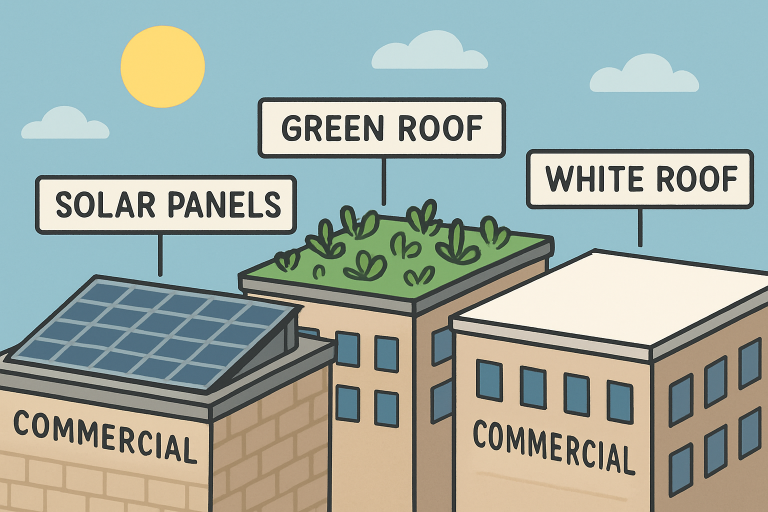
Commercial buildings can dramatically improve their sustainability footprint by pairing roofing systems with rooftop solar panels. The integration of photovoltaic technology enables businesses to reduce grid dependency, stabilize energy costs, and potentially sell excess electricity back to the utility. Partnerships between roofing installers and solar panel recyclers, such as the collaboration between We Recycle Solar and Nations Roof, are setting new standards for responsible end-of-life management and efficient rooftop design. More about this innovative approach can be found at PR Newswire.
Green Roofs and Vegetative Systems
Green roofs go beyond basic insulation and weatherproofing. By creating a living ecosystem atop commercial buildings, these systems absorb rainwater, reduce stormwater runoff, and lower rooftop temperatures. They also boost urban biodiversity and provide a natural buffer against extreme weather. Many cities are encouraging the adoption of green roofs to combat the urban heat island effect and improve local air quality.
Vegetative roofing not only has ecological benefits but also transforms often unused rooftop space into welcoming environments for relaxation, events, or gardening.
Cool Roofs and Reflective Coatings
Cool roofs are engineered to reflect more sunlight and absorb less heat than standard options. Materials like thermoplastic polyolefin (TPO) and ethylene propylene diene monomer (EPDM) membranes excel in hot climates by minimizing air conditioning demand. Reflective coatings applied over existing roofs can also extend lifespan and improve compliance with energy codes. According to coverage by The Washington Post, these roofs are becoming a critical tool in combating rising temperatures in urban areas.
Recycled and Recyclable Materials
Using recycled materials whenever possible supports a circular economy. Many manufacturers offer shingles, tiles, and panels made from post-consumer plastic, reclaimed metal, or rubber. These products often meet or surpass the durability of traditional materials while continually diverting waste from landfills. Specifying recyclable systems ensures future tear-offs can be processed responsibly, further supporting resource efficiency.
Certifications and Standards
Attaining third-party certifications can validate a commercial roofing system’s sustainability. The LEED program (Leadership in Energy and Environmental Design) is widely recognized for promoting energy-efficient, low-impact materials and practices in commercial construction. ENERGY STAR certification highlights roofing products that reflect sunlight and lower roof surface temperatures, thereby reducing energy consumption. Pursuing these standards delivers branding benefits and confirms your commitment to trusted environmental benchmarks.
Conclusion
Commercial property owners have several viable options for implementing sustainable roofing systems that reduce costs, support environmental goals, and add value to their real estate assets. By carefully selecting appropriate materials, capitalizing on new solar and vegetative technologies, and adhering to green building standards, businesses can create a roofing strategy that supports both profit and ecological stewardship well into the future.