Table of Contents
- The Versatility of Mobile Cranes
- Technological Advancements Enhancing Efficiency
- Safety Innovations in Mobile Crane Operations
- Economic Impact and Market Growth
- Future Trends in Mobile Crane Technology
- Conclusion
Mobile cranes have emerged as crucial assets in contemporary construction, providing the versatility and agility needed to meet fast-paced project demands. Their capacity to move freely between multiple job sites has redefined how construction tasks are managed. For builders and contractors who need both flexibility and reliability, Mobile Crane Rentals offer an accessible solution to keep projects on schedule and within budget.
By integrating swift transportability and seamless setup features, mobile cranes enable crews to overcome logistical hurdles and adapt to evolving site requirements. This transformative equipment bridges the gap between traditional heavy-lift systems and the modern need for smarter, time-efficient workflows. In turn, crews can lift, position, and install building materials and infrastructure components faster than ever.
This operational flexibility is especially vital on sites where space is limited or where fixed cranes would be impractical. Additionally, mobile cranes can be quickly redeployed as project phases advance, reducing delays and offering cost-saving benefits. As productivity expectations increase across the industry, mobile cranes are instrumental in meeting tight deadlines and complex construction goals.
From high-rise construction to bridge work, these machines prove indispensable for meeting diverse project specifications, supporting both urban and remote developments. Mobile cranes not only boost productivity but also enhance the overall safety and economic outcomes for construction companies, as outlined in a recent analysis by For Construction Pros.
The Versatility of Mobile Cranes
One of the key reasons mobile cranes are preferred on modern construction sites is their wide range of applications. Unlike tower cranes or other fixed equipment, mobile cranes can be relocated effortlessly, even within the same worksite. This fluidity is made possible by design features such as telescoping booms, hydraulic lifts, and chassis options including all-terrain or rough-terrain capabilities.
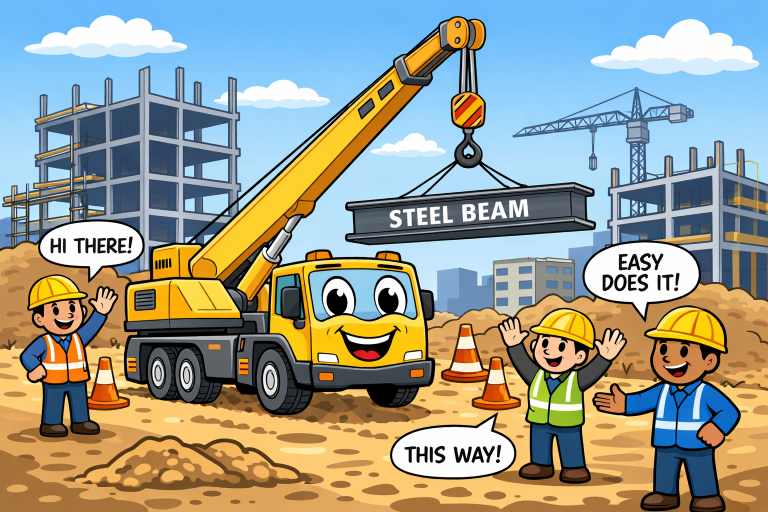
This adaptability makes mobile cranes suitable for a wide variety of tasks, ranging from setting steel beams in multi-story buildings to precisely positioning heavy HVAC equipment in tight urban quarters. Their ability to maneuver through difficult site conditions, including rough terrain or restricted spaces, is unmatched, leading to increased demand for mobile crane services across construction sectors.
Technological Advancements Enhancing Efficiency
The last decade has seen rapid technological advancements that have elevated mobile crane performance. Automation, telematics, and smart control systems have become standard features in many new models. Enhanced sensors and load-chart software help maintain balance and stability, while telematics systems provide real-time diagnostics to support maintenance and repair schedules. This reduces unplanned downtime and extends equipment lifespan.
Remote operation capabilities have added a new layer of safety and usability. Operators can now control cranes remotely, reducing exposure to hazardous situations. These tools also enable instant monitoring and adjustment of crane performance, enabling higher precision and more efficient operation overall. As noted by Construction Dive, automation and networking technologies will play a significant role in reshaping how equipment is managed on-site.
Safety Innovations in Mobile Crane Operations
While efficiency is crucial, the safety of operators and site personnel remains a top priority in crane operations. Mobile cranes now benefit from integrated safety systems that monitor operational parameters such as load weight, wind speed, and crane inclination. These monitors provide instant feedback and warnings, enabling quick decision-making when hazardous conditions arise.
In addition to equipment-centered safety systems, rigorous crane operator training is now more accessible than ever. Virtual reality (VR) simulators offer realistic scenarios that help prepare operators for complex or emergency situations without risk. Together with ongoing safety audits and routine maintenance, these innovations greatly reduce the likelihood of accidents and support safer workplaces across the construction sector.
Economic Impact and Market Growth
The economic impact of mobile cranes is profound, especially as global infrastructure investment rises. The surge in public and private sector construction of bridges, highways, commercial spaces, and energy facilities directly fuels mobile crane demand. According to a study cited by MarketsandMarkets, the global crane rental market is projected to reach USD 68.04 billion by 2030, further emphasizing the vital role mobile cranes play in construction economics.
This market expansion drives competition and innovation, resulting in more affordable rental options and enhanced machine capabilities. Ultimately, construction companies benefit from more reliable uptime and lower equipment costs. The widespread availability of mobile cranes makes ambitious infrastructure projects feasible, even in challenging locations or on accelerated timelines.
Future Trends in Mobile Crane Technology
The future of mobile cranes lies in adopting emerging technologies and sustainable practices. Artificial intelligence and machine learning are expected to revolutionize predictive maintenance, enabling crews to identify component fatigue before failure. These advanced analytics tools also enable smarter load and route planning, optimizing crane usage and reducing overall project risk.
Sustainability is also taking center stage. Manufacturers are developing hybrid and emergency rescue cranes to minimize environmental impact and comply with stringent emissions regulations. This transition supports green building goals and helps construction firms meet regulatory standards while maintaining high performance. With continuous improvement and innovation, mobile cranes will remain a cornerstone of construction progress for years to come.
Conclusion
Mobile cranes have transformed the construction industry by bringing unmatched versatility, safety, and efficiency to job sites. Through ongoing technological innovation and a growing focus on sustainability, they are poised to handle the evolving demands of modern infrastructure development. As the construction sector faces increasing complexity and tighter deadlines, mobile cranes will continue to play an integral role in shaping skylines and building resilient communities.