Getting the perfect fit for golf trousers men requires more than just knowing your waist size. Golf pants need to accommodate your swing mechanics, provide comfort during long rounds, and maintain a professional appearance from the first tee to the 19th hole. After helping dozens of golfers find their ideal fit and learning from my own sizing mistakes over the years, I’ve developed a systematic approach that works consistently. This guide walks you through every measurement and consideration needed to find golf trousers that enhance rather than hinder your game.
Taking Accurate Body Measurements
Start by measuring yourself properly, because golf trouser sizing differs significantly from casual or dress pants. You’ll need a flexible tape measure and someone to help with certain measurements for accuracy. Don’t rely on your memory of previous measurements – your body changes over time, and accurate measurements are crucial for online ordering.
Measure your natural waist, which sits about an inch above your hip bones, not at your belt line. Most guys measure too low, leading to pants that gap at the back or feel too tight when sitting. Breathe normally during measurement – don’t suck in your gut or push out your stomach. Write down this measurement in inches.
For inseam, measure from your crotch seam down to where you want the pants to end. Most golfers prefer a slight break at the shoe, meaning the fabric just touches the top of your golf shoe. If you’re unsure, measure to your ankle bone and subtract about an inch.
Hip measurements matter more than most people realize, especially for athletic cuts. Measure around the widest part of your hips and buttocks. This measurement helps determine whether you need regular, athletic, or relaxed cuts. If your hip measurement is more than 10 inches larger than your waist, consider athletic fits.
Understanding Different Cut Styles
Straight cuts work for most body types and offer the most versatility. The leg opening measures roughly the same from knee to ankle, creating a classic silhouette that looks good with all golf shoe styles. These cuts provide moderate room through the thigh and seat without looking baggy.
Slim fits taper from thigh to ankle, creating a more modern appearance. However, they can restrict movement if your thighs are muscular or if you prefer looser clothing. Test your range of motion in slim fits by doing practice swings in the fitting room or at home if ordering online.
Athletic cuts accommodate larger thighs and glutes while maintaining a tailored appearance through the waist. These work well for golfers who lift weights or have naturally muscular builds. The extra room through the seat prevents the uncomfortable pulling sensation during your swing.
Relaxed fits offer the most room throughout but can look sloppy if not properly tailored. These work best for golfers who prioritize comfort over appearance or those with larger builds who need extra room for movement.
Determining Proper Rise Height
Low-rise pants sit below your natural waist and work well for slimmer builds, but they can create problems during golf swings. When you bend over to read putts or address the ball, low-rise pants often gap at the back, which looks unprofessional and feels uncomfortable.
Mid-rise options hit at or slightly below your natural waist, offering good coverage during all golf movements. This rise works well for most golfers and provides the best balance between comfort and appearance. Mid-rise pants stay in place better during your swing and don’t require constant adjustment.
High-rise pants extend above your natural waist and work particularly well for taller golfers or those with longer torsos. They provide excellent coverage and often feel more secure during athletic movements. However, they can look dated if not styled properly.
Fabric Considerations and Stretch Requirements
Modern golf trousers should include some stretch fabric, typically 2-4% elastane or spandex blended with polyester or cotton. This small percentage makes a huge difference in comfort and mobility. Test the stretch by gently pulling the fabric – it should give slightly and return to its original shape.
Four-way stretch fabrics move with you in all directions – up, down, left, and right. Two-way stretch only moves in one direction, usually horizontally. Four-way stretch costs more but provides significantly better performance during golf swings.
Fabric weight affects both comfort and appearance. Lightweight fabrics work better in hot climates but might look too casual for some golf courses. Heavier fabrics provide a more professional appearance but can be uncomfortable in warm weather. Consider your local climate and course dress codes when choosing fabric weight.
Testing Fit and Movement
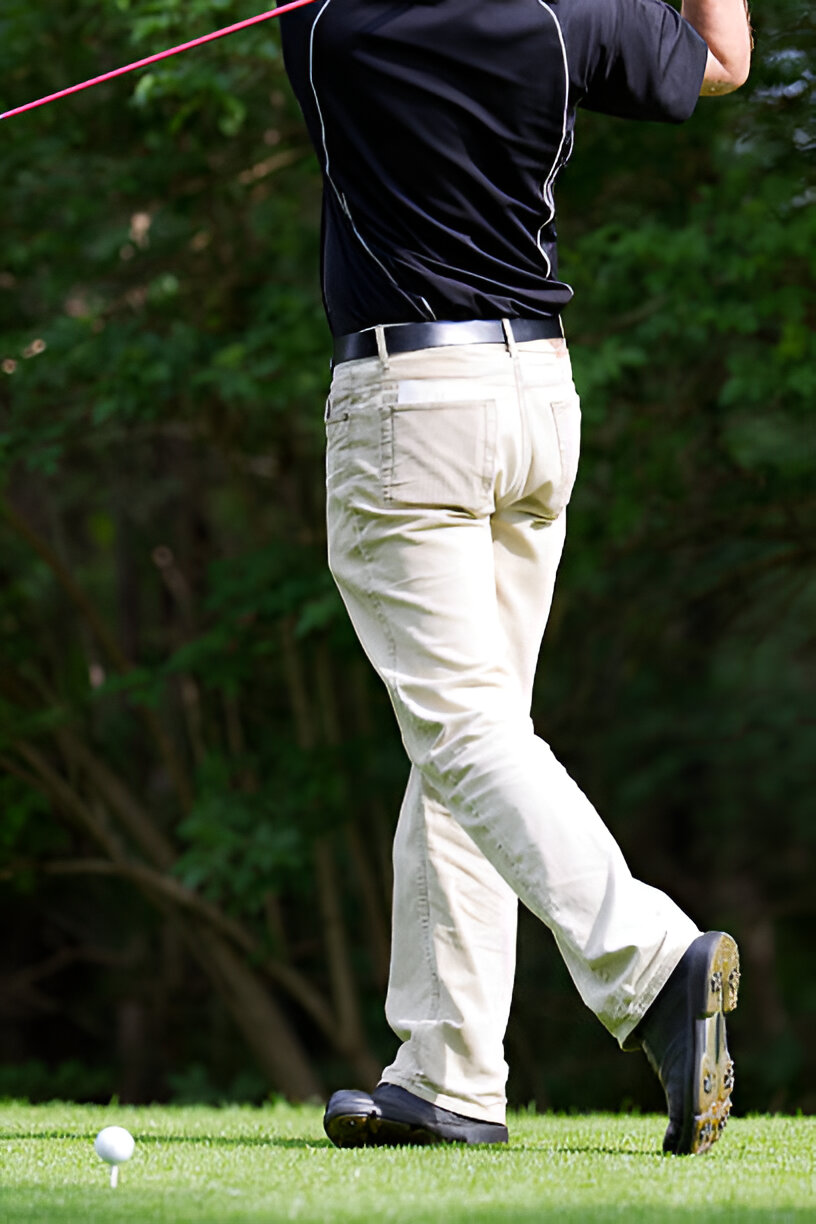
Once you have pants that fit properly while standing, test your range of motion. Do practice swings to ensure the fabric doesn’t bind or restrict your movement. Sit down and stand up several times to check for comfort in the seat and thighs.
Walk around for several minutes to identify any chafing or discomfort points. Pay attention to how the waistband feels – it shouldn’t dig into your skin or roll over during movement. The pants should stay in place without requiring frequent adjustment.
Check the length while wearing golf shoes. The pants should barely touch the top of your shoes with a slight break. Too long creates a sloppy appearance and can interfere with your stance. Too short looks awkward and exposes your socks during play.
Brand-Specific Sizing Considerations
Each major golf brand has distinct sizing characteristics that you should understand before ordering. Nike typically runs true to size but their athletic cuts are slightly more fitted than competitors. Under Armour tends to run small, especially in the waist, so many golfers size up.
Adidas sizing varies between product lines, with their performance lines typically running smaller than their lifestyle options. FootJoy generally runs large, particularly in traditional cuts. Lululemon uses their own sizing system that doesn’t always correlate with standard measurements.