Key Takeaways
- Forestry mulching provides an eco-friendly, sustainable option for land management.
- It benefits soil health and property value while supporting local ecosystems and biodiversity.
- This method is cost-effective, efficient, and adaptable for various land use scenarios.
Table of Contents
- Introduction
- Enhancing Soil Health and Preventing Erosion
- Reducing Wildfire Risks
- Promoting Biodiversity
- Cost-Effectiveness and Efficiency
- Versatility in Land Management
- Minimal Environmental Impact
- Improving Aesthetic Appeal
- Supporting Sustainable Practices
Introduction
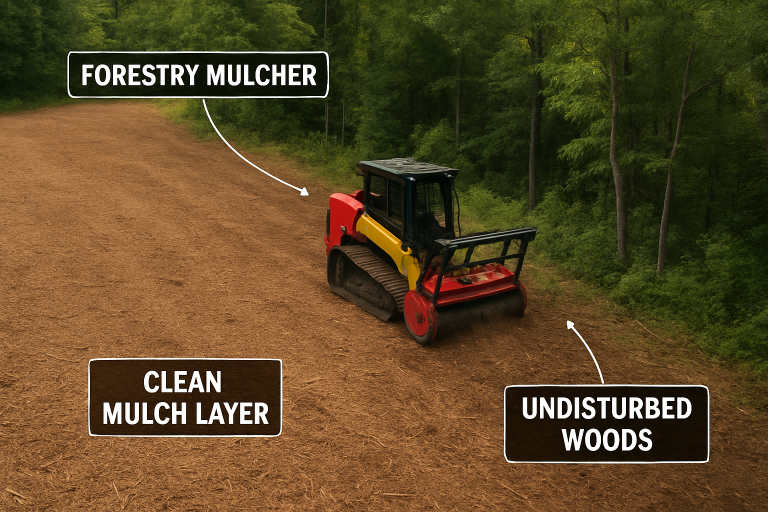
Managing land responsibly requires methods that achieve a landowner’s goals and support broader environmental health. Forestry mulching stands out as a progressive approach to land clearing, offering significant advantages like improved soil quality, reduced fire risk, and promoting biodiversity. The process uses specialized equipment to grind trees, brush, and vegetation into a mulch layer distributed over the cleared area. Those looking for expert Forestry Mulching in Midland find that this sustainable method enables them to balance productivity with environmental stewardship.
Unlike traditional methods such as bulldozing or burning, forestry mulching allows landowners to handle overgrowth quickly and efficiently with less disruption to the ecosystem. The resulting mulch nourishes the soil, reduces erosion, and creates a healthier foundation for new growth. By opting for Forestry Mulching in Midland, property owners can meet land management objectives and play a role in conserving natural resources for future generations.
Enhancing Soil Health and Preventing Erosion
A primary benefit of forestry mulching is the positive transformation of the soil. When mulch is spread over the land, it decomposes naturally over time, introducing organic matter and essential nutrients into the ground. This process improves the soil’s fertility, texture, and ability to retain water, supporting robust plant growth. Furthermore, the mulch acts as a shield, protecting the soil from the harmful effects of wind and water erosion. According to the USDA Natural Resources Conservation Service, healthy soil is crucial for long-term land productivity and resilience against climate extremes.
The mulch layer also helps prevent rapid runoff during heavy rains by slowing water movement and allowing more time for the soil to absorb it. This natural barrier is especially valuable in sloped or erosion-prone areas, safeguarding topsoil for crop and native plant success.
Reducing Wildfire Risks
One of the growing concerns in many regions is the increased risk of wildfires due to dense underbrush and accumulated deadwood. Forestry mulching directly addresses this risk by removing combustible materials from the landscape, significantly lowering the chances of wildfire ignition and spread. The moisture-retaining properties of mulch further act as a deterrent against the propagation of fire.
This approach also benefits public safety and property protection, especially in wildland-urban interfaces where homes and businesses border unmanaged forested areas. Proactive land clearing with mulching supports the creation of defensible spaces, a recognized best practice for wildfire mitigation recommended by the National Fire Protection Association.
Promoting Biodiversity
Forestry mulching contributes to ecological diversity by selectively clearing invasive species, overgrown brush, and non-native plants. This creates open areas where native grasses and wildflowers can return and thrive, bolstering local biodiversity. With improved ground conditions, habitats for beneficial insects, birds, and small mammals are restored.
The residual mulch layer fosters a mini-ecosystem at ground level, offering refuge and nutrients for decomposers like fungi, bacteria, and insects, supporting higher food chain organisms. This method preserves a natural balance and ensures that desirable plant and animal species can persist and flourish on the property.
Cost-Effectiveness and Efficiency
For landowners, efficiency and affordability are important considerations. Forestry mulching combines what would traditionally be several land clearing steps—cutting, hauling, and debris disposal into a single straightforward operation. This approach saves labor and equipment costs and dramatically shortens project timelines.
As all mulched material is left on-site, there are no additional transportation or landfill fees. This streamlined process is ideal for clearing land for development, trail building, or pasture reclamation. Many landowners also appreciate that project costs are predictable, with fewer unexpected expenses arising than with other clearing techniques.
Versatility in Land Management
Forestry mulching is a flexible solution adaptable to various land management scenarios. It can be used on residential, agricultural, commercial, and utility properties and easily handles variable terrain and plant types. Whether preparing land for construction, opening up woodlands, or maintaining right-of-way corridors, this technique delivers effective results with minimal hassle.
Minimal Environmental Impact
Choosing environmentally responsible land management practices is increasingly important. Forestry mulching limits soil disturbance, enhancing the soil’s natural structure and health. Unlike burning, it doesn’t release greenhouse gases or harmful particulates. The decomposition of organic mulch naturally recycles nutrients, eliminating the need for synthetic fertilizers or chemical weed control.
Improving Aesthetic Appeal
Forestry mulching cleans up unruly overgrowth, delivering a neater, more attractive landscape. This improvement benefits the current landowner and boosts overall property value. Well-maintained grounds are more inviting for recreational use, potential buyers, and even local wildlife, reflecting positively on land management practices.
Supporting Sustainable Practices
Forestry mulching is a practical demonstration of sustainable land management philosophy. By enhancing the health of soil and native ecosystems, lowering dependence on chemical treatments, and reducing fire and erosion risks, landowners are making decisions that benefit both their properties and their communities. These practices help ensure that land remains productive and ecologically balanced for future generations.
Forestry mulching is a practical, sustainable solution for modern landowners who aim to balance land productivity with ecological stewardship. Its benefits—from soil enrichment and wildfire risk reduction to biodiversity enhancement—illustrate why it’s a leading choice for anyone seeking responsible, efficient land management.