Table of Contents
- The Importance of Data Quality
- Data Quality and Regulatory Compliance
- Impact on Product Excellence
- Challenges in Maintaining Data Quality
- Strategies for Enhancing Data Quality
- The Role of AI in Data Quality Management
- Case Studies
- Conclusion
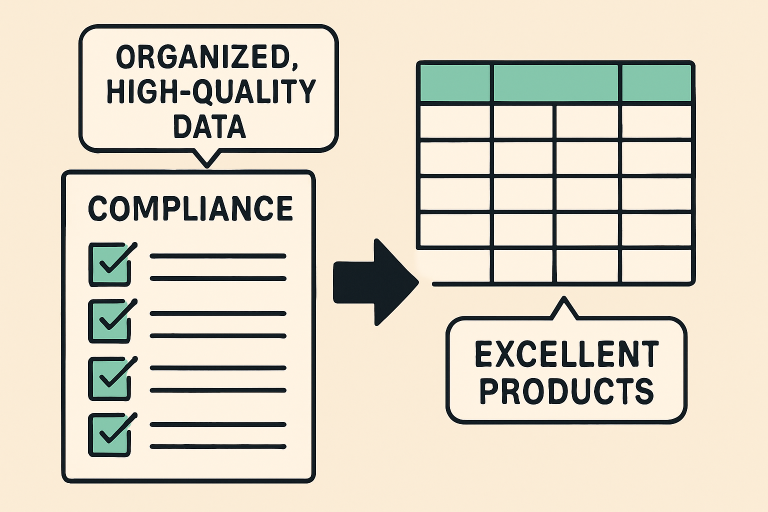
In today’s competitive business landscape, achieving regulatory compliance and creating exceptional products hinges on one powerful asset: the quality of organizational data. From supply chain logistics to medical device labeling, data reliability shapes efficiency, customer trust, and market success. Ensuring high-quality data not only drives operational performance but also forms the backbone of compliance in increasingly regulated industries. Tools such as regulatory data tool make it possible for organizations to systematically manage product and compliance master data, enabling smoother audits and more reliable product releases.
As digital transformation accelerates, regulators demand accuracy, transparency, and data-driven documentation. Meanwhile, consumers expect products to function flawlessly, with any deviation potentially resulting from insufficient data costing both trust and revenue. Companies that invest in modern data management systems are better positioned to mitigate compliance risk and deliver on customer expectations.
The Importance of Data Quality
Reliable, timely, and accurate data form the cornerstone of operational success. Stakeholders across all departments from manufacturing to customer support depend on high-quality data to make sound decisions. When organizations prioritize data quality, they benefit from fewer errors, improved collaboration, and more predictable outcomes across their product lines. Conversely, poor data can disrupt everything, from supply chain forecasting to risk assessment, ultimately undermining an organization’s competitive edge. As highlighted by Forbes, establishing clear data quality metrics ensures businesses stay proactive rather than reactive. Without such frameworks, companies often discover data inaccuracies too late during regulatory reviews or after a product recall, which can prove costly both financially and in terms of reputation.
Data Quality and Regulatory Compliance
Regulatory compliance is non-negotiable in fields such as healthcare, finance, and logistics. Regulatory authorities mandate strict data standards for traceability, reporting, and auditability. Inaccurate or incomplete data can expose organizations to legal penalties, delays, or product withdrawals. According to an industry study, more than half of surveyed corporations cite data quality issues as a direct cause of compliance setbacks. Effective compliance is greatly dependent on transparent data governance and structured quality controls at every data touchpoint.
Impact on Product Excellence
Product development today is inseparable from its underlying data sources. A successful launch depends on precise product specifications, reliable customer feedback, and transparent quality histories. Inaccurate data can result in design flaws, product recalls, or customer dissatisfaction—all of which impact brand loyalty and profitability. By embedding rigorous data quality standards from R&D through post-launch monitoring, organizations safeguard their reputations and foster product innovation.
Moreover, data that flows seamlessly through production stages enables organizations to fulfill complex regulatory requirements, such as those for medical devices or pharmaceuticals, and streamlines product certification in global markets. As noted by McKinsey, data-driven product cultures deliver more reliable and innovative products at scale. Establishing these practices not only reduces risk but also builds a stronger foundation for long-term competitiveness. Companies that invest in robust data governance are better positioned to anticipate market shifts and respond with agility.
Challenges in Maintaining Data Quality
Despite the clear benefits, maintaining consistent data quality across large organizations is a challenging task. Key obstacles include data silos, inconsistent data entries, legacy systems, and a lack of standardized processes. These challenges can result in outdated or contradictory information being stored in various repositories. Without a centralized data strategy, teams can inadvertently make decisions based on faulty data, compounding errors as they scale.
Other common challenges include rapid data growth and the increasing complexity of data sources, which multiply the difficulty of identifying and correcting errors. Manual approaches to data cleansing are not scalable, leaving organizations vulnerable to hidden inaccuracies.
Strategies for Enhancing Data Quality
- Establish Strong Data Governance: Set clear policies for data entry, validation, storage, and access, ensuring responsibilities are defined throughout the organization.
- Implement Regular Data Audits: Schedule routine data cleaning and verification to identify inconsistencies, outliers, or missing information.
- Provide Comprehensive Training: Equip staff across departments with data management best practices, reinforcing a culture of accountability and accuracy.
- Leverage Automated Tools: Use purpose-built data quality management tools for continuous monitoring, error detection, and correction at scale.
The Role of AI in Data Quality Management
Artificial Intelligence is reshaping data management by automating previously labor-intensive processes like duplicate detection, data validation, and anomaly identification. Machine learning models can uncover relationships and data quality gaps that are undetectable to human analysts, thereby boosting efficiency and accuracy across large, dynamic datasets. AI integration enables organizations to respond quickly to issues, with automated corrections reducing the burden on IT and compliance teams.
Conclusion
As regulations become tougher and product standards rise, data quality is more important than ever. Organizations that commit to robust data quality frameworks and embrace next-generation technology especially AI stand out for faster compliance, smarter operations, and exceptional customer experiences. Starting with reliable tools and transparent governance, companies can drive compliance and product excellence in a rapidly evolving world.