Key Takeaways
- Smart technologies and real-time data analytics drive modern security guard services.
- Artificial Intelligence, remote monitoring, and automation have created flexible and effective security options.
- Mobile platforms and advanced access control systems allow for rapid response and safer environments.
Security guard services have undergone a significant transformation over the past decade. With advanced technologies seamlessly integrating into everyday operations, businesses and individuals now depend on innovative solutions for enhanced safety and peace of mind. To learn more about how contemporary security approaches surpass traditional services, click here. These developments are not only enhancing the efficiency of security efforts but also equipping organizations to respond proactively to evolving threats in real-time.
Artificial Intelligence, mobile technologies, and automation are at the heart of these changes, redefining what it means to keep property and people safe. Whether guarding a small event or monitoring an entire corporate campus, modern security guard services now encompass a toolkit that includes remote surveillance, data-driven insights, and rapid deployment solutions. This shift enables security professionals to mitigate risk and deliver value-added support beyond basic patrols or physical presence.
At the same time, businesses can benefit from flexible, on-demand options that meet a range of needs—from event security to fire watch patrols. Innovations such as mobile applications and remote monitoring centers enable organizations to adapt their security strategies to meet situational demands quickly. As technology continues to evolve, so too does the ability of security services to offer tailored, responsive protection in any environment.
Below, we explore the essential ways technology is revolutionizing the field, making security services more effective, accessible, and scalable for everyone, from property managers to private individuals.
Integration of Artificial Intelligence and Automation
Artificial Intelligence (AI) plays a profound role in the evolution of security guard services. Today’s AI-driven surveillance systems can analyze thousands of video frames in real time, identify unusual activity, and even predict potential threats before they occur. These tools reduce the reliance on human attention alone, ensuring fewer incidents are missed and enabling a swift, targeted response when needed. By automating repetitive monitoring and using data-driven decision-making, security teams increase both their reach and reliability.
Remote Monitoring and Virtual Security Guards
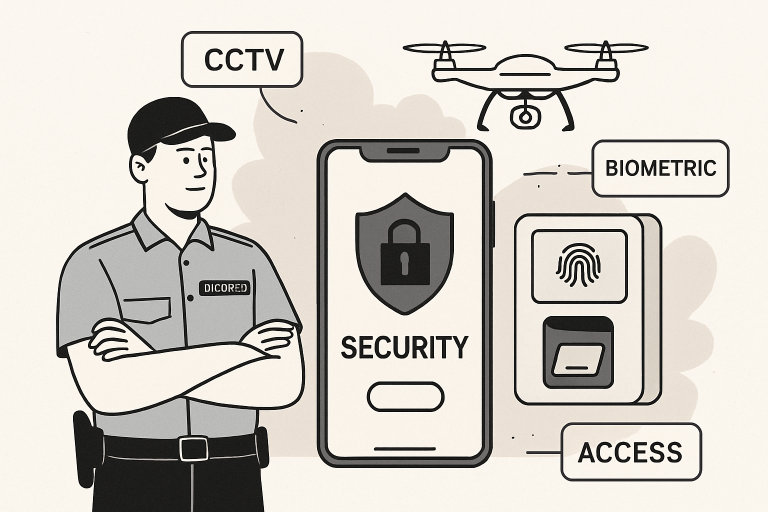
Gone are the days when security operations required a guard to be physically present 24/7. Modern remote guarding systems integrate high-resolution CCTV cameras, advanced video analytics, and centralized monitoring centers, enabling security professionals to oversee multiple locations simultaneously. Virtual guards can intervene directly by issuing verbal warnings via loudspeakers, dispatching personnel, or alerting local authorities. According to a Forbes report, such approaches have dramatically improved quick response rates and lowered costs for businesses seeking comprehensive security coverage.
Mobile Applications for On-Demand Security
Mobile technology is making security more accessible and customizable than ever. Apps now allow users to request instant assistance, locate available guards, and manage on-site security patrols through user-friendly platforms. For instance, dedicated security apps enable businesses or individuals to coordinate with professionals in real-time for services such as fire watch, emergency escorts, or crowd management during events. The real-time flexibility and transparency empower clients to tailor security to specific needs, whether for daily operations or special occasions.
Deployment of Drones and Robotics
The deployment of drones and robotics in security brings significant advancements, particularly in large-scale and high-risk environments. Drones provide quick aerial surveillance, offering real-time feeds of wide areas and responding to incidents more quickly than ground teams can reach. On the ground, robotic security guards equipped with sensors and advanced cameras can patrol spaces, identify unauthorized intrusions, or detect hazardous conditions. These innovations not only expand coverage but also protect human guards from unnecessary exposure to danger, a topic recently discussed in-depth by WIRED.
Advanced Access Control Systems
Modern access control systems have moved well beyond the era of simple lock-and-key or magnetic card approaches. Biometric authentication, including facial recognition and fingerprint scanning, ensures only authorized individuals are granted entry. Mobile credentialing enables employees or guests to access secure areas using their smartphones, while role-based permissions facilitate the easy management of varying access levels. These breakthroughs not only enhance security but also streamline access and reduce bottlenecks, allowing businesses to exert greater control with minimal inconvenience.
Integration with Smart Technology
Security guard services today are often integrated with smart technologies, such as IoT-enabled sensors and advanced AI analytics platforms. These tools generate real-time alerts and provide actionable insights for property managers or security personnel. Smart security systems track patterns, identify vulnerabilities, and allow businesses to optimize protocols before security incidents escalate. The predictive power of such integrations enables organizations to move beyond reactive models, developing proactive approaches that can deter threats and reduce overall risk across their assets.
Conclusion
The intelligent implementation of advanced technologies is shaping the future of security guard services. With AI-driven insights, remote monitoring, mobile platforms, drones, and sophisticated access control, security operations now offer unmatched efficiency, flexibility, and reliability. As the sector continues to modernize, both organizations and individuals stand to benefit from safer, more adaptable, and personalized protection strategies—heralding a new era for the industry at large.