Key Takeaways
- Always wear a properly fitted helmet to protect against head injuries.
- Enhance visibility with bright clothing and appropriate lighting.
- Regularly maintain your bicycle to ensure optimal performance.
- Adhere to traffic laws and use hand signals to communicate intentions.
- Stay alert and avoid distractions to anticipate potential hazards.
Cycling is both a practical mode of transport and an enjoyable activity, but safety should always remain a top priority. Reducing risks on the road is achievable when you combine attentive behavior with knowledge of best practices and local cycling laws. In the unfortunate event of an accident, knowing where to find a qualified bike injury lawyer can also be crucial for protection and legal guidance.
Whether cycling for exercise, commuting, or leisure, adopting safety measures helps avoid injuries and enjoy rides. Staying alert and prepared for hazards increases confidence. Making safety a habit such as wearing a helmet and maintaining a bike—reduces collisions. Staying informed makes you a better advocate and fosters a positive cycling culture. Simple actions, such as obeying signals and planning routes, can help keep everyone safe.
Helmet Safety: Your First Line of Defense
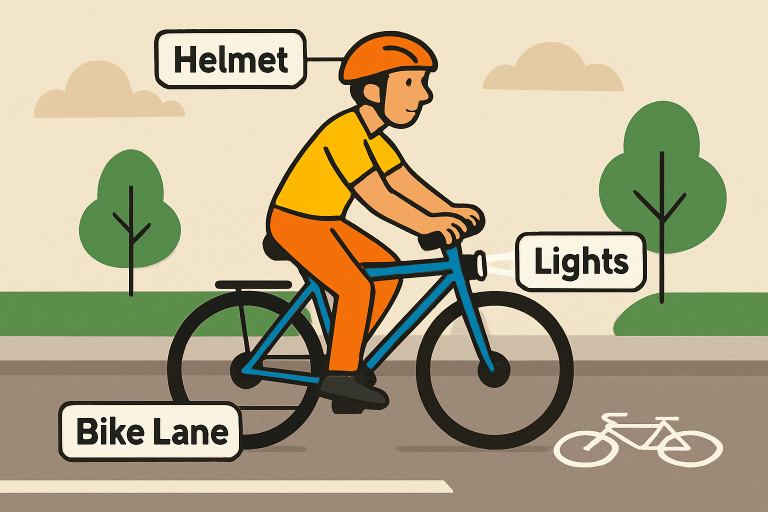
Wearing a helmet can reduce the risk of serious head injury by nearly 50%, making it your most essential protective gear. Select a cycling helmet that fits snugly without tilting. Adjust the straps to create a V shape under your ears and fasten the chin strap so only one or two fingers fit under it. Replace your helmet if it has ever been in a crash, even if no visible damage is present.
Enhancing Visibility on the Road
A significant factor in cycling accidents is poor visibility. Wear bright and reflective clothing, especially during dawn, dusk, or inclement weather, to enhance your presence on the road. Equip your bike with a white front light and a red rear light using these even during daytime can substantially increase your visibility to drivers. Reflective tape or wheel reflectors further decrease the risk of being overlooked by motorists, particularly at intersections or during nighttime riding.
Regular Bike Maintenance
Before each ride, inspect your bicycle using the ABC check, which includes checking tire pressure, ensuring proper brake engagement, and lubricating the chain and cranks. Regular maintenance prevents sudden breakdowns, keeps the ride smooth and efficient, and ensures faster, more predictable stops, as well as better maneuverability in emergencies. Regular maintenance is essential for keeping a bike in good condition.
Adhering to Traffic Laws
Cyclists are subject to the same traffic laws as motorists. Ride in the same direction as traffic, stop at all signals and signs, and always yield to pedestrians. Make your intentions clear with hand signals: extend your left arm to signal a left turn, right arm for a right turn, and signal stops by extending your left arm downward. Obeying these rules not only protects you but also creates predictability on the road, lowering risks for everyone.
Staying Alert and Avoiding Distractions
Riding with awareness is key. Avoid headphones or looking at your phone while cycling, as distractions increase reaction time. Scan the road ahead for potholes, debris, or opening car doors anticipating hazards gives you precious seconds to maneuver safely. Stay focused at intersections and avoid sudden movements that could catch motorists off guard. Practicing vigilance every time you ride can make the difference between a near miss and a collision.
Planning Safe Routes
Favor bike lanes or dedicated cycling paths whenever possible these lower your exposure to vehicle traffic. If bike lanes aren’t available, select quieter streets with slower speed limits. Familiarize yourself with your routes before heading out and be aware of any challenging junctions, ongoing construction, or frequently congested areas. Planning ahead helps you avoid last-minute decisions and reduces stress during your ride.
Benefits of Group Riding
Riding with a group enhances overall safety. Larger groups are more visible, and collective awareness reduces the chance of missing hazards. There’s also strength in numbers motorists tend to give groups more space than solo cyclists. Group riding fosters community and provides opportunities to exchange tips, learn traffic patterns, and assist one another with unexpected issues, such as flat tires.
Cycling in Various Weather Conditions
Adapting your cycling habits to the weather is crucial. During rain or after a thunderstorm, traction decreases, increasing your stopping distance. Use tires with extra grip, and ensure your fenders keep water and road debris off the vehicle. In winter, consider installing studded tires for improved traction on ice and wearing additional layers to stay warm and dry. No matter the weather, always use front and rear lights and dress appropriately for changing conditions. By incorporating these safety tips into your cycling routine and keeping resources from reputable organizations at hand, you safeguard both yourself and the cycling community at large. Practice these habits consistently, and cycling will remain a rewarding, safe, and sustainable way to travel and explore your surroundings.
Prioritizing Safety for Every Ride
Cycling is a rewarding and eco-friendly way to stay active, but safety must always be a top priority. By wearing a properly fitted helmet, enhancing visibility, maintaining your bike, following traffic laws, staying alert, and planning safe routes, riders can significantly reduce the risk of accidents. Adapting to weather, riding in groups, and practicing consistent safety habits further protect both cyclists and those around them. Incorporating these strategies into every ride ensures a safer, more enjoyable cycling experience helping you confidently explore your surroundings while protecting yourself and the broader cycling community.