Table of Contents
- Visual Engagement Captures Attention
- Simplifying Complex Concepts Through Art
- Enhancing Comprehension and Retention
- Fostering Imagination and Creativity
- Interactive Elements Encourage Active Participation
- Celebrating Cultural Diversity Through Illustrations
- Building Emotional Connections with Characters
- Supporting Visual Literacy Development
Illustrated educational books stand as vital instruments in the educational journey—captivating learners, simplifying complex ideas, and encouraging curiosity across age groups. By embracing a harmonious blend of striking visuals and informative content, these books transform abstract ideas into vivid, memorable learning experiences. Whether opening pages to explore the mysteries of science, history, or literature, children are invited not only to read but to observe, question, and immerse themselves at their own pace. For families and educators seeking to foster a deeper appreciation for knowledge and learn advanced concepts, illustrated educational books remain an indispensable resource.
Combining narrative, art, and in many cases, interactivity, these books foster more than academic growth they inspire lifelong learning, empathy, and creativity. The act of reading shifts from a passive reception to a dynamic exploration, helping children make sense of the world around them while honing essential skills. As we explore the lasting impact of these books, it becomes clear how they promote imagination, cultural awareness, and even future-ready competencies in today’s visually driven world.
Visual Engagement Captures Attention
From the earliest picture books to advanced illustrated guides, striking visuals are the foundation of engagement. Children’s attention is naturally drawn to bright colors, varied textures, and inviting characters. With each page turn, learners find new details to ponder, making reading sessions vibrant and interactive. Beautifully illustrated books harness this engagement, opening opportunities for shared discovery between children, parents, and educators. Attention not only increases but sustains, as space-themed spreads or bustling natural scenes invite children to linger, ask questions, and connect with new ideas.
Simplifying Complex Concepts Through Art
When teaching intricate subjects such as the life cycle of a butterfly, the concept of gravity, or the sweep of ancient civilizations words alone can spark confusion or frustration. Illustrated books use visual metaphors, sequential storytelling, and dynamic diagrams to break down complex information into elements children can see, relate to, and remember. For instance, the water cycle is no longer an abstract sequence when depicted through fresh illustrations showing the sun’s rays, evaporating water, fluffy clouds, and falling rain. Children grasp scientific and mathematical concepts more rapidly when visuals accompany key ideas, providing pathways to profound and durable understanding.
Enhancing Comprehension and Retention
Pairing text with images has been proven to enhance comprehension and memory. Young readers especially benefit from reinforcing new vocabulary through matching illustrations; a picture of a bustling farm helps anchor words like “tractor,” “barn,” or “harvest.” This dual coding where concepts are processed both verbally and visually improves recall and supports struggling readers. According to Edutopia’s research on visuals in learning, combining text and imagery leads to greater information retention and a heightened interest in subject matter. Teachers and parents report that illustrated resources often help children review and apply what they’ve learned, not just in tests but in everyday conversations and problem-solving.
Fostering Imagination and Creativity
Imagination flourishes when the line between reality and fantasy blurs. Illustrated educational books do more than transmit facts they set the stage for creative interpretation and understanding. A book’s artwork becomes a springboard for children’s stories, inventions, and questions. Detailed scenes prompt children to imagine life in different eras or places, and playful illustrations encourage their own artistic and narrative experiments. Classroom activities that use illustrated books routinely see increased participation and originality, as children both mimic and adapt artistic styles they encounter.
Interactive Elements Encourage Active Participation
The newest generation of illustrated educational books goes beyond passive reading by integrating interactivity. Lift-the-flap features, tactile illustrations, and even digital QR codes enhance sensory exploration and active learning. These interactive aspects reinforce lessons as children eagerly uncover surprises, trace shapes, or access multimedia content that supports the lesson. Research published in The New York Times on the role of interactive picture books highlights how tactile and visual engagement supports literacy, comprehension, and enthusiasm for independent reading.
Celebrating Cultural Diversity Through Illustrations
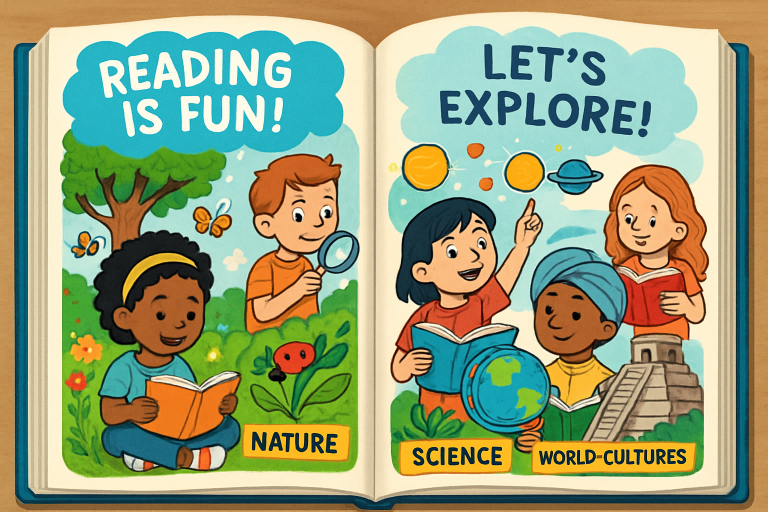
Illustrated books often serve as early introductions to global cultures, helping build acceptance and cultural competence. Pages depicting diverse traditions, foods, attire, and family structures provide windows into other communities and serve as mirrors for children to see themselves reflected in. Such representations foster empathy, curiosity, and respect, breaking down barriers and expanding worldviews from a young age. Visual storytelling can bridge linguistic gaps, nurturing understanding even before a child learns to read proficiently.
Building Emotional Connections with Characters
Characters in illustrated books often display clear emotional cues such as joy, sadness, fear, and wonder that resonate with young readers. Through expressive faces, nuanced body language, and dramatic settings, children recognize emotions, develop empathy, and see the effects of actions. This emotional literacy benefits social development, enabling children to articulate their feelings and understand their peers in group settings. Educators note that illustrated narratives make social themes such as friendship or resilience feel more real and relatable.
Supporting Visual Literacy Development
Visual literacy is now recognized as vital as traditional reading and writing. Navigating a world filled with images, charts, and infographics, children trained with illustrated educational books gain a head start. They learn to decode visual clues, compare and contrast artistic styles, and interpret charts or diagrams. These skills not only boost academic success but also enhance everyday problem-solving and communication, preparing learners for future challenges in an increasingly digital and image-oriented environment.
For those interested in exploring this topic further, consider reading “The Power of Storytelling in Childhood Education,” which highlights the role of storytelling in early development. Additionally, the evolving field of illustrated educational publishing is tracked by industry experts in the Publishers Weekly resource hub.