Leaks at 2 a.m., flapping fabric in a crosswind, puddles under your sleeping bags—most campers have been there. Price alone doesn’t fix those problems; materials, structure, and layout do. If you’re comparing outdoor tents for real trips, the question isn’t “how cheap,” it’s “how many dry, quiet nights will this shelter deliver over the next few years?”
Premium air-beam construction keeps geometry stable when gusts build. Breathable, weather-tight fabric manages condensation instead of trapping it. Standing-height interiors and smart zoning turn a campsite into a livable base, not a cramped bunker. That’s why a serious inflatable can land near $2,000—and why it can still be the rational choice in family camping tents when you account for seasons of use. RBM Outdoors focuses on dependable comfort in real weather, so families spend less time troubleshooting and more time actually camping. If you need extra room for kids, gear, or longer stays, explore large camping tents to see how space and stability change the experience.
What usually fails — and why the cheap option costs more
The weak spots are predictable:
- fabric that wets out — thin coatings saturate and sag, water pools, and seam lines wick; the fly sticks to the inner and starts dripping.
- rigid poles under gusts — kink, crack, or permanently bow; once geometry is off, doors stop sealing and leaks start.
- zippers and seams — light tape and short bar tacks fail under tension; sliders chew fabric when the canopy is loose and flapping.
- condensation control — non-breathable skins trap humidity; by morning, bags and liners are damp even if it never rained.
- floor abrasion — thin bases crease and puncture; moisture wicks up from ground contact.
The hidden bill isn’t just a replacement tent. It’s patch kits, emergency tarps, ruined sleeping gear, lost weekends, and the stress of managing problems at 2 a.m. Add the replacement cycle every season or two and your “budget” shelter often costs more per year than a premium inflatable that stays taut, vents correctly, and holds shape in weather. Price per season — not sticker price — is what tells the truth.
Materials and engineering that change the experience
Price follows fabric, beams, hardware, and the tolerances that hold everything together. That’s not marketing—it’s what keeps a shelter dry, quiet, and usable when weather lingers.
Breathable, weather-tight skin
A quality polycotton canvas balances protection and airflow. Fibers swell slightly when damp, tightening the weave to resist seep-through while still letting moisture escape. The result is less clamminess, fewer drips from condensation, and a calmer interior in wind.
Air beams that flex and recover
Reinforced bladders inside protective sleeves distribute loads and bend under gusts, then spring back. No kinks, no cracked joints, and far fewer stress points around doors and windows. Pressure control and proper baffling keep the canopy tensioned so zippers track clean and panels don’t slap.
Geometry that stays true
Catenary cuts, real seam allowances, and bias-tape reinforcements help the shell keep its shape. Guyout placement matters: wide stake angles and continuous lines hold the fly off the inner, keep vents working, and prevent water from bridging onto the body.
Floors and interfaces built for abuse
A durable bathtub floor resists abrasion and edge wicking. Taped and bound seams, shielded zippers, and storm flaps stop spray from creeping in at the places you use most. Doors open and close under tension without chewing fabric.
Repeatable setup = longer life
Clear valve layout, logical anchor points, and color-coded hardware make the same, solid pitch easy to reproduce. Consistent tension reduces flapping, protects stitching, and extends service life—especially noticeable on day three of rain when lesser tents start to sag.
Built for family living, not just sleeping
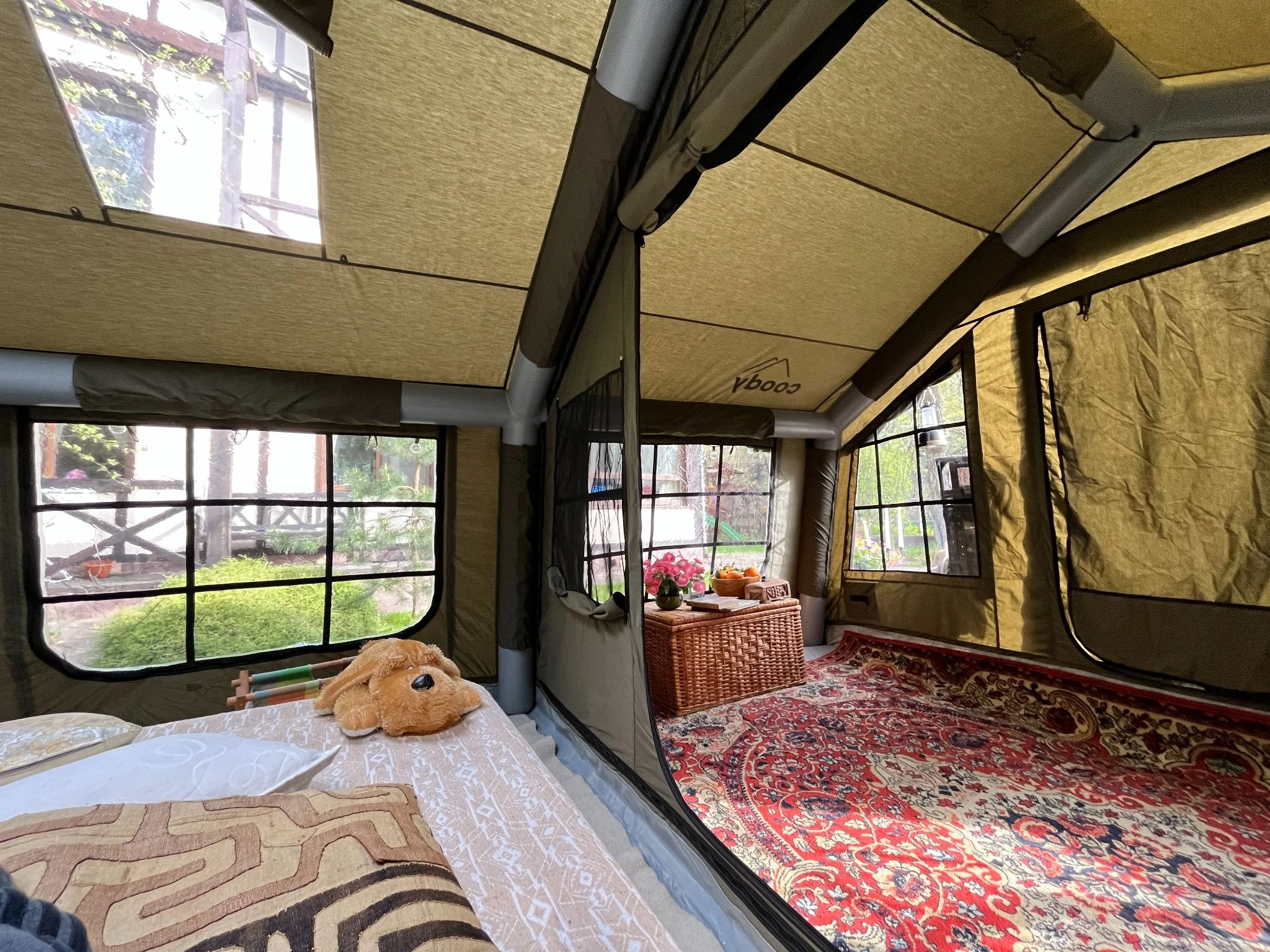
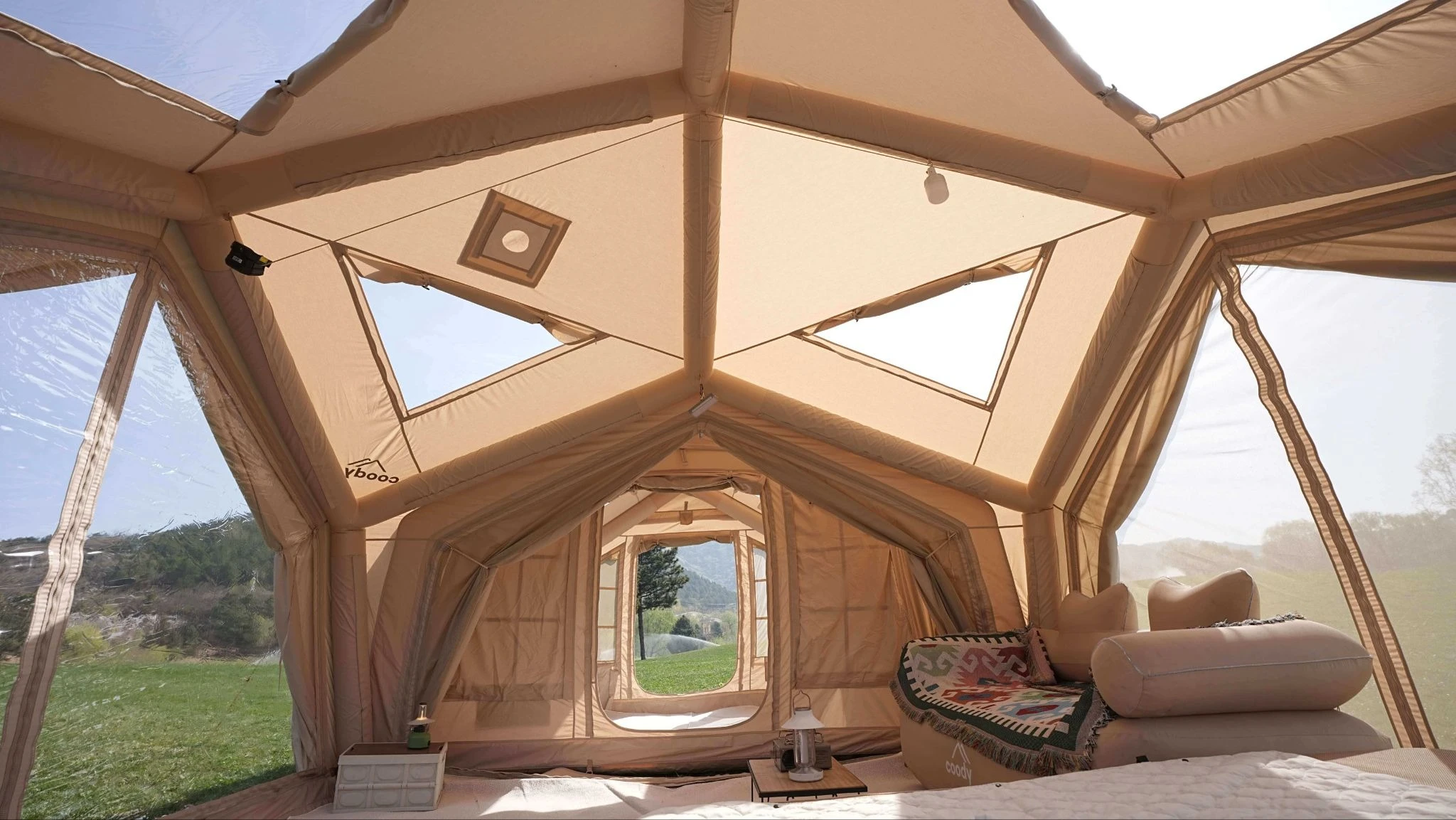
A tent that works for families does more than sleep four. Standing-height zones let adults move, dress, and cook upright. True separation between sleep and day space keeps naps quiet while the rest of the camp stays active. Wide doors and straight paths reduce tripping and midnight chaos; covered entries create a dry “mudroom” for boots and wet layers so the floor stays clean.
Light and privacy matter. Clear panels brighten gray days; mesh and blackout options control glare at dawn and make early bedtimes easier for kids. Vent paths are designed to move air without drafts across sleeping bags, and window geometry avoids direct sightlines from neighboring sites. Thoughtful storage—overhead lofts, corner pockets, and gear loops—keeps essentials off the floor and easy to find.
Small details lower the mental load: zippers that run under tension without snags, guy points you can reach without crawling, and a layout that allows one parent to handle setup while the other manages dinner or bedtime. The result isn’t luxury for its own sake—it’s a calmer, drier, quieter base that helps everyone last longer outdoors and wake up ready for the next day.
Designed for real weather, not perfect forecasts
Forecasts change. What matters is how a shelter behaves when wind shifts, rain settles in, or a cold front slides through overnight. A premium air-beam frame keeps panels tensioned so the fly doesn’t slap, vents stay open, and doors seal even as gusts build. Breathable fabric manages moisture from the inside out, cutting the clammy chill that shows up when a non-breathable shell traps humidity.
Control is the theme: high/low vents that keep air moving without drafts across sleeping bags; guy points placed wide so the fly clears the inner and sheds water instead of bridging; storm flaps that block spray at the places you touch most. With a repeatable pitch, the canopy stays quiet, zippers track clean, and the floor stays drier by morning—even after hours of mist and onshore breeze.
The payoff is simple and noticeable:
- fewer cold spots and less condensation drip
- stable geometry in crosswinds, not a collapsing sail
- quieter nights, better sleep, and gear that stays dry
- a tent that looks and works the same on day three of rain as it did on day one
What you’re really paying for (value highlights)
Not a logo or a spec line—predictable comfort over many trips. A premium inflatable tent trades cheap thrills for repeatable results when weather and fatigue stack up.
- stable geometry in wind — air beams flex and recover, keeping doors sealing and vents working
- dry, breathable nights — a skin that sheds rain yet lets moisture escape, so bags and layers stay usable
- quiet canopy — taut panels reduce flap and rattling that wreck sleep and patience
- standing-height livability — real room to cook, sort gear, and manage bedtime without chaos
- clean setup, clean takedown — consistent pitching protects seams, zippers, and coatings
- durable floor and interfaces — fewer punctures, less edge wicking, less emergency triage
- serviceable components — beams and hardware you can maintain instead of binning a whole tent
- time saved — fewer midnight fixes, fewer rescheduled weekends, more actual camping
- lower cost per season — fewer replacements and write-offs as nights accumulate
Price becomes sensible when you count the seasons you’ll use it and the problems you won’t have to solve. The value is a shelter that behaves the same on day three of rain as it did on day one—dry, quiet, and ready for the next morning.
Conclusion
If you camp in real weather and want trips to feel calm instead of fragile, the price begins to make sense. You’re paying for structure that holds its shape, fabric that stays dry yet breathes, and a layout your family can live in when plans change. That combination turns a tent into a dependable part of your routine rather than a gamble against the forecast. For some campers, a simple fair-weather shelter is enough. For others, the value is in quiet nights, predictable mornings, and seasons of use that don’t end in repairs. That’s the promise a premium inflatable aims to keep—and the standard RBM Outdoors builds toward.