Key Takeaways
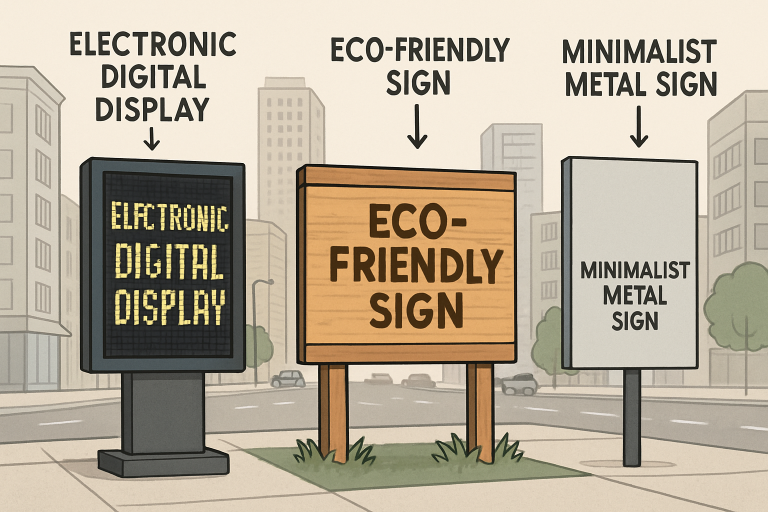
- Integration of digital and interactive technologies enhances customer engagement by making signage more responsive and dynamic.
- Eco-friendly materials and sustainable practices are becoming industry standards for environmentally conscious brands.
- Minimalist and clean designs improve readability and brand perception by cutting through visual clutter.
- Customization and adaptability in signage allow for dynamic content updates and flexible branding strategies.
As the business landscape evolves, so does the approach to outdoor signage. Rapid advances in technology are shaping modern outdoor business sign solutions, driven by the growing demand for eco-friendly practices and the evolving preferences of contemporary consumers. Companies today understand that their signage is more than a communications tool it’s a crucial brand touchpoint and differentiator in a crowded marketplace. A strategically designed and placed sign has the power not only to attract foot traffic but to communicate your brand’s personality and values instantly. Businesses catering to modern shoppers recognize that signs can create an immediate first impression, and this impression is crucial in a competitive environment where every small advantage counts. Today’s signs are no longer static objects; they are dynamic, adaptable, and often interactive channels for direct, continuous communication with potential customers.
Staying ahead of signage trends is essential for brands to remain appealing and memorable. Businesses must strike a balance between aesthetics, sustainability, and innovation to maximize the impact of their signage. As customers become more discerning, those who invest in quality and eco-consciousness attract greater attention. Adapting to trends reflects adaptability and values that resonate with modern consumers. The article examines significant trends in visual communication through outdoor signs and discusses how to capitalize on these advancements for effective brand connection and success.
Embracing Digital and Interactive Technologies
One of the most transformative trends in the industry is the adoption of digital and interactive technologies. Digital displays, touchscreens, and motion-activated signage enable businesses to update messaging instantly, provide engaging content, and interact with customers in real-time. For example, restaurants can rotate menus and promote new specials within seconds, while retail stores use sensors to detect shoppers and display targeted advertisements. Interactive kiosks can guide visitors through complex areas, offer wayfinding assistance, or provide virtual product demonstrations, thereby making the customer experience more seamless and informative.
Brands investing in interactive technology are seeing tangible results; research from Forbes confirms that digital signage increases visibility and consumer engagement. These interactive features cater to the demands of tech-savvy audiences, enhancing a more personalized brand experience. Not only do they draw longer attention spans, but they also gather data, allowing businesses to optimize future messaging. As digital hardware becomes more affordable and robust, even small businesses can employ these solutions for targeted, timely promotions.
Prioritizing Sustainability in Signage Materials
As global awareness of environmental protection grows, businesses are increasingly choosing sustainable signage materials, including recycled metals, biodegradable plastics, and responsibly sourced wood. Energy-efficient LED and solar-powered lighting are also replacing traditional options, further reducing environmental footprints. These changes reflect a growing consciousness among both companies and consumers regarding the preservation of natural resources, as well as an understanding of the long-term cost benefits of energy-saving technologies.
Consumers increasingly prefer companies that align with their green values. A commitment to sustainability not only helps preserve the environment but can also enhance brand reputation among eco-conscious audiences, according to The New York Times. Businesses implementing visible eco-conscious practices through their signage send a clear message of responsibility and care for the planet, which can translate into customer loyalty and positive word-of-mouth. Investing in green signage solutions, such as those made from soy-based inks or upcycled frames, also sets a precedent for innovation within your sector, prompting a ripple effect among competitors and partners.
Adopting Minimalist and Clean Designs
Minimalism remains a dominant trend in outdoor business signage design. The focus is shifting toward less cluttered, highly readable layouts that help key messages stand out instantly. Clean lines, prominent typography, and bold contrasts ensure that branding is instantly recognizable, even from a distance. As people are increasingly inundated with advertising and marketing messages throughout their day, signs that are straightforward to interpret are highly effective.
By stripping away unnecessary details, minimalist signage effectively channels consumer attention to a brand’s core message while emphasizing professionalism and clarity. This modern aesthetic is especially valuable as urban environments become more saturated with visual stimuli. Minimalist design also lends itself well to future branding adaptations, as less ornate logos and layouts tend to be more timeless and versatile. In settings where legibility and immediate recognition are most crucial, such as busy intersections or shopping plazas, less is definitely more.
Incorporating 3D and Kinetic Elements
Three-dimensional effects and kinetic features add depth, uniqueness, and movement to static information, enhancing its visual appeal. Raised lettering, three-dimensional emblems, and elements that spin or sway with the wind bring signage to life, capturing passersby’s attention in ways flat signs cannot. The extra dimension adds both tactile and visual interest, encouraging people to engage with your sign and, by extension, your brand narrative.
These innovations make signage more dynamic, engaging, and memorable—often creating conversation points and photo opportunities that amplify word-of-mouth marketing. Well-executed 3D elements can even become landmarks in themselves, acting as boosters for social media engagement when customers share their experience online. Whether used as a central branding piece or an accent feature, 3D signage demonstrates creativity and an understanding of how to create lasting impressions.
Leveraging Customization and Adaptability
Modern businesses are utilizing customization to reflect their unique voice and differentiate themselves from competitors. Bespoke shapes, materials, and color schemes help communicate brand identity, while modular or interchangeable panels make it easier to update messaging for promotions or seasonal campaigns. Adaptable signage streamlines operations and future-proofs your investment as business needs change. The ability to change graphics or switch panels without needing entirely new signs saves on long-term costs and makes response times quicker during rebranding or marketing pushes.
Customization also allows brands to be highly local and context-specific. For example, a business can incorporate local icons, language variations, or community references, increasing relevance and emotional connection. This adaptability is crucial in today’s fast-paced world, where marketing messages must be tailored and updated to suit rapidly changing trends and customer preferences.
Integrating Smart Technology
The integration of innovative features such as embedded QR codes, Bluetooth beacons, or NFC chips enables customers to seamlessly access menus, product catalogs, and digital offers from their smartphones. These technologies bridge the gap between offline and online experiences, creating new opportunities for engagement and data collection. For example, a sign advertising a current promotion could include a QR code that, when scanned, directs the customer to a landing page with more details or even an online ordering portal.
Bright signage can gather real-time data on user interactions, foot traffic, and demographics, providing businesses with valuable insights for refining their marketing strategies. Additionally, innovative features can enhance accessibility by providing instant translations or audio assistance for visually impaired visitors. The convenience and innovation of these features ensure that businesses remain at the forefront of the customer experience curve.
Embracing Retro and Vintage Styles
Alongside futuristic trends, retro and vintage designs are enjoying a resurgence. Classic color palettes, nostalgic fonts, and distressed finishes offer timeless appeal, helping brands evoke authenticity and a sense of history. This aesthetic is especially popular among establishments seeking to convey trustworthiness or local heritage, such as boutique hotels, eateries, and specialty shops. The use of hand-painted signs or neon tubes can tap into collective memories, creating an inviting, familiar atmosphere that stands out from the digitally dominated landscape.
Retro signage styles not only attract those who appreciate nostalgia but also signal durability, consistency, and respect for tradition. These designs are particularly effective in historic districts or when marketing to a demographic that values authenticity over fleeting trends. By thoughtfully incorporating vintage elements, businesses can bridge generations and forge connections rooted in shared cultural references.
Conclusion
The scope and possibilities for outdoor business signs are expanding rapidly. With advancements in digital, sustainable, and interactive technologies, businesses can craft memorable and responsible visual identities. Embracing minimalist, customized, and even nostalgic elements enhances both form and function, ensuring signage stays relevant and impactful. Today’s outdoor signage, when thoughtfully designed and regularly updated, has the power to support marketing efforts, deepen customer loyalty, and express a brand’s commitment to both innovation and authenticity. Staying current with these trends is crucial for maintaining your business’s visibility, competitiveness, and alignment with evolving consumer expectations. In a rapidly changing world, making your mark through adequate outdoor signage is not just a marketing decision—it’s a strategic imperative.