Key Takeaways
- Advanced metal finishing techniques significantly improve component durability, appearance, and operational efficiency.
- Leading methods can tailor surface characteristics with precision, making them valuable across diverse industries.
- Automation and AI integration provide greater consistency and optimize production processes.
- Environmental responsibility is now central to the development of new finishing methods.
Metal finishing is more than just a final step in manufacturing. It is an essential process that unlocks the full potential of metal components by improving their durability, functionality, and appearance. Driven by research and by industries seeking higher efficiency and sustainability, advanced techniques have rapidly reshaped the field. To discover a broad range of metal finishing solutions powered by these advancements, explore https://www.royalcoatings.com/capabilities/metal-finishing/. Modern methods now address unique industrial challenges and open new possibilities for both traditional applications and cutting-edge manufacturing.
Industries are leveraging advancements in automation, artificial intelligence, and eco-friendly technologies to improve product performance and competitiveness in global markets. Modern methods address previous challenges related to consistency and environmental impact, enabling manufacturers across sectors like automotive and aerospace to produce longer-lasting parts with specific surface characteristics. This evolution supports stricter regulations and consumer expectations, as well as sustainability goals, by enhancing product lifecycles, reducing ecological footprints, and improving workplace safety. The trend towards innovation in metal finishing is fostering cross-industry solutions and new opportunities.
Laser Surface Texturing for Enhanced Performance
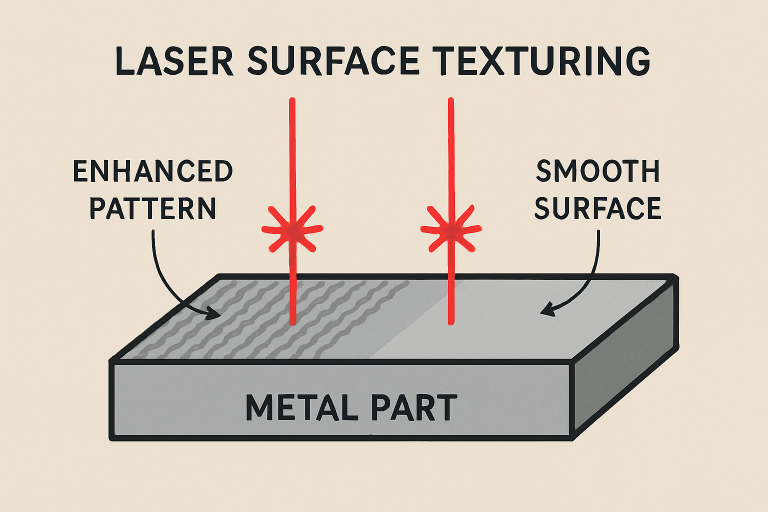
Laser surface texturing (LST) is transforming how industries like automotive and aerospace approach critical component design. This technique uses concentrated laser beams to etch microscopic patterns onto metal surfaces, deliberately engineering properties such as friction, wear resistance, and adhesion. By meticulously controlling surface roughness, manufacturers can reduce friction in engine parts, for instance, thereby improving fuel efficiency and reducing wear over time. LST’s ability to create highly repeatable patterns gives engineers unprecedented flexibility when tailoring parts for performance in harsh or demanding environments.
Magnetic Abrasive Finishing for Complex Geometries
Certain industries require extremely smooth, uniform surfaces within intricate geometries, which traditional finishing methods often cannot achieve. Magnetic abrasive finishing (MAF) addresses this challenge by using magnetic fields to direct abrasive particles precisely along the workpiece surface. This is particularly advantageous for items such as medical implants and aerospace components, where both internal and external surfaces must meet stringent safety and functional specifications. The resulting surfaces are free of microdefects, resulting in longer life and better reliability. MAF also offers efficiency, speeding up finishing times and reducing the risk of damage to sensitive components.
Integration of Automation and AI in Metal Finishing
Automation and artificial intelligence are now pivotal in metal finishing, enabling manufacturers to automate tasks such as coating application, surface inspection, and thickness measurement with high repeatability. Robotic units handle parts consistently, maximizing throughput and minimizing errors rooted in manual labor. AI systems can monitor every stage of the process, adapting in real-time to deviations or predicting maintenance needs before breakdowns occur. These smart strategies help companies lower production costs, reduce waste, and maintain quality standards. The integration of AI not only ensures the highest standards are met but also improves workplace safety by minimizing human exposure to hazardous substances.
Environmental Considerations in Modern Metal Finishing
Environmental awareness is continually shaping the future of metal finishing. Manufacturing processes historically relied on harsh chemicals and significant water usage, which are increasingly unacceptable under modern regulations and sustainability goals. Current innovations offer alternatives such as supercritical carbon dioxide cleaning, which leaves no toxic residue and requires less energy than conventional cleaning agents. Advanced coatings now leverage water-based or plant-derived materials while still providing corrosion resistance and functional benefits. These eco-conscious solutions enable continued productivity while substantially reducing the environmental impact of manufacturing operations.
Applications Across Various Industries
Metal finishing techniques are not confined to a single sector. Their adoption is widespread and continues to grow as demands for product longevity and quality increase. In the automotive industry, advanced finishes on engine and transmission parts improve efficiency and reduce emissions. Aerospace firms rely on these processes to ensure that critical components withstand temperature extremes, vibration, and long-term stress. In the medical sphere, exceptionally smooth, biocompatible finishes are vital for implants and devices to avoid patient complications. Meanwhile, electronics manufacturers depend on precision surface treatments to shield sensitive parts from corrosion and wear, ensuring device reliability over extended use.
- Automotive: Optimizing engine surfaces and internal moving parts for increased fuel efficiency and long-term durability.
- Aerospace: Protecting high-value components from wear, corrosion, and fatigue failure in demanding flight environments.
- Medical Devices: Achieving strict smoothness and biocompatibility requirements for implants and surgical tools.
- Electronics: Guarding components against oxidation and extending product life in sensitive assemblies.
Future Trends in Metal Finishing
Future developments in metal finishing promise to push boundaries even further. Nanotechnology is enabling the creation of coatings and treatments at the molecular scale, enhancing surface properties to levels previously unattainable. Manufacturers are also combining the precision of advanced finishing with the flexibility of 3D printing to produce customized, high-performance components with complex shapes directly. Innovative smart coatings are emerging that respond to environmental changes or automatically repair damage, enabling longer-lasting, more adaptive surfaces. These trends are certain to reshape expectations in numerous industries by providing unprecedented performance.
Conclusion
As the landscape of metal finishing continues to evolve, companies across all industries benefit from the improved quality, sustainability, and adaptability these advanced techniques provide. By remaining at the forefront of technological change, manufacturers ensure their products perform reliably under the toughest conditions and for the longest durations possible. Advanced metal finishing is a cornerstone of modern manufacturing, equipping businesses to meet higher standards and anticipate future demands.