Key Takeaways
- Flexible academic pathways are essential for fostering engagement, achievement, and well-being in gifted students.
- Academic acceleration, differentiated instruction, and cluster grouping support gifted education.
- Collaborative planning, robust resources, and open communication underpin successful implementation.
Table of Contents
- Understanding Flexible Academic Pathways
- Benefits for Gifted Learners
- Strategies for Implementation
- Challenges and Solutions
- Real-Life Examples
- Conclusion
Gifted students in traditional educational settings often confront a one-size-fits-all curriculum that fails to address their unique learning needs. This mismatch hinders their academic development and risks disengagement and underachievement. By introducing flexible academic pathways, schools can provide programs and schedules that empower these learners to thrive. Central to this approach is incorporating enrichment opportunities such as character education classes, which help cultivate critical lifelong skills beyond core academics.
Flexible pathways are tailored to accommodate advanced aptitude and curiosity, ensuring that learning is neither monotonous nor superficial for gifted students. These education models respect students’ readiness for more complexity and real-world problem-solving, boosting motivation and fostering resilience. Implementing such changes calls for thoughtful coordination, but the rewards are evident in the lives of students who finally feel challenged and understood.
Providing gifted students with the proper support has implications for individual growth and schools as a whole. When these learners feel valued, they become more involved in their education and often inspire their peers, contributing to an enriched environment for everyone.
The strategies supporting flexible academic pathways are diverse, including acceleration, differentiated instruction, and creating opportunities for social-emotional growth. Edutopia highlighted that fostering talent requires structural adaptation and cultural support within schools, ensuring that every student’s unique needs are met and talents are nurtured.
Understanding Flexible Academic Pathways
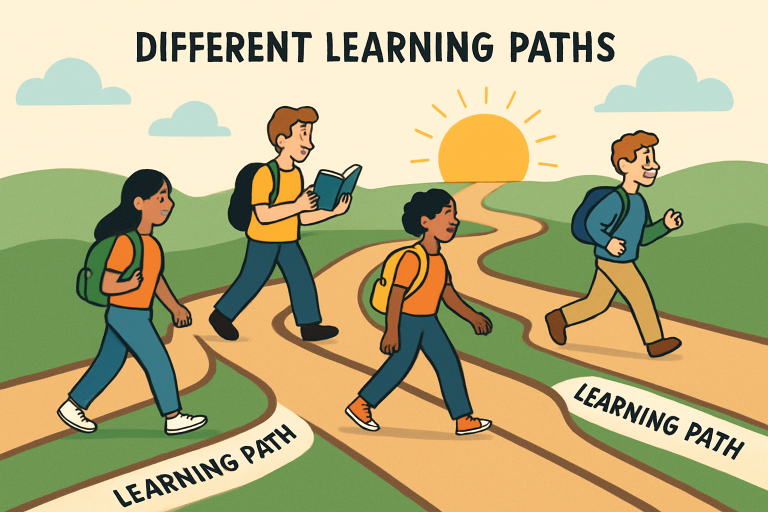
Flexible academic pathways encompass a wide range of methods that allow educators to adapt the learning environment and curriculum pacing to match students’ individual readiness and interests. For gifted learners, this means abandoning rigid, age-based progression in favor of options like subject acceleration, compacted lessons, or project-based independent studies. This adaptive approach helps gifted students experience the intellectual stimulation they crave while learning alongside peers with similar capabilities.
Rather than being bound by standard grade-level expectations, gifted students benefit from being able to progress as they master content, access enrichment opportunities, and explore advanced topics, all while gaining skills vital for life beyond the classroom.
Benefits for Gifted Learners
Implementing flexible pathways is transformative for gifted learners and their school communities. First and foremost, it dramatically boosts engagement when students can interact with appropriately challenging material, they become more motivated and dedicated to learning.
- Enhanced Engagement: Flexible systems reduce boredom and foster a genuine love of learning.
- Academic Growth: Students progress at a pace encouraging deep mastery, leading to greater academic achievement and sustained curiosity.
- Social-Emotional Well-being: Gifted learners often struggle with feelings of isolation; flexible pathways allow them to connect with intellectual peers, bolstering confidence and a sense of belonging.
Research from resources such as The National Association for Gifted Children (NAGC) underscores the necessity of tailoring academic environments to gifted learners’ strengths to unlock their full potential.
Strategies for Implementation
Schools can craft flexible pathways by integrating several well-developed strategies:
Academic Acceleration
Academic acceleration enables students to move through the standard curriculum faster or skip entire grade levels, ensuring continued intellectual stimulation. Decades of research confirm that acceleration yields significant academic gains and generally improves social adaptation for gifted students. The Trevor Day School, for example, has tailored accelerated math and science tracks in response to students’ demonstrated readiness, leading to outstanding academic engagement and achievement.
Differentiated Instruction
Through differentiated instruction, teachers modify content, process, and expectations based on individual student readiness and interests assessments. Effective differentiation necessitates ongoing training for educators, as gifted children often need opportunities to work at greater depth and complexity or pursue independent research projects.
Cluster Grouping
Cluster grouping—placing gifted students together within a larger, heterogeneous classroom—allows teachers to deliver targeted instruction while maintaining diverse classroom dynamics. Studies consistently demonstrate that cluster grouping enhances learning outcomes and encourages gifted students to challenge and support each other in healthy, collaborative environments.
Challenges and Solutions
The shift to more flexible and responsive educational pathways comes with challenges, but these are not insurmountable:
- Resource Allocation: Funding and staffing for specialized programs can strain budgets. Schools can supplement resources by seeking external grants, involving community partners, and leveraging volunteer expertise.
- Teacher Training: Many educators lack a background in gifted education. Regular, in-depth professional development ensures that all students receive instruction that matches their abilities.
- Parental Concerns: Some parents worry that acceleration or differentiation may impact their child’s social life. Open, ongoing communication encourages joint goal-setting, addresses concerns, and helps families support their child’s educational journey.
Real-Life Examples
Mackintosh Academy
Mackintosh Academy serves as a prime example of differentiation in action. Its tailored curriculum and flexible grouping strategies have measurably improved student well-being and academic performance. The school’s emphasis on supporting advanced academic and emotional needs sets a benchmark for what gifted education can achieve.
Vanguard Gifted Academy
Vanguard Gifted Academy’s STREAM-based curriculum personalizes education for every student, integrating science, technology, engineering, arts, and mathematics into daily learning. Their approach underscores that holistic, individualized pathways dramatically increase engagement and achievement for gifted learners, resulting in a community where intellectual curiosity is the norm.
Conclusion
Gifted learners deserve educational experiences as unique as their talents. Flexible academic pathways offer these students the challenge, encouragement, and support they require to flourish. When schools embrace academic acceleration, differentiation, and innovative grouping models, the results are profound—gifted students thrive academically, connect socially, and mature into well-rounded individuals ready to make a difference in the world. Through thoughtful planning and a commitment to equity, schools can cultivate a dynamic environment where all students reach their highest potential.