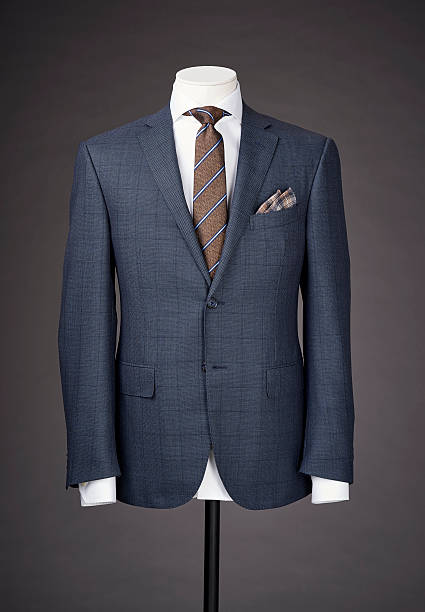
Have you ever seen a person in a suit and thought, “Wow, that jacket looks incredible,” and didn’t know quite why? It was the way the jacket seemed to be a part of them, moving with a quiet confidence. It likely had a sense of structure, of history, and of artisanal touch that you just don’t find off the rack. Chances are, you were admiring a suit jacket with a feature known as the “French drape.”
In this article, we’ll break down its three key components (the draped shoulder, the roping, and the collar roll) into easy-to-understand concepts. By the end, you’ll not only know what to look for, but you’ll also appreciate the incredible skill required to create it. By using your 22Bit login, you implement your own talent and abilities to a passion of yours that might actually pay off in the future, of which you can reinvest into a dashing and impressive closet of your own!
What is a French Drape?
The French drape is a specific way of cutting and constructing the shoulder and chest of a suit jacket. Its goal is to create a clean, sharp, and elegant silhouette while allowing for ease of movement and comfort. The term “drape” can be a little misleading. In tailoring, “drape” refers to the way the material is shaped and arranged over the body’s form.
A cheap suit jacket is like a paper bag. It hangs off your shoulders in a straight, boxy line. A jacket with a French drape, however, is more like a well-fitted leather glove. It is meticulously shaped to follow your contours, but it also adds its own distinct structure and personality.
The magic of the drape is achieved through extra cloth that is carefully suppressed and stitched into the seams around the shoulder and armhole. This creates a soft, vertical fold or pleat of fabric running from the shoulder down towards the chest. The extra room allows you to move your arms freely without the entire jacket pulling and straining across your back.
The Three Pillars of the Drape
One must understand the three elements of this style that make it complete. They work in harmony, and a flaw in one can undermine the beauty of the others.
The Shoulder Expression: The Foundation
The shoulder of the jacket is its foundation. Everything else hangs from this anchor point. “Shoulder expression” simply refers to the shape and style of the jacket’s shoulder where it meets the sleeve.
In a French drape, the shoulder has a very distinct build. It typically features light padding that follows the natural slope of the client’s own shoulder, but it’s built up just slightly at the very end to create a clean, square line. This padding is there to create a crisp, architectural edge.
The most critical part of the shoulder is the armhole. On a bespoke jacket with a drape, the armhole is cut remarkably high and close to the armpit. This might sound uncomfortable, but when done correctly, it’s the opposite. A high armhole acts as a pivot point. When you raise your arm, the jacket moves with your body, instead of the entire jacket lifting up.
The Art of the Roping
Now, let’s look at where the sleeve attaches to the shoulder. This is where we find “roping.” Look at the very top of the sleeve head, right where it sews into the shoulder seam. Do you see a small, rolled, rounded bump of fabric that sits along that seam? That’s roping.
This is not an accident. It is a deliberate, hand-made detail. To create roping, a stitcher will sew a small, narrow wad of yarn or felt (called a “sleeve head rope”) along the very top edge of the arm sleeve before it is attached. Then, when it is meticulously sewn into the armhole by hand (a process called “setting the sleeve”), this padding creates that subtle, proud roll of fabric.
The Collar Roll: The Final Touch
The collar of a suit jacket should never look like it’s choking the neck. It should rest gently against the shirt collar beneath it, with a soft, smooth curve. This is the “collar roll.” A perfect collar roll is one of the most difficult things to achieve. It’s the final, crucial element of this look.