Table of Contents
- Smart Cleaning Technologies
- Green Cleaning Initiatives
- Enhanced Sanitation Protocols
- Data-Driven Cleaning Practices
- Adaptation to Hybrid Work Models
- Cost-Plus Cleaning Models
- Specialized Cleaning Services
- Final Thoughts
The commercial cleaning industry is undergoing a revolution, driven by rapid technological advancements and growing pressure to operate sustainably. As client demands evolve and new challenges such as pandemic preparedness and hybrid workplaces arise, the approach to maintaining safe, spotless environments is shifting in remarkable ways. Businesses today understand that ensuring a pristine workspace cannot be achieved alone; instead, it is best addressed by partnering with a trusted commercial cleaning provider that is forward-thinking in its use of technology and green practices.
Facilities managers, property owners, and business leaders face mounting expectations not only for more efficient cleaning, but also for practices that support public health and sustainability objectives. Innovations such as AI-driven scheduling, robotic cleaners, and IoT sensors are transforming previously manual or routine activities into intelligent, optimized workflows. This shift enables human cleaners to focus on complex, detail-oriented tasks, while technology enhances both productivity and consistency. Staying informed on these changes is essential for maintaining standards and remaining competitive.
Emerging industry standards also emphasize the importance of transparency and a data-driven approach to cleaning services. More companies are looking to external certifications, third-party audits, and evidence-based cleaning schedules to ensure quality and compliance with health guidelines. With stakeholders more interested than ever in measurable and visible cleanliness results, communication between cleaning providers and business clients is critical.
Smart Cleaning Technologies
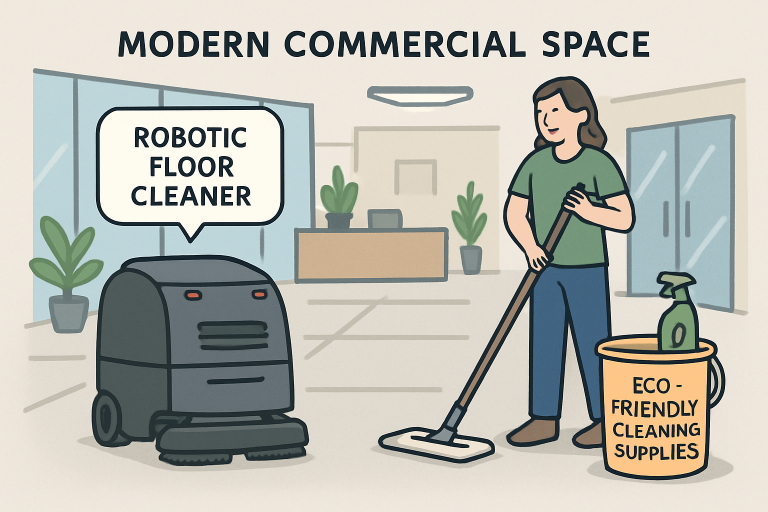
Tech-driven cleaning is at the forefront of the industry’s transformation. Autonomous equipment, such as robotic vacuum cleaners and AI-powered scrubbers, now handles repetitive floor maintenance, saving labor hours and ensuring uniform results every time. IoT-connected devices such as occupancy sensors and air quality monitors allow cleaning procedures to be tailored to real-time needs. For example, sensors can prompt restroom cleaning after a certain number of uses, rather than relying on static schedules. These innovations enhance both service delivery and cost efficiency, making them attractive investments for facilities of all sizes.
Green Cleaning Initiatives
Modern businesses are increasingly eco-conscious, and commercial cleaners are adapting accordingly. Shifting away from harsh chemicals and wasteful practices, new green cleaning initiatives leverage biodegradable, low-toxicity products and microfiber cleaning materials. Companies seeking to reduce their environmental footprint have found that green cleaning also benefits employee health improving air quality and reducing allergic reactions. Pursuing certifications such as Green Seal or LEED for cleaning operations can strengthen a business’s environmental credentials and help attract sustainability-minded clients and employees.
Enhanced Sanitation Protocols
The COVID-19 pandemic transformed expectations for disinfection and hygiene in commercial spaces. Leading cleaning providers have responded by integrating advanced technologies such as UV-C light sterilization and electrostatic sprayers, which efficiently coat all surfaces with disinfectant and kill pathogens on contact. These new protocols have proved critical for vulnerable settings such as healthcare facilities and schools, providing robust protection against a range of bacteria and viruses. Enhanced cleaning routines, accompanied by thorough documentation and third-party verification, foster trust and demonstrate a commitment to public safety.
Data-Driven Cleaning Practices
Digitized cleaning schedules and AI-powered route planners are redefining how resources are allocated. By analyzing building occupancy data and traffic patterns, cleaning tasks can be targeted to high-touch or high-traffic areas, reducing waste and labor costs. Predictive analytics identify usage patterns, ensuring essential areas are prioritized while avoiding unnecessary cleanings in seldom-used spaces. This approach accounts for variable occupancy particularly relevant in hybrid offices—and delivers both efficiency and accountability. The use of data and analytics is also driving competitive differentiation among leading facilities management companies.
Adaptation to Hybrid Work Models
With remote and hybrid work models now prevalent, cleaning providers face new challenges regarding scheduling and the scope of work. Space utilization can change on a weekly or even daily basis, requiring agile and responsive cleaning teams. The partnership between cleaning companies and their clients has evolved from a transactional to a strategic level, with service providers collaborating closely to align cleaning frequency, timing, and areas of focus with fluctuating building usage. Proactive communication, flexibility, and the ability to ramp services up or down support optimal facility operations and contribute to workforce satisfaction and productivity.
Cost-Plus Cleaning Models
To accommodate these changing needs and variable work patterns, many cleaning vendors are shifting to cost-plus pricing models. Rather than agreeing to a rigid contract, this structure adds a consistent margin to actual hours worked. It provides transparency and fairness, aligning provider compensation directly with the effort involved. For property managers, it offers budget predictability and the flexibility to scale the service level up or down as needed without renegotiating the entire contract. This approach reflects the industry’s push toward more collaborative, mutually beneficial relationships between businesses and their cleaning partners.
Specialized Cleaning Services
The complexity of facilities across different sectors has fueled demand for industry-specific cleaning expertise. Healthcare, food processing, education, manufacturing, and hospitality all face unique health, safety, and compliance standards. Specialized cleaning services are designed with these requirements in mind, utilizing both trained personnel and industry-specific tools and chemicals. Providers who invest in staff training and certification stand out in an increasingly crowded market—offering peace of mind to clients with the most demanding service specifications.
Final Thoughts
The future of commercial cleaning is about agility, intelligence, and resilience. As innovation drives the development of new tools, methods, and partnership models, business leaders who prioritize adaptability whether through the integration of technology, a focus on sustainability, or robust strategic relationships will be best positioned to meet current and future facility needs. By embracing these modern approaches and seeking out expert guidance and specialized solutions, organizations can ensure safe, efficient, and inspiring environments for all who enter their spaces.