Key Takeaways
- Technology has streamlined the home-buying process, making it faster, more transparent, and more convenient.
- Digital tools such as VR tours, mobile apps, and online listings empower buyers with immediate access to detailed property information.
- AI, big data, and blockchain are reshaping decision-making and transactions with smarter insights and enhanced security.
- Modern buyers benefit from improved efficiency, personalized recommendations, and streamlined communication throughout the process.
Introduction
Technology is dramatically reshaping the home-buying journey, making it more accessible, transparent, and efficient for everyone involved. From digital listings to remote property tours, today’s buyers have unprecedented tools at their fingertips. Individuals searching for their next dream property, such as Bend, OR homes for sale, can access comprehensive information and browse homes from anywhere in the world.
Whether you’re a first-time buyer eager to learn more about the process or an experienced investor leveraging the latest market insights, understanding how technology integrates into each stage of home buying is essential. Digital advancements, such as virtual reality tours and smart contracts, now streamline searches and transactions, offering convenience, speed, and confidence to modern buyers.
Online Real Estate Platforms
The shift from traditional classifieds to online real estate platforms has revolutionized how buyers access property information. Industry giants such as Zillow and Realtor.com aggregate property listings across regions, displaying high-resolution images, virtual tours, and deep market analytics. These websites are more than digital catalogs—they offer buyers the ability to compare homes, neighborhoods, and prices with just a few clicks.
Advanced search filters allow users to narrow their choices by location, size, school districts, price, and key amenities, making the process more tailored and time-efficient than ever before. Many platforms also provide school ratings and insights about local communities, empowering buyers to make informed decisions. As a result, buyers often begin their journey online long before contacting an agent or visiting a home, highlighting the value of these digital tools.
Virtual and Augmented Reality Tours
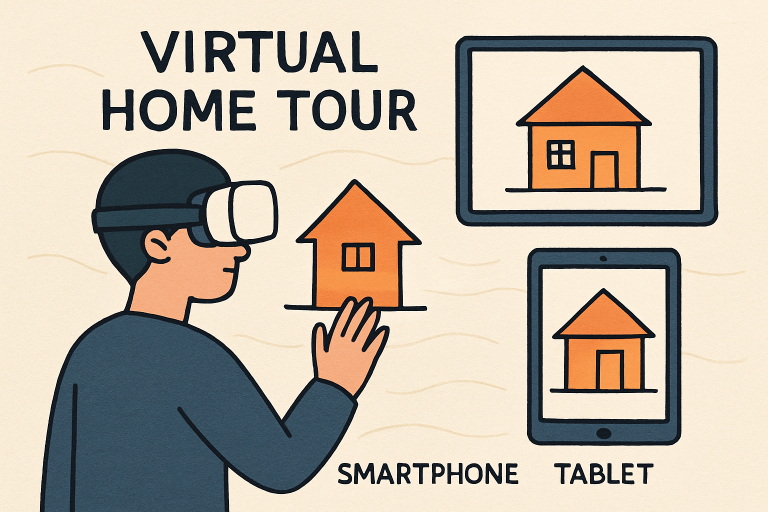
Virtual reality (VR) and augmented reality (AR) applications offer an immersive experience, allowing buyers to “walk through” homes from anywhere in the world. This technology breaks down geographical and logistical barriers that often complicate property searches. For busy professionals, out-of-town buyers, or anyone looking to maximize their time, virtual tours eliminate the need for multiple in-person showings.
AR doesn’t stop at viewing homes; it enables users to visualize changes in real time think new paint colors, furniture placement, or landscaping creating a stronger emotional connection to properties under consideration. This personalization helps buyers visualize the true potential of each home, making it easier to envision daily living within the space. Further enhancing this trend, VR and AR technology can be accessed via smartphones, tablets, or specialized headsets, democratizing access to immersive experiences.
Mobile Applications
House-hunting has become a mobile-first experience. Popular real estate apps provide users with powerful property search features, neighborhood statistics, and interactive maps directly on their smartphones. Instant push notifications keep potential buyers informed about new listings or price changes, ensuring they stay ahead of the competition in hot markets.
Direct messaging within these apps enables buyers to connect instantly with agents to ask questions, schedule showings, or negotiate terms. In-app calendaring tools and e-signature features also streamline the closing process, removing much of the paperwork traditionally involved. For those prioritizing efficiency, mobile apps provide a one-stop solution for browsing properties, communication, and transaction management.
Big Data and Artificial Intelligence
Big data and artificial intelligence (AI) have become powerful allies for modern home buyers. By processing massive datasets on housing trends, local market conditions, buyer behavior, and historical pricing, these tools generate actionable insights that inform decision-making. Automated valuation models help estimate the fair market value of properties in real-time, while predictive analytics can identify emerging neighborhoods or forecast future price appreciation.
AI-driven personalization creates curated home recommendations, surfaces relevant properties based on user preferences, and even customizes marketing materials for agents. For buyers, this reduces information overload and provides targeted results that better meet their individual needs and aspirations.
Blockchain and Smart Contracts
The introduction of blockchain in real estate is transforming transactions by increasing security, transparency, and efficiency. Blockchain enables the direct transfer of property titles between buyers and sellers without the need for multiple intermediaries. This not only lowers transaction costs but also drastically reduces the risk of fraud, as every step is securely recorded and verifiable on a decentralized ledger.
Smart contracts a key feature of blockchain systems automatically trigger payment transfers, title changes, and other contractual obligations when certain criteria are met. This removes the friction and uncertainty commonly associated with manual paperwork and bureaucratic processes. As blockchain adoption grows, buyers can expect faster and smoother closings, along with a trustworthy framework for one of life’s biggest investments.
Social Media and Online Marketing
Social media has emerged as a cornerstone of real estate marketing and discovery. Agents now leverage platforms like Instagram, Facebook, and YouTube to showcase properties through stunning visuals and virtual tours to wide audiences. Buyers, in turn, scan their feeds to spot listings, attend live-streamed open houses, and gain insights into agents’ personalities and expertise.
Targeted advertisements reach the right audience based on location, interests, and budget, providing sellers with maximum exposure and enabling buyers to access exclusive opportunities. Features such as Facebook Messenger and Instagram Direct streamline communication, enabling instant responses and quick-moving negotiations. Social media engagement also helps build trust and relationships long before buyers step into their new home.
Final Thoughts
Technology has fundamentally transformed the entire home-buying process, from the first online search to the final handshake at closing. Innovations such as digital listings, immersive tours, mobile apps, and blockchain have made the home-buying process faster, more informed, and less stressful for today’s buyers. As these tools and platforms continue to evolve, their influence will only deepen, further enhancing the accessibility and experience of finding and securing your next home.