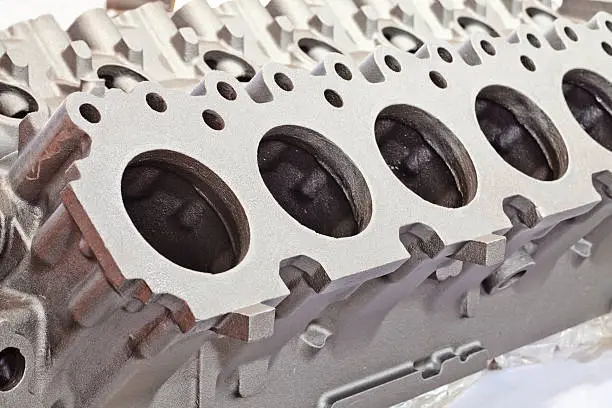
Prioritization of efficiency and integration in industrial manufacturing has become an industry standard. With the increase in demand for seamless integration of various processes in the manufacturing sector, companies in the aerospace, automotive, energy, and marine industries have begun requesting complex and high-quality metal products that are not only constructionally precise, but also usable and ready for assembly. These industry trends are shaping lost wax casting factory operations to provide fully integrated services that include surface finishing, machining, and assembly operations.
Finishing post-casting operations are extremely valuable, as they reduce lead times, lower production costs, and maintain quality across production stages. Benefitting B2B purchasers, the consolidation of production operations enhances supply chain management and product reliability.
Unlike the traditional casting workflows, this article highlights and discusses the integrated surface finishing capabilities of the lost wax casting factory and the industrial clients they service.
The Development of Integrated Precision Casting
Traditionally, casting facilities would work in a silo and only perform the casting work. This resulted in producing a single raw or semi-finished product that necessitated additional processing that would have to be done with another company. This type of production workflow created fragmentation of the production process, leading to a series of production inefficiencies like long lead times, quality assurance issues, and additional costs due to transport needed to move the products to the various companies involved in the workflow.
The modern-day lost wax casting factory is now a fully-fledged manufacturing partner. With the integration of casting, heat treatment, machining, finishing, and assembly, these facilities can perform all the stages of a manufacturing process starting from the idea and finishing with the final product.
Here’s what some of these one-stop facilities can do:
- Centralized production: No need to outsource the post-processing steps.
- Seamless coordination: Aligning of casting “silhouettes,” surface treatment, assembly.
- Fewer touch points within the process: Reduced risk of cost and time overruns.
- Better visibility: Defect detection and control at all stages of manufacturing.
Advanced metal casting manufacturers and integrated facilities increase efficiency, reliability, and reduce costs through process outsourcing, and B2B clients can save on resources and time, all of which are vital for being competitive.
The Role of Surface Finishing in Precision Casting
Surface finishing is an essential post-casting process in precision manufacturing. Apart from improving the aesthetic value of the metal components, it also enhances some of the physical and mechanical features of the components, enhances the corrosion resistance of the component, and enables the component to perform better in harsher conditions.
Some of the common finishing techniques used in lost wax casting factory operations are:
- Polishing and Buffing: Removes surface imperfections and gives the surface a smooth and high luster finish.
- Sandblasting and Shot Blasting: Improves surface texture, adhesion, and uniformity.
- Passivation: Restores stainless steel’s protective oxide layer and enhances corrosion resistance by removing surface contaminants.
- Electropolishing: Produces ultra-smooth surfaces suitable for food and medical industries.
- Coating Plating: Functional layer additions, such as zinc, nickel, or chromium, for wear and corrosion resistance.
Each method is chosen according to the component’s material, purpose, and the environment it will be in. For instance, aerospace components may have specific surface treatments to reduce drag, while marine hardware surface finishes for wear and corrosion resistance.
All treatments have to maintain the same professional quality to meet the casting requirements, producing consistent final products in appearance, strength, and functionality.
Furthermore, it eliminates the potential for problems to crop up through the stages to ensure there are no discrepancies with the specifications as every component is produced to the full satisfaction and tolerances of the customer without compromising quality.
Quality Control that Comes from Integration
When integration involves surface finishing and assembly, the quality of the entire process is easier to maintain at a steady state. A fully equipped lost wax casting factory employs an integrated center of quality that oversees and validates every process in the production continuum.
Some of the quality control measures are:
- Dimensional inspection: Use of Coordinate Measuring Machines (CMM) to ensure compliance within the defined tolerances.
- Non-destructive Testing (NDT): Use of ultrasonic, X-ray, and dye penetrant inspections to locate flaws that are otherwise hidden.
- Surface analysis: Checking to ensure that the required surface roughness is achieved and that the coatings are securely bonded.
- Mechanical testing: Assessment of the finished assembly to determine its tensile strength, hardness, and resistance to fatigue.
- Functional testing: Simulated operational conditions are applied to the assembly in order to verify its operational performance.
When all of these steps occur within the same facility, the result is a tightly integrated working environment, permitting exceptional process control, where the data from each operation is available in a timely manner to make adjustments to the other process, leading to faster continuous improvement.
The closed-loop quality system ensures all our products are reliable and contributes to increased transparency within the supply chain. B2B partners are able to see every step in the process from raw material acquisition to delivery, which is a necessity for compliance in fields such as aerospace and energy.
The B2B Benefits Of Integrated Precision Casting
The advantages for business-to-business partners when selecting an integrated lost wax casting factory extend beyond the ease of manufacturing. This paradigm fosters strategic initiatives, including lean manufacturing, sustainability, and overall cost savings.
These benefits include:
- Reduced Lead Times: Integrated workflows eliminate unnecessary transport and wait times.
- Cost Saving Opportunities: One supplier means fewer administrative and logistical costs.
- Improved Product Uniformity: All quality assurance processes are integrated so every piece is held to the same standard.
- Easier Communication: One contact oversees the entire manufacturing system.
- Environmental Benefits: Consolidated processes mean lower energy use and fewer greenhouse gasses.
Additionally, partnering with metal casting manufacturers and foundries offers the opportunity for both parties to collaborate on and improve the overall efficiency of design, material, and performance along the supply chain, fostering a relationship that improves responsiveness and flexibility to changing conditions.
Conclusion
The merging of surface finishing and assembly operations has the potential to accelerate the responsive adaptability of the precision casting industry, and the evolving modern lost wax casting factory has the opportunity to go beyond the traditional operations of a foundry. B2B customers that value reliability, rapid operations, and precision will benefit from factories that provide fully processed, assembled, and tested components, ready to be integrated into operations.
The fulfillment of all foundry production needs — casting, finishing, assembly, and quality control — under a single roof is a function of partnering with proficient metal casting manufacturers and one-stop casting facilities. The benefits of finishing a whole operation under a single roof include a simplified supply chain that guarantees quality and consistency, rapid turnaround times, and lower costs.
Precision casting solutions are the industry standard in offering conspicuous reliability and responsiveness. Integrated operations will only become more valuable as industries demand more from their manufacturing counterparts, and supply chains continue to evolve. The precision casting solutions offered stand as the benchmark in B2B production.