Introduction
In the fast-evolving world of manufacturing, CNC machining stands as a cornerstone of precision and reliability. But when it comes to high-hardness materials like titanium, Inconel, or ceramics, traditional CNC machining can hit a wall—think skyrocketing tool wear, sluggish production rates, and hefty costs. Enter laser-assisted CNC machining (LACM), a game-changing hybrid technology that’s redefining how manufacturers tackle tough materials. By combining the precision of CNC machining with the power of laser heating, LACM boosts efficiency, slashes costs, and delivers parts that meet the exacting demands of industries like aerospace, medical, and defense. In 2025, as manufacturers in the US, UK, and beyond race to stay competitive, LACM is emerging as a must-have solution. Let’s dive into how this technology works, why it’s making waves, and what it means for the future of CNC machining.
Understanding Laser-Assisted CNC Machining: A Hybrid Powerhouse
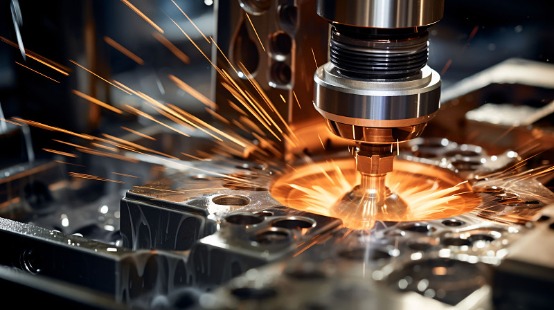
Laser-assisted CNC machining is like giving your CNC machine a superpower. Imagine a laser beam softening a stubborn titanium alloy just before the cutting tool swoops in. By heating the material locally, LACM reduces its hardness—sometimes by 20-40%—making it easier to machine without compromising precision. The process integrates a laser source (like a CO2 or fiber laser) with a CNC machine, using real-time control systems to synchronize laser power and tool movement. Unlike traditional CNC machining, which struggles with hard materials, LACM cuts through them with less force, less wear, and better results.
Why does this matter? High-hardness materials are the backbone of high-stakes industries. Aerospace relies on titanium for lightweight, durable turbine blades. Medical devices demand ceramics for biocompatible implants. Defense needs Inconel for rugged armor. But machining these materials the old-school way eats through tools and time. LACM changes the equation, offering a smarter, faster way to achieve precision. It’s not just about cutting metal—it’s about cutting costs and staying ahead in a competitive market.
Why Laser-Assisted CNC Machining is a 2025 Must-Have
In 2025, CNC machining is at a crossroads. Manufacturers face mounting pressures: labor shortages, rising material costs, and the push for sustainability. LACM addresses these pain points head-on. For one, it tackles the perennial issue of tool wear. Machining titanium can reduce tool life by up to 50% compared to softer alloys, driving up expenses. LACM’s laser heating reduces cutting forces, extending tool life by as much as 40%. This translates to fewer tool replacements and lower downtime—a win for any shop floor.
The technology also aligns with broader trends. The global CNC machine market is projected to hit $195.59 billion by 2032, with a CAGR of 9.9%, driven by demand in aerospace, automotive, and electronics. LACM is carving out a niche within this growth, especially for high-value applications. Plus, it dovetails with Industry 4.0, where smart manufacturing—think IoT sensors and AI-driven controls—is king. By integrating real-time monitoring, LACM ensures every cut is optimized, reducing waste and boosting sustainability.
Table 1: Impact of Laser-Assisted CNC Machining on Tool Life and Costs
| Material | Tool Life (Traditional CNC, Hours) | Tool Life (LACM, Hours) | Cost Savings (%) | Application Example |
| Titanium (Ti-6Al-4V) | 10 | 14 | 40% | Aerospace turbine blades |
| Inconel 718 | 8 | 11.2 | 38% | Jet engine components |
| Alumina Ceramic | 6 | 8.4 | 35% | Medical implants |
| Stainless Steel | 12 | 16.8 | 30% | Defense armor |
| Nickel Alloy | 9 | 12.6 | 37% | Renewable energy components |
| Tungsten Carbide | 7 | 9.8 | 36% | Tooling inserts |
Source: Industry studies and manufacturer data, 2025

Precision and Surface Quality: A Game-Changer for Medical and Aerospace
When it comes to industries like medical and aerospace, precision isn’t just a goal—it’s a non-negotiable. LACM shines here, delivering surface finishes as smooth as Ra 0.5 µm, critical for biocompatible implants or aerodynamic turbine blades. By reducing thermal and mechanical stresses, LACM minimizes micro-cracks and improves dimensional accuracy to ±0.01 mm. For medical manufacturers, this means implants that integrate seamlessly with the human body. For aerospace, it’s about parts that withstand extreme conditions without failing.
Take a real-world example: a UK-based medical device company used LACM to machine titanium hip Implants, achieving a 25% reduction in production time while meeting stringent biocompatibility standards. In aerospace, a US supplier cut Inconel jet engine components with LACM, boosting material removal rates by 30% and slashing scrap rates. These gains aren’t just technical—they translate to millions in savings and faster time-to-market.
Table 2: Surface Quality and Precision Metrics for LACM vs. Traditional CNC
| Material | Surface Finish (Traditional CNC, Ra µm) | Surface Finish (LACM, Ra µm) | Dimensional Accuracy (mm) | Industry Application |
| Titanium | 1.2 | 0.5 | ±0.01 | Medical implants |
| Inconel 718 | 1.5 | 0.6 | ±0.012 | Aerospace engine parts |
| Zirconia Ceramic | 1.8 | 0.7 | ±0.008 | Dental components |
| Stainless Steel | 1.3 | 0.55 | ±0.01 | Defense weapon systems |
| Nickel Alloy | 1.4 | 0.6 | ±0.011 | Wind turbine components |
| Cobalt-Chrome | 1.6 | 0.65 | ±0.009 | Orthopedic implants |
Source: Technical journals and CNC machining case studies, 2025
Smart Manufacturing: LACM in the Industry 4.0 Era
The rise of Industry 4.0 has transformed CNC machining into a data-driven powerhouse, and LACM is at the forefront. By integrating IoT sensors, LACM systems monitor laser power, material temperature, and tool wear in real time. This means adjustments happen on the fly—say, tweaking laser intensity to avoid overheating a nickel alloy. AI takes it further, using predictive models to optimize toolpaths and prevent defects before they occur. The result? Near-zero scrap rates and a leaner, greener process.
This smart approach resonates in English-speaking markets like the US and UK, where manufacturers are under pressure to meet net-zero goals. LACM’s targeted laser heating uses less energy than traditional methods, cutting consumption by up to 20%. For a mid-sized CNC shop, that’s thousands in annual savings—and a step toward sustainability that customers and regulators love.

Applications Across Industries: From Aerospace to 5G
Laser-assisted CNC machining is a Swiss Army knife for high-precision industries. In aerospace, it’s used to craft lightweight titanium turbine blades and Inconel engine parts, where every micron counts. In medical, LACM produces ceramic dental implants and titanium joint replacements with flawless finishes. Defense contractors rely on it for composite armor and weapon systems, meeting MIL-SPEC standards with ease. Even in electronics, LACM is carving out a niche, machining ceramic substrates for 5G antennas with unmatched precision.
The renewable energy sector is another hotbed for LACM. Wind turbine components made of high-hardness alloys demand durability and precision—LACM delivers both, cutting production costs by 15-20%. A Canadian energy firm, for instance, used LACM to machine nickel alloy parts for nuclear reactors, achieving a 30% boost in efficiency. These applications show LACM’s versatility, making it a go-to for manufacturers chasing innovation.
Overcoming Challenges: Making LACM Accessible
No technology is without hurdles, and LACM is no exception. The biggest roadblock? Cost. Retrofitting a CNC machine with a laser module can run upwards of $100,000, a steep price for smaller shops. Then there’s the learning curve—operators need training to master laser-CNC synchronization. Materials like highly reflective ceramics can also pose issues, requiring specialized laser wavelengths to avoid inefficiencies.
But solutions are emerging. Modular LACM systems are hitting the market, lowering upfront costs by 25% compared to full setups. Training programs, often backed by manufacturers like Haas Automation, are bridging the skills gap. And advances in fiber lasers are improving compatibility with tricky materials. For shops willing to invest, the ROI is clear: reduced tool costs, faster production, and happier customers.
Table 3: Cost and Efficiency Comparison of LACM vs. Traditional CNC
| Metric | Traditional CNC | Laser-Assisted CNC | Improvement (%) | Industry Impact |
| Tool Replacement Cost | $10,000/year | $6,000/year | 40% | Aerospace, Medical |
| Production Time (Hours) | 100 | 75 | 25% | Defense, Electronics |
| Energy Consumption (kWh) | 500 | 400 | 20% | Renewable Energy, Automotive |
| Scrap Rate (%) | 5% | 1% | 80% | Aerospace, Medical |
| Operator Training (Hours) | 20 | 30 | -50% (initial) | All industries |
| Material Removal Rate | 100 cm³/min | 130 cm³/min | 30% | Defense, Energy |
Source: Manufacturer reports and industry analysis, 2025
The Future of Laser-Assisted CNC Machining
Looking ahead, LACM is poised to reshape CNC machining. AI is set to take center stage, with algorithms predicting tool wear and optimizing laser settings in real time. Ultrafast lasers, like femtosecond models, are reducing heat-affected zones, making LACM viable for even the most sensitive materials. Hybrid manufacturing—pairing LACM with 3D printing—is another frontier, enabling complex titanium parts to be printed and finished with unmatched precision.
Sustainability is also a driving force. As English-speaking countries push for net-zero, LACM’s energy efficiency makes it a standout. By 2030, experts predict 30% of CNC shops in the US and UK will adopt LACM, driven by cost savings and environmental benefits. For manufacturers, the message is clear: invest in LACM now, or risk falling behind.
Case Studies: LACM in Action
Real-world success stories bring LACM’s impact to life. A US aerospace supplier used LACM to machine Inconel jet engine parts, cutting tool costs by 38% and boosting throughput by 25%. In the UK, a medical manufacturer adopted LACM for ceramic dental implants, achieving Ra 0.6 µm surface finishes and slashing production time by 20%. In Canada, a defense contractor leveraged LACM for composite armor, meeting MIL-SPEC standards while saving 30% on costs. These examples prove LACM isn’t just a tech trend—it’s a profit driver.
Conclusion: Why LACM is Your Next Step in CNC Machining
Laser-assisted CNC machining is more than a niche innovation—it’s a lifeline for manufacturers tackling high-hardness materials. By slashing tool wear, boosting precision, and aligning with smart manufacturing, LACM delivers results that resonate from the shop floor to the bottom line. Whether you’re crafting aerospace components, medical implants, or 5G antennas, LACM offers a path to efficiency and competitiveness. As the CNC machining market surges toward $195 billion by 2032, now’s the time to explore LACM.
FAQ:
1. What is laser-assisted CNC machining, and how does it differ from traditional CNC machining?
Answer: Laser-assisted CNC machining (LACM) is a hybrid technology that combines traditional CNC machining with laser heating. A laser beam softens high-hardness materials like titanium or ceramics before the CNC tool cuts, reducing material hardness by 20-40%. Unlike traditional CNC machining, which struggles with tool wear and slow cutting speeds on hard materials, LACM lowers cutting forces, extends tool life by up to 40%, and improves surface finishes (e.g., Ra 0.5 µm). This makes it ideal for industries like aerospace and medical, where precision is critical.
2. What materials can be processed using laser-assisted CNC machining?
Answer: Laser-assisted CNC machining excels at processing high-hardness materials, including titanium alloys (e.g., Ti-6Al-4V), nickel-based superalloys (e.g., Inconel 718), ceramics (e.g., alumina, zirconia), stainless steel, and cobalt-chrome. These materials are common in aerospace (turbine blades), medical (implants), and defense (armor). LACM’s laser heating enhances machinability, but highly reflective or low-conductivity materials may require specialized lasers, such as fiber or femtosecond lasers.
3. How does laser-assisted CNC machining improve efficiency in manufacturing?
Answer: LACM boosts efficiency in CNC machining by reducing tool wear, increasing material removal rates, and minimizing production time. For example, it extends tool life by 30-40% when machining titanium, cutting tool replacement costs. Material removal rates can increase by up to 30% for nickel alloys, speeding up production. Additionally, LACM’s precision reduces scrap rates to as low as 1%, saving costs and aligning with sustainability goals in industries like aerospace and renewable energy.
4. What industries benefit most from laser-assisted CNC machining?
Answer: Laser-assisted CNC machining is a game-changer for industries requiring precision and durability, including:
· Aerospace: Machining titanium and Inconel for turbine blades and engine parts.
· Medical: Producing ceramic and titanium implants with biocompatible finishes.
· Defense: Crafting composite armor and weapon systems to MIL-SPEC standards.
· Electronics: Micro-machining ceramic substrates for 5G infrastructure.
· Renewable Energy: Manufacturing high-hardness components for wind turbines and nuclear reactors.
These sectors leverage LACM’s ability to handle tough materials efficiently.
5. What are the main challenges of adopting laser-assisted CNC machining?
Answer: Adopting laser-assisted CNC machining involves challenges like high initial costs—retrofitting a CNC machine with a laser module can cost $100,000 or more. Operators require specialized training to manage laser-CNC synchronization, adding to expenses. Certain materials, like reflective ceramics, may need advanced lasers, increasing complexity. However, modular LACM systems and training programs are reducing barriers, with ROI driven by 40% tool cost savings and 25% faster production.
6. How does laser-assisted CNC machining align with Industry 4.0 trends?
Answer: Laser-assisted CNC machining integrates seamlessly with Industry 4.0 through IoT and AI. IoT sensors monitor laser power, material temperature, and tool wear in real time, enabling instant adjustments to optimize cuts. AI-driven systems predict tool wear and refine toolpaths, reducing defects and scrap. This smart approach enhances CNC machining efficiency, cuts energy use by up to 20%, and supports net-zero goals, making LACM a cornerstone of modern smart factories.