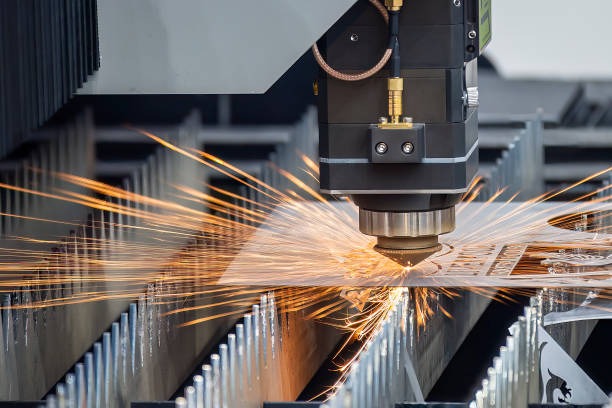
The healthcare sector is adapting to precision strategies, with the evolution of procedures that are less invasive surgically as the foremost advancement. As the focus shifts to ever more precise, smaller, and more tailored tools, components for delicate procedures, medical CNC machining services are and will remain critical to product development and clinical success. B2B partners such as medical device manufacturers, OEMs, and suppliers need to know how high precision machining supports product innovation.
Minimally invasive Machining services biocompatible CNC medical devices Biocompatible CNC machining offers clean surfaces, smooth finishes, and biocompatible materials required for minimal invasive devices and sophisticated CNC machining.
The Direction of Less Intrusive Surgical Procedures
Compared to traditional open surgery, these procedures have significantly reduced patient trauma, faster recovery times, lower risk of infection, and are more cost efficient. Such a shift changes the demand for surgical tools, endoscopic instruments, catheter systems, robotic arms, and implantable devices.
Such devices require:
- Components that are microsized with precise tolerances.
- Advanced geometries that enable navigation throughout the human body.
- Biocompatibility and strict surface finish requirements.
- Rapid prototyping coupled with agile manufacturing for the development cycles.
Only medical-grade high precision machining can meet these requirements.
Importance of High Precision Machining in Medical CNC Machining Services
In the medical industry, precision is critical. A few microns too much or too little can put an implant at risk and another one on the market, waiting to be recalled. Thanks to medical CNC machining services, modern high-precision CNC systems make it possible to manufacture parts to very tight tolerances and to spec time after time.
High precision machining provides several advantages in medical manufacturing:
- Accuracy: The tolerances provided by CNC systems is as extreme as ±0.001mm. With such precision, components can be placed into surgical systems or tailored to the patients needs.
- Fabrication of Complex Parts: Multi-axis machining can produce geometrically intricate parts like catheter tip guides or robotic surgical arms.
- Smoother Surface Finishes: Precision machining as well as post-processing ensures surfaces are smooth, reducing the risk of tissue damage and bacterial accumulation.
- Flexible Materials: Biocompatible materials such as titanium, stainless steel and PEEK can be easily machined.
Such precision makes possible innovations that can be both lifesaving and enhancing in the case of reusable and disposable medical equipment.
High Precision Machining in Minimally Invasive Devices
Minimally invasive technology includes various fields like cardiology, neurology, orthopedics, and gastroenterology. Here’s how medical CNC machining services and high precision processes support each:
Endoscopic Tools
Endoscopic instruments must be thin, flexible, and corrosion-resistant. Their movement must be exact and their sterility reliable. Therefore, every CNC machined housing, connector and articulation point must be corrosion resistant.
Laparoscopic Instruments
Laparoscopic surgery scalpels, graspers and scissors are hinged and slid in a way that is more ergonomic. Parts are often made out of stainless steel with ultra smooth surfaces to reduce tissue damage.
Catheter and Stent Systems
Catheters for cardiac and neurological procedures contain small machined parts. Stent delivery systems need high accuracy parts to precisely guide elements through blood vessels.
Robotic Surgical Systems
Ultra precise robotic arms and component mounts require ultra precise joints. High accuracy machining provides smooth and reliable movement within micrometer precision, needed during prostatectomies, heart valve repairs and many other delicate surgeries.
Custom Implants
From dental posts to spinal plates, implants are made to the specific needs of the patient and are often produced through CNC machining. Precision is especially important to matching anatomical contours, and machining works well for both prototyping and production due to quick turnaround times.
In What Ways Does CNC Machining Assist Innovation and Compliance?
When it comes to a medical device company, time-to-market and regulatory compliance are two critical issues. These focal points are addressed with:
Rapid Prototyping
Medical device makers can rapidly advance from an idea to a working prototype. Small-batch runs are cost-effective with high-speed CNC machining. Designers can put their ideas into practice and test new features effortlessly.
Agile Manufacturing
In the case of medical CNC machining, versatility is a synonym to the service. It does not matter if the order is for 5 parts or 5,000. The same equipment and processes will be used for both, allowing for adaptive shift and build iterative development with clinical feedback.
Traceability and Quality Control
Meeting FDA or ISO standards requires rigorous documentation and traceability. CNC machining processes which are monitored allow for digital control and unlinkable logs which provide detailed documentation as well as checks and automated defect prevention.
Validation of Materials
CNC machining is capable of working with medical-grade materials like titanium, stainless steel, cobalt-chromium alloys, and some advanced polymers. All of these have specific tooling strategies, and precision machining upholds biocompatibility requirements.
Finding The Best CNC Collaborator For Medical Uses
Finding the right CNC machining partner involves much more than checking their technical capabilities; collaboration, dependability, and understanding regulatory requirements matter too. Look for the following attributes:
- Tight Tolerance Capability: Ability to consistently meet tolerances of ±0.005mm or tighter.
- Material Expertise: Knowledge of machining biocompatible metals and polymers.
- Cleanroom or Controlled Environment Production: For Class I, II, or III device manufacturing.
- Documentation Readiness: Systems and processes that support audits with traceability and documentation.
- Small-Batch & Scalable Production: Capability for prototyping and scaling to clinical volumes.
- Effective Communication: Medical terminology and specifications are understood by supporting engineering teams.
The ideal partner will not only supply the services needed, but also become an integrated engineering extension of your R&D and production teams.
The Growth of Innovation and the Use of Precision Technology
The development of new technology that is less invasive continues to grow. As the medical industry approaches less traumatic methods of treatment, the manufacturing process of such devices must change. High precision machining is not just enabling innovation, it’s also improving the health and surgical results of patients.
B2B enterprises in the medical field can adapt to modern healthcare needs while integrating future innovations by medical CNC machining services and building strategic manufacturing alliances.
Whether you are working on next generation robotic surgical systems or catheter technology, you can always depend on solid foundations from high-precision CNC machining.