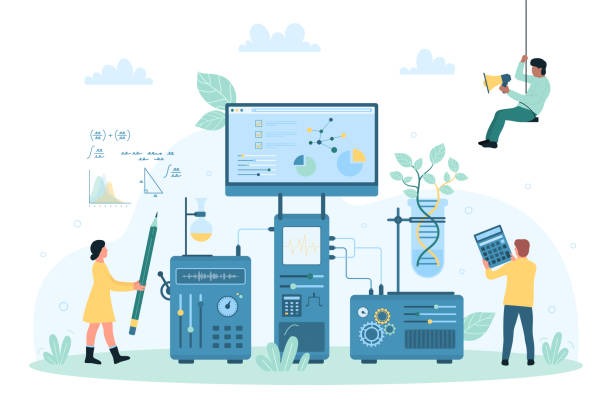
Getting your lab equipment setup right isn’t just important; it’s non-negotiable when scaling scientific workflows. Poor setups cause slowdowns, repeated errors, or even total process failure. Scaling fails when reliable, flexible, automated tools don’t support core lab processes. First, build your foundation. Without a scalable infrastructure, no workflow expansion will hold.
Start with Workflow Bottlenecks
Scaling begins with eliminating friction points. Look for repetitive manual steps or tasks dependent on outdated lab instruments or single-use tools. If your team pauses constantly to recalibrate or remeasure, the problem isn’t personnel, it’s equipment design. Replace any process that creates delay, errors, or rework. Speed follows standardization. Tools must support quick setups, repeatable runs, and minimal user intervention.
Modular Layouts Enable Faster Scaling
A modular bench layout supports more researchers without crowding. Use mobile carts, flexible plumbing, and quick-connect utilities. That allows setups to shift without downtime or construction. One bench can run multiple workflows over time. If everything’s fixed in place, future upgrades cost more than they’re worth. Start modular now or stay locked in place.
Invest in Multipurpose Equipment
Single-use tools have their place, but they don’t scale well. Use equipment with programmable interfaces, swappable modules, and compatibility with multiple sample types. A thermal cycler that only runs one protocol will hold your lab back. Choose instruments that evolve as your workflow expands. That reduces capital costs over time and training needs across teams.
Automation Is Not Optional
Manual handling breaks under volume. Invest early in automation for mixing, measurement, tracking, and disposal. Even partial automation boosts throughput and data integrity. Use robotic arms, pipetting systems, and inventory tracking. Smart sensors prevent missed errors. Don’t automate everything at once, but automate something critical. Start with the one task most prone to human error.
Centralized Data Infrastructure
Data from equipment needs to flow into a single source. Fragmented data slows analysis and introduces blind spots. Use connected devices that export in standard formats. Feed them into one LIMS or ELN platform. Even better, link devices directly to your analytics pipelines. Scaling output without scaling insight creates dangerous gaps. Data accessibility is part of your lab’s setup.
Prioritize Calibration and Maintenance Plans
Scaling equipment capacity is useless if accuracy collapses. Each tool should have an automated or logged calibration protocol. Schedule preventive maintenance in software. Include alerts and fail-safes. Don’t trust memory or sticky notes. Scalable workflows demand uninterrupted reliability. A single failed reading from one machine can invalidate days of results across multiple projects.
Match Utilities to Equipment Needs
New devices draw more power, need more ventilation, or require water lines, plan for future needs, not current usage. Your lab is underpowered if a freezer or centrifuge knocks out a breaker daily. Equipment upgrades without utility upgrades cause cascading failures. Ventilation is often overlooked but critical for thermal stability and safety.
Even water pressure fluctuations can disrupt temperature control or sterilization cycles. Add surge protection, backup systems, and capacity buffers. Never assume your utility setup will “probably handle it.” Scale utilities before they bottleneck your process.
Scaling lab workflows depends on modular layouts, automation, and infrastructure that supports multipurpose use. Data systems and calibration protocols must grow with the lab, not trail behind. Plan for volume, not just variety. Don’t forget onboarding, your setup should help new researchers work efficiently within days, not weeks. A good lab trains through its tools.