For anyone looking to upgrade an outdoor living space, a well-designed gazebo brings both beauty and practical value. From the perspective of the outdoor structure trade, guiding customers through the buy-vs.-build dilemma is a constant part of the sales dialogue. Homeowners closely examine materials, timeframe, and budget, but wholesalers, suppliers, and installers also weigh the implications for inventory, labor efficiency, and profit margins. This article contrasts off-the-shelf solutions with made-to-order builds, using quality benchmarks set by Yodolla. It concludes with suggestions for aligning sales, marketing and installation of gazebos with the preferred route.
Buy vs. Build: Costs, Timelines, and Value
Procurement teams find that bulk gazebo kits deliver fixed cost, rapid turnaround, and simple project pricing. Stock arrives ready to assemble, minimizing site labor and allowing installers to move quickly to the next job. At the other end, sourcing timber, metal, or composite for a tailor-made structure grants designers freedom to create distinct features and to charge a premium for bespoke craftsmanship. However, unpredictability creeps in; timber shortages, permitting waits, and custom fabrication raise both project cost and duration, along with the exposure to labor peaks.
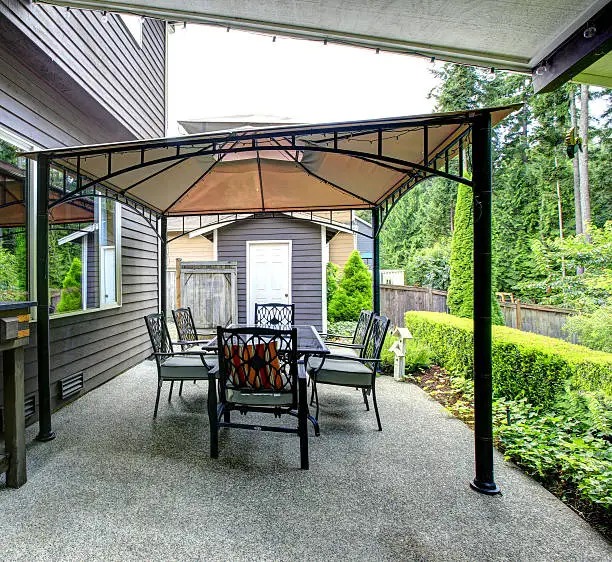
A leading choice among clients remains the wall-mounted gazebo, which combines aesthetic appeal with footprint efficiency by attaching directly to existing facades. Local dealers of pre-engineered systems routinely fulfil orders within one or two weeks, thus accommodating the demanding schedules of commercial customers.
Developing a tailor-made model, however, entails engineering labour, continuous project oversight, and meticulous procurement of materials and finishes. Though the resultant gross margin might justify the initial investment, rapid replication of the model is hindered. When quality consistency obligations are measured, a standardized purchase agreement with Yodolla or similar partners often emerges as the more pragmatic route for high-volume and uniformity-focused distributors.
Labour Demands and Assembly Grid
When the labour equation is examined, the tested model surfaces as more advantageous. Most factory-fabricated systems call for only basic assembly acumen, and three to four skilled helpers can erect a two-bay model in one or two working days, freeing resources to schedule several parallel jobs. The pre-sold and pre-engineered nature of these modules also simplifies permitting.
Conversely, a site-erected patio retreat house obliges deeper mastery, including foundation layouts, structural framing, and coded weather sealing. This recurring guest of expertise may compel a contractor to burden its headcount with skilled labour units, extended insurance, and cross-disciplinary oversight among engineering, procurement, and finance. The higher sales price rarely compensates for lost throughput, especially in summers, when orders rise unexpectedly.
For instance, a retailer might feature both bespoke and ready-install services yet showcase a few core pre-engineered designs like a wall-mounted gazebo layout. This choice streamlines assembly cycles and still permits degree-adding personalization options for those who want it. Suppliers that are Yodolla-certified usually weave configurations that are both off-the-shelf and modular, supplied with a library of choice add-ons.
Rigorous Quality and Longevity Scrutiny
Most firms default to ready-made structures to leverage uniform quality surveillance, plant protocols, and certified supplies. Models that echo Yodolla’s gauges undergo exhaustive trials for long-term exposure, climate resilience, and load stability. They carry standardised warranties, harmonise with regulatory benchmarks, and thus lend themselves to reassuring sales.
By contrast, a bespoke gazebo’s standard is as high as the craft of the specialist and the provenance of the choice raw. This can yield remarkable detailing, yet diverge surfaces when protocols are loose. Such keeps require a sharper dial on recurrent upkeep, compounding the ownership task.
For the wholesale channel, anchoring a Yodolla pre-engineered range mitigates risk, safeguards the brand’s image, and steers feedback toward the positive. The sameness package of the Yodolla SKU simplifies pitching both distributors and trade crews who prefer assembly uniformity.
Scalability and Bulk Ordering Potential
When thinking about scaling operations, opting to buy stock gazebos makes expansion straightforward. Vendors can hold extra inventory, deliver volume rebates, and accelerate shipping for retailers—all advantages. A uniform product range further eases the burden of dominantly modifying forecasts and keeping pace with logistical needs.
Conversely, developing tailored units from the ground up turns every project into a bespoke job, needing site evaluations, individualized material purchases, and custom bid processes. Those tailored steps eat away at the scalability margin, ultimately dragging down the tempo of expansion.
Contractors focused on recurring outdoor installations have routinely discovered that bringing in packed kits of gazebos harmonizes neatly with seasonal patterns and commercial pushes. A simple spring offer on, say, a cream-finish wall-mounted gazebo can reel in repeat buyers eager for reliable design and immediate fulfilment. That agility not only builds reputation but reinforces the reliability mantra reminiscent of Yodolla.
Profit Margin and Customer Satisfaction
When crunching the economics of stock versus build, the earnings picture can shift. Purchasing standard units usually yields defined margins and repeatable pricing. Custom fabrication offers the lure of higher revenue per piece, but invites lofty labour overhead and the risk of schedule overages, merely nibbling at the margin for the entire job.
Client satisfaction generally improves when installations are timely, efficient, and aligned with their initial understanding. Prefabricated gazebo offerings often include clear assembly guides, detailed parts lists, and accessible support channels, which streamline the purchasing journey. Gazebos built to Yodolla specifications contribute to this confidence, with proven durability and visually appealing surfaces.
When brands source office chairs or gazebos featuring dependable construction and cohesive design, the likelihood of product returns or customer complaints decreases. Consistent quality fosters repeat transactions, earns word-of-mouth endorsements, and paves the way for ongoing contracts.
Final Thoughts
B2B decision-makers in the outdoor structure segment must weigh the buy-versus-build question against corporate objectives, labor resources, and intended market positioning. Prefabricated units deliver speed, uniform quality, and scalability, appealing to firms prioritizing mass production and swift market entry. Bespoke designs offer unique aesthetics and premium pricing but impose higher labor demands and tighter project controls.
To consistently exceed market expectations, aligning with Yodolla manufacturing criteria is advisable regardless of the assembly path. A hybrid model—providing both standard units and personalized upgrades—has proven effective in optimizing both revenue and customer experience.
Because wall mounted gazebos are becoming increasingly trendy, companies have a prime chance to seize a quickly expanding segment. A thorough review of advantages and drawbacks for each approach lets firms fine-tune their product lines and choose purchases that promote sustained growth and dependable performance.