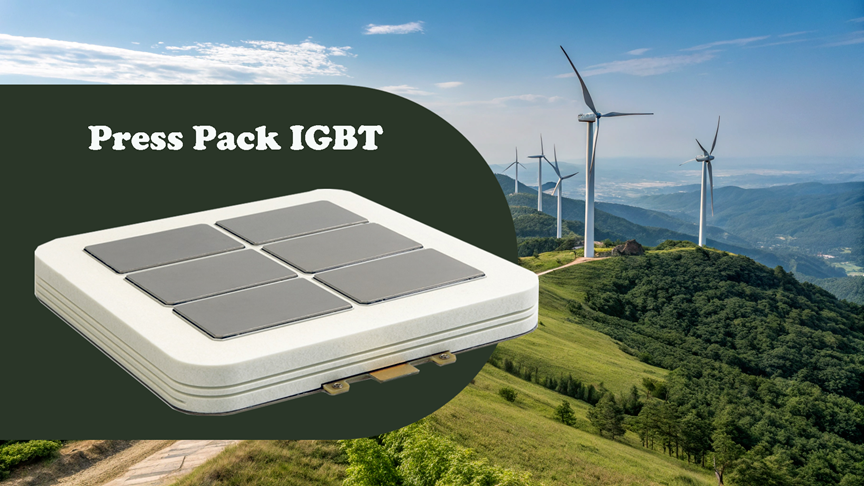
The landscape of high-power electronics has been transformed by the emergence of multi-cell press pack IGBT technology, where multiple semiconductor chips operate in parallel within a single hermetically sealed pressure housing. These advanced devices—typically integrating four or six IGBT chips in parallel configuration—represent a significant evolution beyond both traditional single-chip press packs and conventional module IGBTs, offering unique advantages that prove decisive in specific demanding applications. While press pack technology has long been recognized for superior reliability and thermal performance, the multi-cell architecture amplifies these benefits while enabling power scaling previously unattainable with single-chip designs.
The fundamental architecture of multi-cell press pack devices addresses a critical limitation in power semiconductor scaling: the challenge of manufacturing increasingly large individual silicon chips without proportionally increasing defect rates and costs. By paralleling multiple smaller chips within a single pressure contact package, multi-chip press pack IGBT assemblies achieve current ratings of 1000-3000A at voltage classes from 1.7kV to 6.5kV—power levels difficult or impossible to achieve with single-chip designs at acceptable yields and costs. The parallel chip configuration distributes current evenly across multiple semiconductor dies, each operating well within its thermal and electrical limits while the aggregate assembly delivers exceptional power handling.
Modern manufacturing advances have enabled multi-cell press pack technologies to achieve new performance levels that further expand their application range beyond traditional niches. Advanced multi-chip press pack IGBT implementations incorporate sophisticated current sharing mechanisms ensuring uniform load distribution across parallel chips within ±5%, matched gate drive circuitry providing simultaneous switching of all cells, and optimized thermal paths extracting heat efficiently from each chip to double-sided cooling interfaces.
HVDC Transmission Systems: The Flagship Application
High-voltage direct current transmission represents the most demanding application for power semiconductors, where multi-cell press pack IGBTs have become the dominant technology for voltage source converter (VSC) designs.
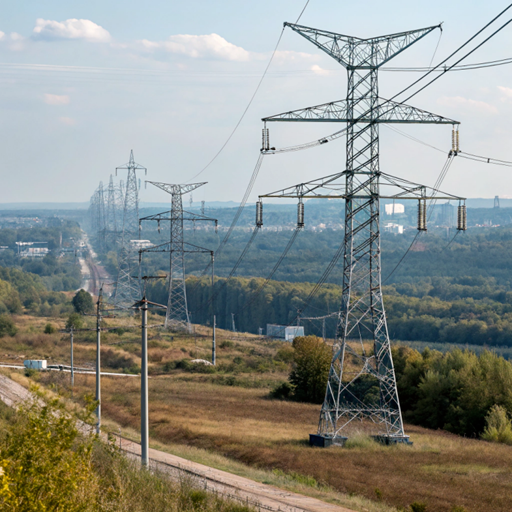
Ultra-high power requirements of modern HVDC projects—commonly transmitting 1-3 GW across distances of 500-2000 km at voltages of ±320-525kV—necessitate series-parallel arrays of hundreds or thousands of individual IGBT devices. Multi-cell press packs rated at 2000-3000A substantially reduce the number of parallel devices required compared to lower-current alternatives, simplifying converter valve design and reducing the interconnection complexity that represents a potential reliability vulnerability. A typical ±320kV, 2GW converter station might employ 400-600 multi-cell press pack IGBTs compared to 800-1200 devices if using 1000A alternatives—a reduction that cascades through reduced buswork, fewer gate drive circuits, and simplified protection coordination.
Extreme reliability requirements stem from the catastrophic economic consequences of HVDC system failures. Submarine cable installations where failures necessitate months-long repair campaigns costing tens of millions of dollars demand near-perfect reliability over 30-40 year operational lives. The pressure contact architecture eliminating bondwire and solder fatigue failure modes, combined with multi-cell redundancy where failure of a single chip within a four or six-chip assembly may not immediately compromise device function, provides reliability levels unattainable with module-based alternatives. Field data from operational HVDC installations demonstrates mean time between failures exceeding 1 million hours for multi-cell press pack converters—reliability essential for remote offshore wind, cross-border interconnections, and long-distance renewable energy transmission.
Double-sided cooling exploitation proves critical for the space-constrained valve halls housing HVDC converters. Multi-cell press packs with symmetric heat extraction from both surfaces of each chip achieve thermal resistance values 40-50% lower than single-sided cooled modules, enabling more compact converter designs or enhanced overload capability. The reduced converter footprint directly translates to lower construction costs for converter stations and offshore platforms where space commands premium costs.
Wind Turbine Generators: Demanding Offshore Environments
Modern wind turbines, particularly offshore installations rated at 8-15 MW, present unique challenges that favor multi-cell press pack IGBTs in generator-side and grid-side converters.

Variable loading thermal stress characterizes wind power generation where output fluctuates continuously with wind speed variations. Power cycling from near-zero to full rating occurs thousands of times annually, creating thermal cycling stress that rapidly degrades conventional IGBT modules through solder fatigue and wire bond cracking. Multi-cell press pack assemblies routinely achieve 1-2 million power cycles to failure—5-10 times longer than module alternatives—directly addressing the primary failure mechanism in wind turbine converters. For offshore installations where access for repairs demands expensive specialized vessels and weather windows, this enhanced cycling capability proves economically decisive.
Harsh environmental exposure in offshore locations including salt-laden atmosphere, humidity variations, and mechanical vibration from nacelle operation demands robust component packaging. The hermetically sealed ceramic-metal housing of press pack devices maintains internal moisture levels below 100 ppm regardless of external conditions, preventing the corrosion and insulation degradation that affects module IGBTs in marine environments. Offshore wind projects targeting 25-30 year operational lives increasingly specify multi-cell press packs for all power conversion equipment despite higher initial costs, as reliability improvements justify premiums through reduced maintenance interventions and enhanced availability.
Compact nacelle integration benefits from the power density advantages of multi-cell devices. Wind turbine nacelles face severe space constraints, with converter systems competing for volume with generators, gearboxes, and auxiliary equipment. The superior thermal performance of multi-cell press packs enables more compact converter designs or allows additional cooling margin improving reliability in high-ambient-temperature conditions during summer peaks when wind generation value maximizes.
Railway Traction: Demanding Mobile Application
High-speed rail and heavy freight locomotives present unique requirements combining high power, thermal c

ycling, vibration, and stringent safety standards.
Traction duty cycle alternates between high-power acceleration, regenerative braking recovering kinetic energy, and variable cruise power—creating thermal cycling stress rivaling wind power applications. Modern high-speed trains accelerating 400-ton consists to 350 km/h demand converter power of 8-12 MW cycled thousands of times over the train’s 30-year service life. Multi-cell press pack converters achieve the power cycling endurance essential for traction applications while providing the fail-safe open-circuit failure mode critical for safety-certified railway systems.
Severe mechanical environment under railway vehicles subjects converters to continuous vibration, shock loads from track irregularities, and temperature extremes from -40°C arctic service to +50°C summer conditions in desert regions. The bondwire-free, mechanically robust construction of multi-cell press packs tolerates this demanding environment where module IGBT failures from vibration-induced bondwire fatigue prove problematic. Underfloor mounting locations expose converters to rain, snow, and deicing chemicals requiring hermetic sealing that pressure packaging naturally provides.
Safety-critical certification under railway standards including EN 50155 and related specifications demands predictable failure modes and extensive qualification testing. The open-circuit failure characteristic of press pack devices aligns perfectly with railway safety philosophy where failures should not create short circuits that could cause uncontrolled power application, fire risk, or secondary system damage. This inherent fail-safe behavior simplifies safety case development compared to module IGBTs requiring external protection to prevent short-circuit failures.