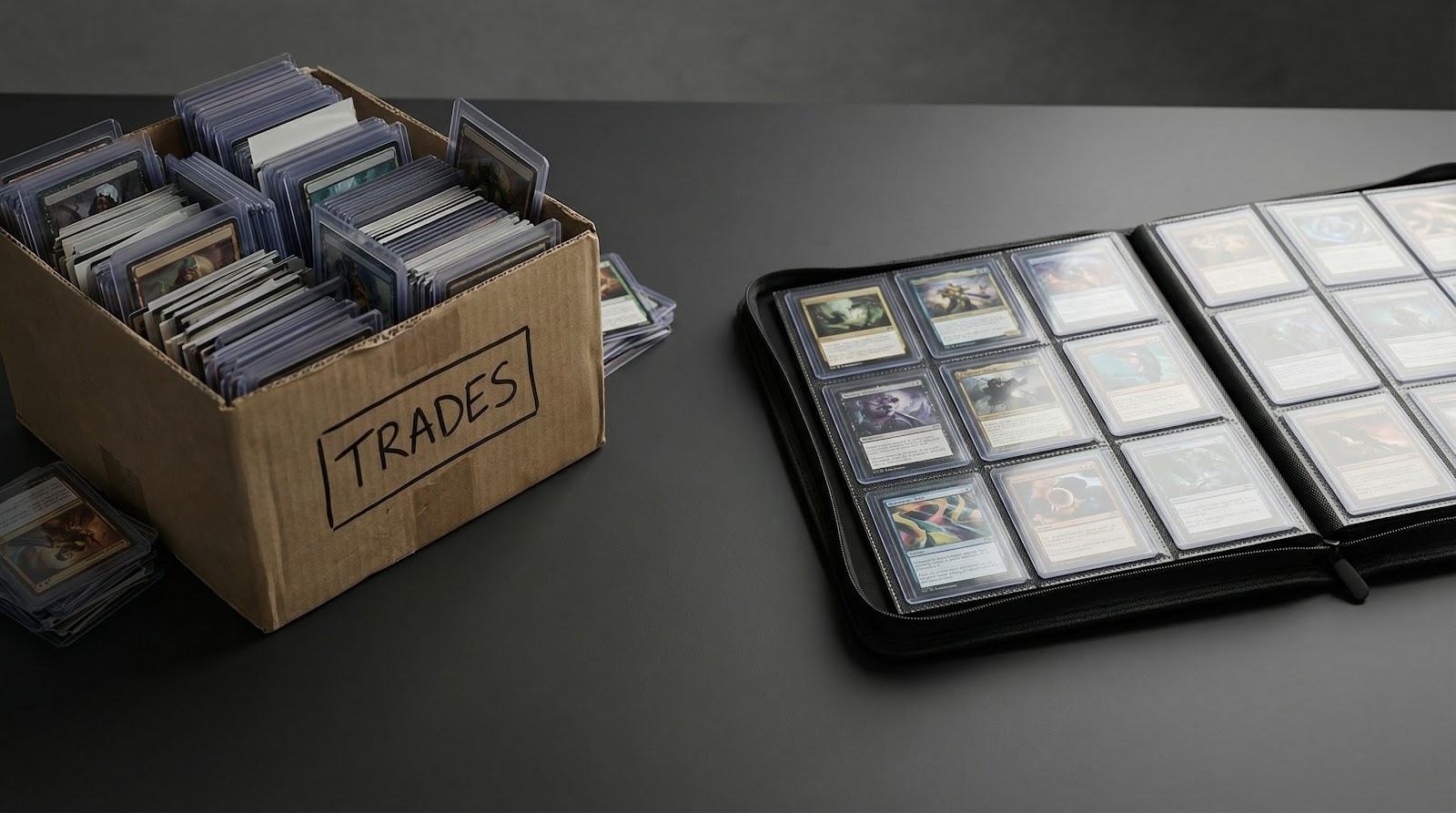
Your 3 × 4 top loaders protect every card, yet a dozen stacked together turns into a clumsy plastic brick.
Boxes hide the artwork, loose piles nick corners, and most “card binders” split because their pockets were sized for raw cards—not rigid plastic.
So we measured pocket openings, weighed fully loaded albums, and compared real-world collector stories to find smarter options.
This guide spotlights five binders—from Vaulted’s sleek newcomer to a 432-slot powerhouse—that cradle top loaders, keep sets sorted, and still slip into your backpack.
Why a toploader binder beats boxes
Top loaders keep cards safe; stack twelve and you juggle a plastic brick. Drop that brick into a cardboard box, and the artwork vanishes until the next rainy afternoon when a “quick sort” swallows the day.
A dedicated binder solves that in one motion. Pages spread cards flat, so you flip instead of dig. You admire foil shimmer, spot printing quirks, and find trade targets in seconds.
Protection rises, too. Each pocket surrounds a rigid top loader, locks out dust, zips shut against spills, and shields corners from bumps boxes never absorb.
Organization turns visual. Group sets, track progress, and label spines instead of scribbling on shoe boxes. When friends visit, sharing your collection feels like turning a photo album, not unpacking moving supplies.
Best of all, binders travel. Trade nights, conventions, or a quick stop at the local shop; the right album slides into a backpack, rides shotgun without rattling, and keeps the hobby fun.
How we picked the winners
A good binder does more than hold plastic. It guards corners, travels well, and still zips after you cram the last page. To separate true performers from clever marketing, we scored every candidate against nine clear-cut factors and used pass-or-fail results to rank them.
Pocket fit and tolerance
Everything starts here. If a pocket grips too tight, it splits at the seam. Too loose and a loaded card rattles, scratches, or slips under the zipper.
So we measured. Standard 3 × 4 top loaders are roughly 2.9 × 4.0 inches on the inside and 3.0 × 4.1 inches on the outside. We slid those into each test binder, watched for bulging seams, then tipped pages upside down to check for sag. Only albums with pocket openings around 3.3 × 4.5 inches (enough wiggle room for a penny-sleeved toploader) cleared this first gate.
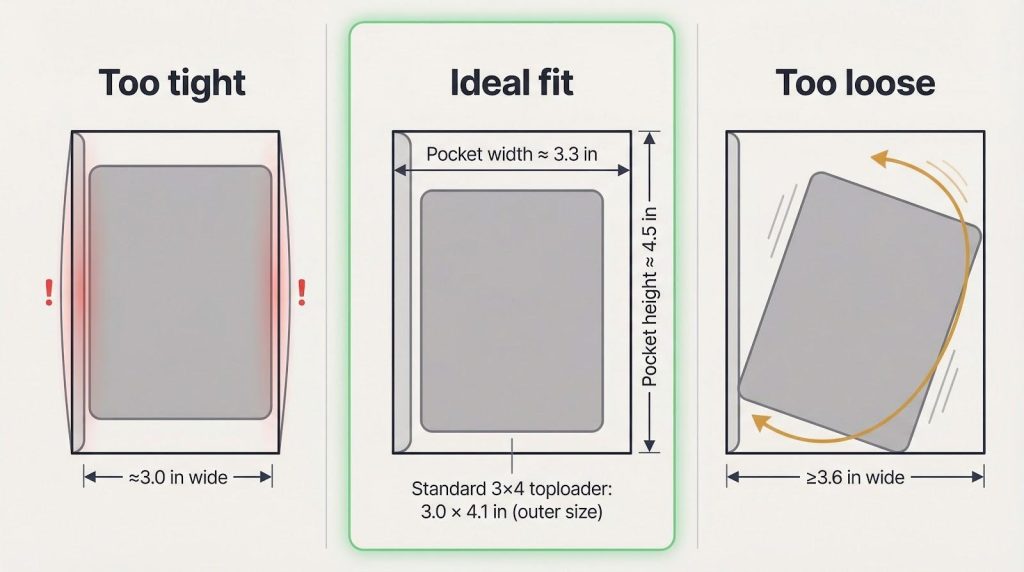
If a binder failed here, it never moved on to capacity, build, or price. Fit is non-negotiable; once a seam tears, the whole page unravels and your cards end up in a sad plastic pile.
Capacity and portability
After the fit test, we ask a simple question: how many loaded pages can you carry without cursing the walk from the parking lot?
Every collector has a sweet spot. Some want a slim album for a single master set, others need a rolling library. We weighed empty binders, calculated filled weight (each 35-point top loader averages about six grams), and then shouldered the result.
A nine-pocket book with 252 slots tops out near 4.5 pounds once full. That still slides into a backpack and fits under an airline seat. Twelve-pocket giants push seven pounds and sprawl like a law textbook; great for storage, hard on shoulders during a long convention day.
Capacity alone never won points. We balanced raw pocket count against real-world comfort. A binder earned high marks only if it zipped shut at 80 to 100 percent capacity, stayed manageable in hand, and kept pages flat. If the spine arched, pages sagged, or the zipper scraped, the model dropped in our rankings, regardless of its claimed slot count.
Build quality and materials
A bulging binder is only as strong as its weakest seam. We flexed covers, tugged zippers, and even dropped full albums a few inches onto a tabletop to mimic daily bumps.
Premium models wrap a thick EVA core in textured PU, which shrugs off scuffs and keeps pages flat. Stitches stay tight, and the zipper glides without snagging pocket edges. Cheaper shells feel spongy and flex under thumb pressure; that bend translates to bowed pages once the binder lives on a shelf.
Inside, pocket film matters just as much. We look for crystal-clear polypropylene; PVC stays far away. Cloudy plastic dulls foil cards and traps odors, while PVC can leach chemicals over time. When pockets felt tacky or smelled like a shower curtain, the binder failed our longevity check.
Bottom line: if the cover warps, the zipper grinds, or pages crinkle on the first flip, your cards pay the price. Only binders built like a hard-cover book with library-grade stitching advanced to the ranking round.
Orientation and security
Side-loading pages earned instant trust. Gravity helps when sleeves open toward the spine, not the ceiling. Turn a page, tilt the binder, or slip it into a backpack and every card stays seated.
Top-loading pockets can work, but only if a firm flap folds over the opening. We found most flaps flimsy; they curled after a few weeks and exposed card tops to dust. Those binders never made the shortlist.
Closure is the second safety layer. A smooth nylon zipper that runs the binder’s full perimeter seals out crumbs, moisture, and curious pets. Elastic bands look tidy in photos yet stretch over time and leave edges exposed. Ring mechanisms fail fastest because pages tug against metal, gaps appear, and a sudden jolt dents every card near the spine.
In short, side-load pockets plus a full zipper equals peace of mind. Anything less trades security for style, and that is a swap we refuse to recommend.
Card protection and archival features
The binder shell is a vault, but page material is the real defense. We hunted for polypropylene sheets free of PVC, plasticizers, or cloudy fillers. Clear PP shows every holo pattern and, more important, never leaches chemicals that fog top loaders over the years.
We also valued padded backings. A thin layer of black fabric behind each pocket prevents face-to-face rubbing when pages are double-sided. It frames the card, cuts glare, and adds a hint of cushion if the album takes a knock.
Finally, we checked zipper lips and corner radii. A wide gutter keeps zipper teeth from grazing pocket edges, while rounded outer corners let the binder slide into crowded shelves without catching. These small choices decide whether your grails stay mint or pick up micro-scuffs on the ride home.
Size and spine design
Spine geometry decides two crucial things: whether the binder lies flat on a table, and whether the zipper scrapes pages when packed tight.
We looked for wide, squared spines with a hinge cut deep enough to let the covers fold back without force. A good hinge keeps pressure off the inner row of pockets, so cards near the gutter do not bow under their own weight.
Thickness matters too. A 2.5-inch spine gives a 252-card binder room to breathe when full. Cram the same load into a slim profile and the zipper strains, pages ripple, and your rookie cards press edge to edge like sardines.
Flat-back construction earns bonus points. When a heavy album stays open on its own, trading sessions flow smoothly and you avoid the one-hand balancing act that leads to accidental drops.
Brand reputation and warranty
Cards can outlive companies, so we favor brands that plan to stick around. Vaulted, TopDeck, and Rayvol answer emails within a day, ship replacement pages when errors slip through, and publish clear warranty terms. That support turns a purchase into a partnership.
A solid guarantee is more than kind copy; it signals confidence in the stitching, zipper, and materials. If a binder arrives with a bent corner, a responsive brand ships a new one, no haggling. Should a page tear under normal use six months later, a real warranty covers it. Fly-by-night labels that vanish after holiday sales leave your inbox silent.
We checked each contender’s return policy, scrolled social channels for unresolved complaints, and even sent a few support tickets. Only brands with quick, helpful replies and at least a year of coverage earned full marks.
Value for price
Great protection should not require a second mortgage, yet ultra-cheap gear often costs double when it fails. We compared price per pocket and weighed that against build quality and warranty.
Budget albums such as D DACCKIT hover around twenty-five cents per slot. Premium books like Gemloader reach forty cents. The cheaper binder may split within a year, while the pricier one sails through a decade of trade nights. Spread that lifespan across thousands of flips and the premium option wins the math lesson.
We ranked value by longevity, not sticker shock. If a binder keeps cards safe, zips smoothly, and comes with real customer support, a few extra dollars today save you the headache, and replacement cost, tomorrow.
Aesthetics and extras
Looks are not trivial. A binder that blends into a bookshelf can deter sticky fingers at shows, while a bold color helps you spot it fast when packing. We checked finish options, logo size, and whether the cover hides scuffs after months on the road.
Extras settled close calls. Vaulted tucks a name-card slot into the spine, perfect for labeling sets. Card Guardian stitches a subtle carry strap along the edge, a small touch that eases long show days. Some budget models toss in penny sleeves or cotton gloves. Thoughtful design mattered more than swag-bag fillers.
Style never outranked safety, yet binders that delivered both climbed the list. You spent years curating those cards; they deserve a case that looks as sharp as the collection inside.
The 5 best binders that truly fit 3 × 4-inch top loaders
1. Vaulted 252-card top loader binder: best overall choice
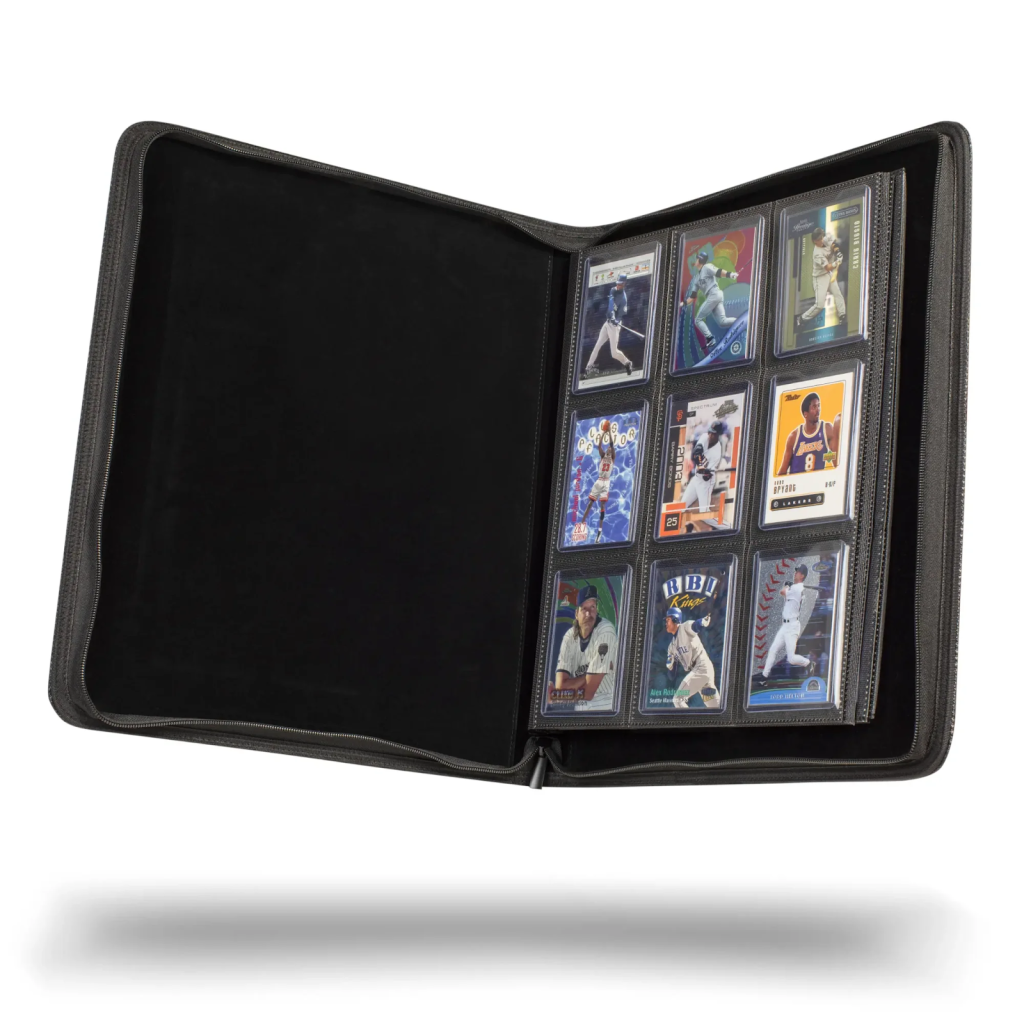
Built-in nine-pocket pages sized for standard top loaders and a customizable back label mean the Vaulted® 252-card binder walks the line between museum-grade protection and everyday practicality. Its hard EVA shell shrugs off dings, while the soft-touch lining keeps glossy holo foils scratch-free.
You get fourteen double-sided pages, each with nine side-loading pockets sized for standard 35-point top loaders. That yields 252 cards, enough for a full Pokémon set with promos or an entire season of baseball rookies. The binder still slips into a backpack because the spine measures just 2.5 inches deep, and it weighs about 1.6 pounds empty.
A wrap-around zipper seals out dust, and the back cover houses a name-card slot so your binder never disappears at a busy trade table. Vaulted backs the build with a clear satisfaction guarantee and answers support emails quickly.
Specs snapshot: 15.9 × 13.5 × 2.5 in; rigid shell; PVC-free pockets; holds 252 top loaders across 14 pages.
If you want a single binder for travel, display, and long-term storage, this is the album we would hand you first.
2. TopDeck 9-pocket toploader binder: best all-rounder
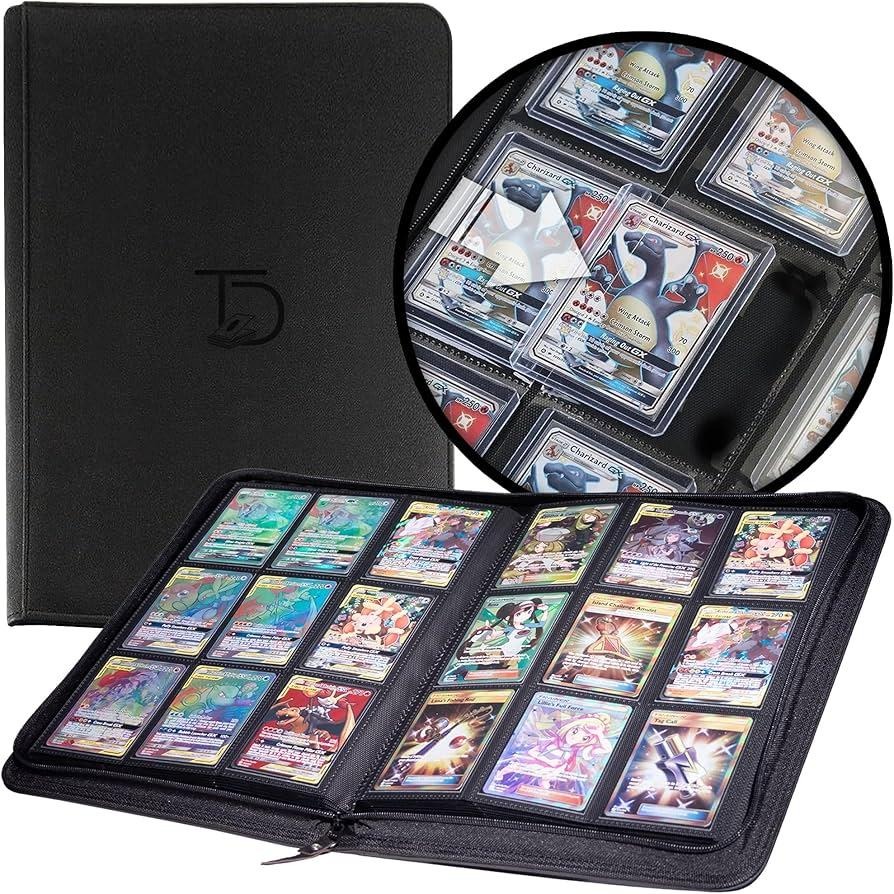
TopDeck earned its reputation on trade floors long before most rivals appeared, and the latest nine-pocket edition shows why collectors return.
The cover feels like a premium game mat over a rigid board. It resists fingerprints, wipes clean, and, more important, stays flat even when every slot is filled. That matters because TopDeck packs twenty double-sided sheets for a 360-card capacity.
Pages load from the side and turn like a hardcover photo book. Flipping never strains the spine or snags the zipper, so you can speed-browse trades without fumbling. Close the binder and the zipper glides smoothly, with no catches or teeth scraping pocket edges.
At about forty dollars, TopDeck lands between budget and boutique. You get more pockets than Vaulted, sturdier build than most marketplace generics, and a brand that has honored replacement requests for years. If you want one binder to handle almost everything, this is the one we trust.
Specs snapshot: 15 × 13 × 2 in; fabric-wrapped hard shell; PVC-free pockets; holds 360 top loaders across 20 pages.
3. Rayvol 12-pocket toploader binder: best high-capacity option
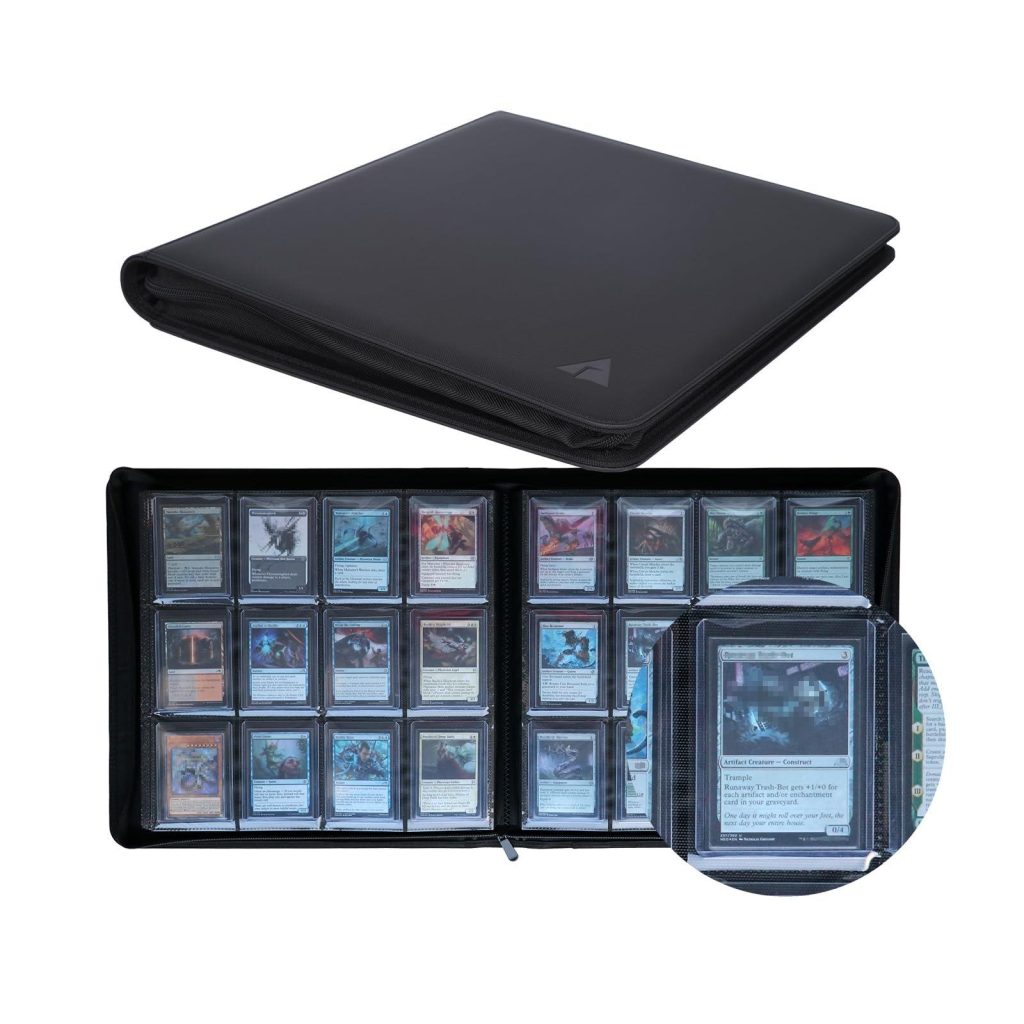
If your collection overflows shoe boxes, Rayvol’s 12-pocket binder brings order without forcing you into multiple albums. Each of the eighteen double-sided sheets shows a four-by-three grid, so a single page turn reveals twenty-four cards instead of eighteen. That bumps total capacity to 432 top loaders.
The binder’s footprint is only an inch wider than a nine-pocket book, but the extra column saves roughly forty percent shelf space compared with carrying two smaller binders. Fill it to the brim and the cover still closes cleanly thanks to a deeper spine and a zipper that rides on a recessed track rather than skimming page edges.
Rayvol lines every pocket with a black fabric backing. Cards pop visually, and back-to-back pages never rub surfaces. A sturdy handle stitched into the spine helps when the album creeps toward seven pounds loaded, a welcome touch during a full day at the National.
One caution: fresh out of the shrink-wrap, some units carry a faint factory odor. Leave the binder unzipped overnight and the smell fades. After that, performance is rock solid. If you want big capacity in a single carry, Rayvol is the clear front-runner.
Specs snapshot: 16 × 13 × 2.8 in; fabric-backed PP pages; recessed zipper track; holds 432 top loaders across 18 pages.
4. Gemloader 216-card binder: best display quality
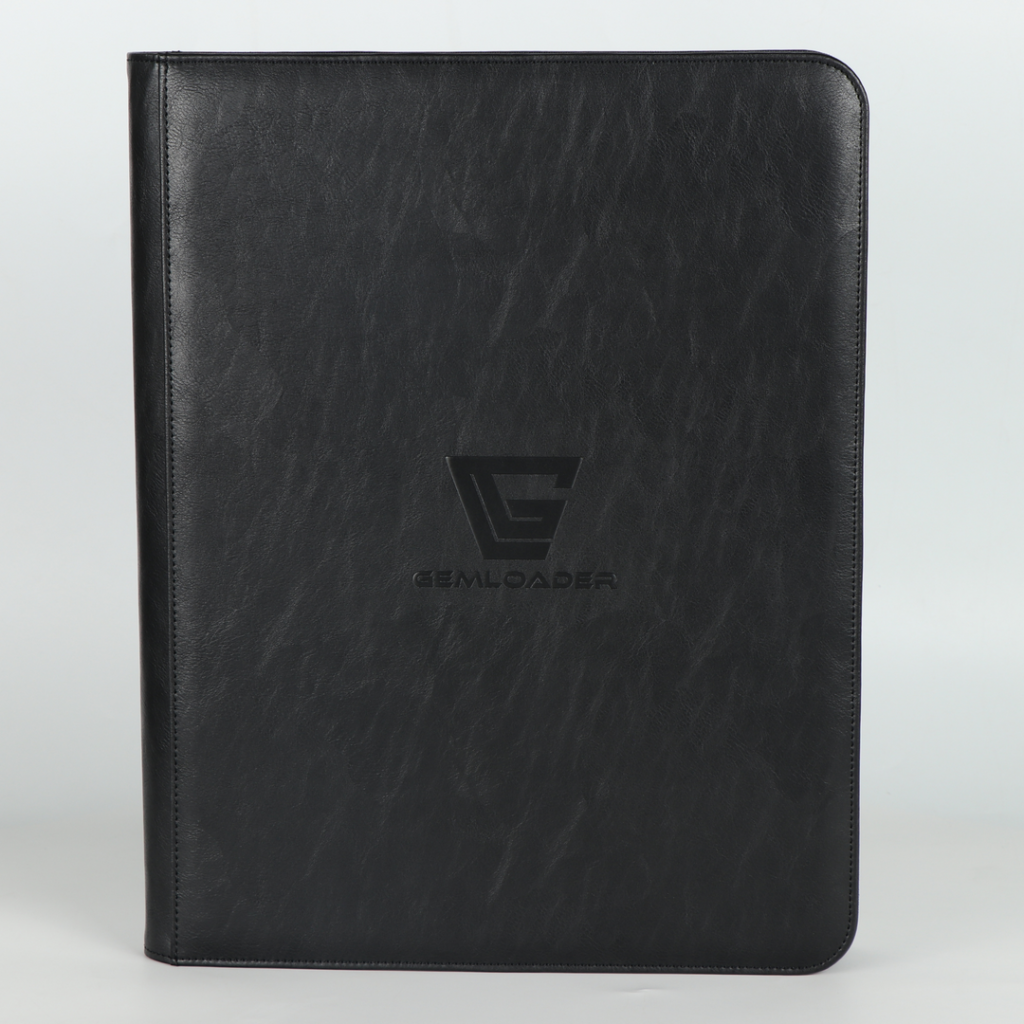
Some albums protect; Gemloader puts cards on stage. Unzip the textured faux-leather cover, feel the metal corner guards, and you will know this binder was built for cards you would gladly frame.
Twelve double-sided pages in a classic three-by-three grid hold 216 top loaders. The pocket film is crystal clear, and a padded black backdrop creates a gallery effect, where foils sparkle, vintage paper pops, and every page lies perfectly flat.
Gemloader’s advantage is rigidity. Each sheet uses thicker plastic welds, so pages never sag, even when full. The spine stays square, and the zipper glides without the micro ridges common on cheaper tracks.
Cost is the only hurdle. After shipping from Europe, you pay boutique money for boutique build. Collectors report that the binder still looks new after years of show travel, and the brand’s meticulous finish justifies every cent if you need a portfolio for grail cards rather than bulk storage.
Specs snapshot: 14 × 12 × 2 in; faux-leather hard shell; PVC-free pockets; holds 216 top loaders across 12 pages; weight 1.4 lb.
5. Card Guardian 4-pocket binder: best travel companion
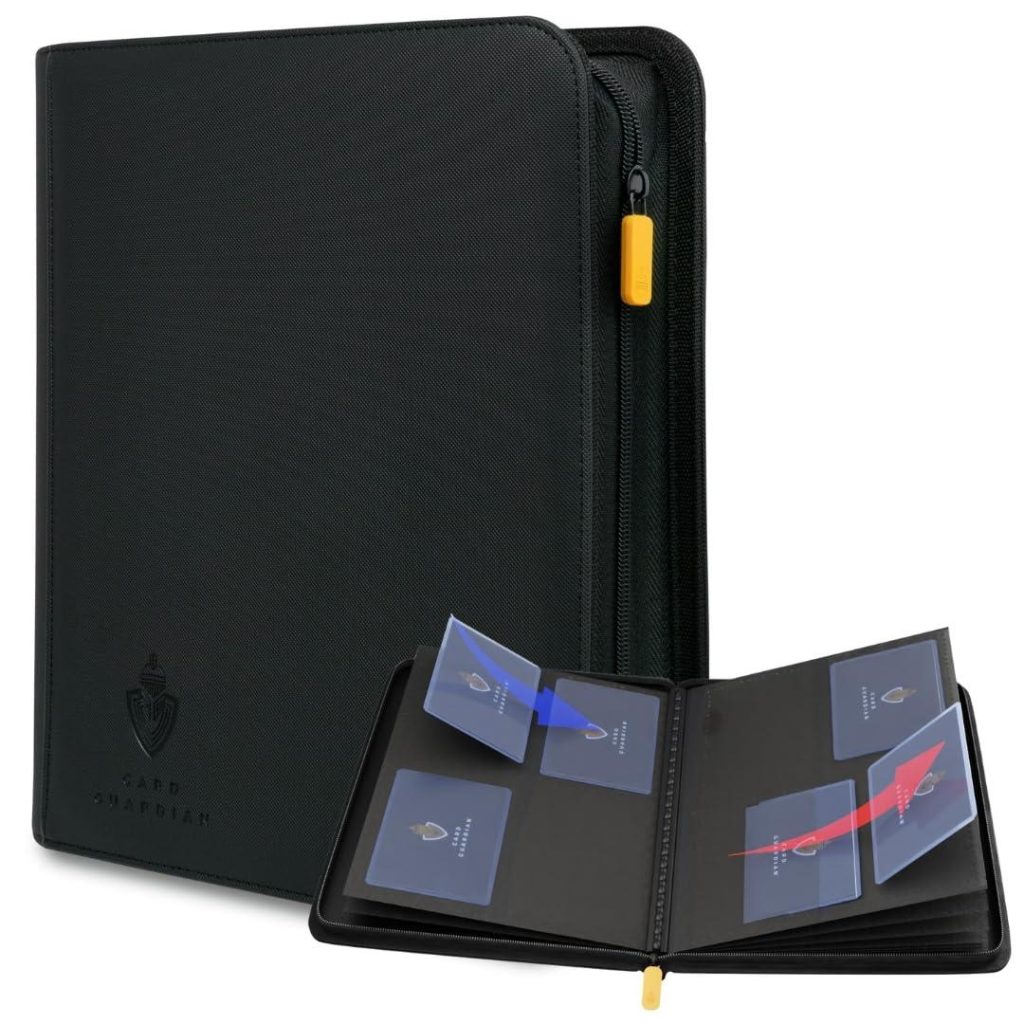
Big binders draw crowds, but sometimes you need a lightweight album that slips into a laptop sleeve. Card Guardian’s four-pocket book weighs under two pounds empty and measures roughly eleven by ten inches, closer to a hardback novel than a briefcase.
Twenty double-sided pages hold 160 top loaders. That capacity covers a curated trade stack or a complete playset, and the small footprint keeps arm fatigue away during long show walks.
Build quality rises above its price. The semi-rigid cover shrugs off backpack bumps, a smooth zipper seals everything tight, and the side-loading pockets use the same clear, PVC-free film found in larger premium binders. A discreet strap stitched along the spine doubles as a carrying handle, a small detail you will appreciate once the pages fill.
If you value portability over raw capacity, Card Guardian is the just-right pick: compact, sturdy, and ready for the next local trade night.
Specs snapshot: 11.4 × 10.2 × 1.6 in; semi-rigid cover; PVC-free pockets; holds 160 top loaders across 20 pages; weight 1.6 lb.
Side-by-side specs at a glance
| Binder | Pockets × pages | Total capacity | Outer size (in) | Empty weight | Price tier* |
| Vaulted | 9 × 14 | 252 | 15.9 × 13.5 × 2.5 | 1.6 lb | $$ |
| TopDeck | 9 × 20 | 360 | 15 × 13 × 2.0 | 1.5 lb | $ |
| Rayvol | 12 × 18 | 432 | 16 × 13 × 2.8 | 2.0 lb | $ |
| Gemloader | 9 × 12 | 216 | 14 × 12 × 2.0 | 1.4 lb | $$ |
| Card Guardian | 4 × 20 | 160 | 11.4 × 10.2 × 1.6 | 1.6 lb | $ |
*Single dollar sign = budget, double dollar sign = premium
Frequently asked questions
Will these binders fit thicker 55-point or 100-point top loaders?
No. Every model above is sized for standard 35-point holders, roughly 3.0 × 4.1 inches outside. Pockets that accept a snug 35-point loader can tear when forced around thicker plastic, and stretched seams never recover. If you store patch cards in chunky loaders, choose a graded-card case or keep those cards in slab boxes.
Why insist on side-loading pockets?
Gravity helps. When pockets open toward the spine, cards stay seated whether the binder is flat, upright, or tilted while you flip pages. Top-loading sheets rely on small flaps that curl over time, and one abrupt turn can launch a heavy top loader onto the floor. Side-load pockets plus a zipper remove that risk.
I saw a review saying some binders smell bad. Is that true?
A few budget batches arrive with a factory “plastic” scent. Collectors on Reddit note that Rayvol and D DACCKIT clear after a night of airing out. Premium binders use higher-grade polypropylene and tighter quality control, so they ship almost odor-free. Either way, a quick unzip on a ventilated shelf solves the issue before cards move in.
Do raw cards work in these pockets?
Technically yes, but we do not recommend it. A loose card rattles in a pocket sized for a rigid holder and can wedge sideways. Sleeve raw cards or use a standard nine-pocket binder built for raw dimensions.
What if the pocket size listed online is missing?
Look for numbers around 3.3 × 4.5 inches; that leaves safe clearance without wiggle. Rayvol, for example, lists that dimension on retailer pages, matching the sweet spot we measured.
How heavy will a full binder be?
Plan on about five grams per top loader plus the binder shell. A 252-slot Vaulted album loaded to the brim weighs roughly 4.5 pounds (about the same as a 13-inch laptop). A 432-slot Rayvol surpasses seven pounds. Store heavy binders upright like books to avoid stacking pressure.
Can I add or remove pages later?
No. All five picks use fixed pages. That choice is intentional because ring mechanisms dent rigid loaders during transport. To reorganize, leave blank slots or keep a second binder for overflow.
What’s the safest way to travel with a full binder?
Zip it closed, slide it spine-down in a backpack or rolling carry-on, and avoid overhead bins where luggage can shift. TSA may run an extra scan because dense plastic blocks X-rays, so plan for a brief manual inspection and you will breeze through.
Conclusion
A well-chosen top loader binder protects your cards, keeps sets organized, and makes trading effortless. Pick the capacity and build quality that match your collecting style, and your collection will stay safe for years to come.