Table of Contents
- Sun and UV Exposure
- Temperature Fluctuations
- Rain and Moisture
- Wind and Storms
- Snow and Ice
- Humidity and Condensation
- Proactive Maintenance Tips
- Conclusion
Your roof serves as the primary barrier, shielding your home from unpredictable weather and harsh environmental elements. As the surface most directly exposed to sun, wind, rain, and temperature swings, its durability determines how well it protects everything beneath. By learning how different weather conditions influence your roof, you are far better prepared to partner with a local roofing contractor to safeguard your investment.
This understanding not only helps you proactively address minor problems before they escalate, but also ensures a longer-lasting roof that performs well against your region’s climate. Ignoring the weather’s cumulative effects can lead to leaks, costly repairs, or even premature roof replacement, all of which can be avoided with timely care. From blazing ultraviolet radiation and heavy spring rains to winter ice dams and subtle humidity, each weather pattern presents unique risks. Adapting your maintenance strategy can make the difference between a roof that lasts its full lifespan and one that falls short. Even in a mild climate, seasonal shifts, occasional storms, and unexpected microclimate effects still require vigilance. With the right knowledge, homeowners can work closely with professionals to address vulnerabilities and strengthen their home’s first line of defense.
Sun and UV Exposure
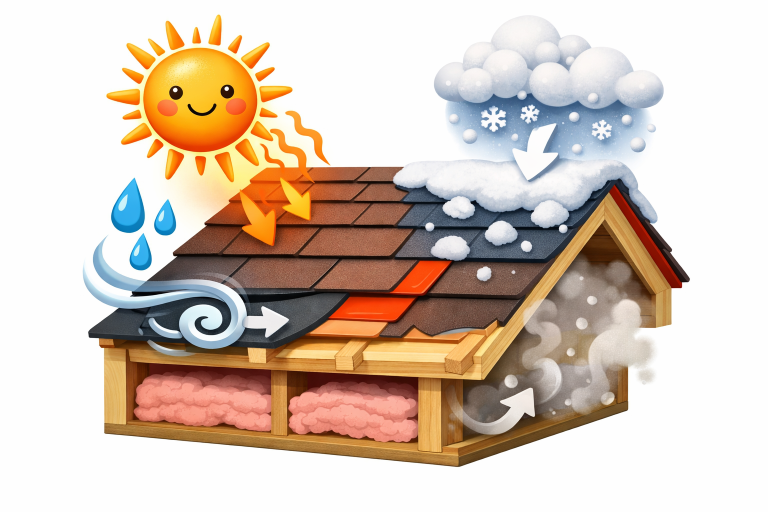
Continuous exposure to the sun’s ultraviolet rays can accelerate the aging process of roofing materials. Asphalt shingles, in particular, are prone to becoming dry, brittle, and faded, often losing the protective granules that help shed water. Unchecked UV exposure shortens roof life by breaking down chemical compounds, reducing wind resistance, and making the surface susceptible to cracking. Regions in the South and Southwest face the greatest risk due to higher sun angles and longer daylight hours.
Temperature Fluctuations
Every roof expands and contracts in response to daily temperature swings, especially in climates with cold nights and hot days. This constant movement gradually weakens seams, flashing, and sealants. Materials may buckle or warp as a result, compromising water-tightness. When paired with moisture, such stress can accelerate deterioration and void manufacturer warranties.
Rain and Moisture
Roofs that face heavy, sustained rainfall are at risk for moisture intrusion and compromised structural health. If gutters and downspouts become clogged or if the roof pitch is insufficient, water can linger and seep beneath the shingles. Moist roofing layers create a fertile environment for mold, algae, and wood rot, as noted by the Environmental Protection Agency’s guidelines for healthy homes. Over time, moisture can degrade the roof deck and undermine insulation, eventually leading to leaks.
Wind and Storms
High winds and severe storms exert force on roofing materials by prying up shingles, loosening fasteners, and displacing flashing. Even without visible damage, powerful wind gusts may lift edges and create entry points for rain. Areas prone to tornadoes or hurricanes require special attention, as minor breaches can escalate quickly. Regular roof inspections after wind events enable early detection, potentially saving thousands in structural repairs.
Snow and Ice
The weight of accumulated snow can place significant stress on the roof structure, especially for older homes or flat roofs. As snow melts and refreezes, ice dams can develop along eaves, forcing water beneath shingles and into the attic. This phenomenon, common in the Northeast and Midwest, can lead to insulation failure and saturated framing. Homeowners should watch for signs of sagging or water stains following heavy snow events and consider professional help for snow removal when needed.
Humidity and Condensation
Extended periods of high humidity foster unseen problems, particularly in poorly ventilated attics. Condensed water vapor settles on rafters and decking, promoting mold growth and hastening wood rot. In warm climates or during periods of high rainfall, pay special attention to attic airflow and insulation coverage.
Proactive Maintenance Tips
- Schedule Regular Inspections. Have a roofing professional examine your roof at least twice a year, ideally before and after winter or stormy seasons.
- Keep Gutters Clear. Clean gutters and downspouts to prevent overflow and pooling water near the roof edges.
- Trim Overhanging Branches. Remove or shorten tree limbs that could abrade roofing materials or drop organic debris.
- Ensure Adequate Attic Ventilation. Promote proper air movement to minimize moisture and temperature extremes under the roof deck.
- Respond Quickly to Repairs. Replace missing shingles, seal flashing, and repair leaks promptly to avoid long-term damage.
By understanding the impact of weather on your roof and prioritizing timely maintenance, you can extend its life and prevent many forms of unexpected damage. Preventive care is always less expensive than major repairs or complete replacement. Collaborating with experienced professionals and following industry-recommended practices is the best way to keep your home protected year-round.
Conclusion
In conclusion, your roof is constantly exposed to a wide range of weather conditions that can gradually weaken its structure and reduce its lifespan if left unchecked. From UV radiation and temperature fluctuations to heavy rain, wind, snow, and humidity, each element presents unique challenges that require ongoing attention. Understanding how these factors affect your roof allows you to take proactive steps, such as regular inspections, proper ventilation, and timely repairs, to prevent costly damage. By staying ahead of weather-related wear and working with experienced roofing professionals when needed, you can significantly extend your roof’s durability. Consistent maintenance not only protects your home’s structure but also ensures long-term safety, efficiency, and peace of mind year-round.