Key Takeaways
- Warehouse safety is increasingly dependent on modern material handling equipment.
- Improved training and technology reduce workplace accidents and increase productivity.
- Trends show a shift toward ergonomic and automated equipment to help lower injury rates.
- Continued investment in equipment brings long-term savings and regulatory compliance.
- Regular equipment maintenance and updated protocols are vital for smooth operation.
How Safe Equipment Transforms Warehouse Work
Modern warehouses are fast-paced environments where efficiency and safety must go hand in hand. The integration of advanced material handling equipment is not just about moving goods faster, but also about ensuring that people remain safe on the job. By leveraging custom material handling solutions, facilities can address unique workflow challenges and comply with evolving safety regulations. These solutions include safety features and ergonomic designs, making processes from loading to storage safer and more efficient. The use of specialized equipment has transformed warehouse operations, leading to a reduction in injuries and turnover. Advanced safety systems and improved design have reduced downtime resulting from accidents. Facilities that prioritize safety boost productivity and foster a loyal workforce.
Why Modern Material Handling Is Critical
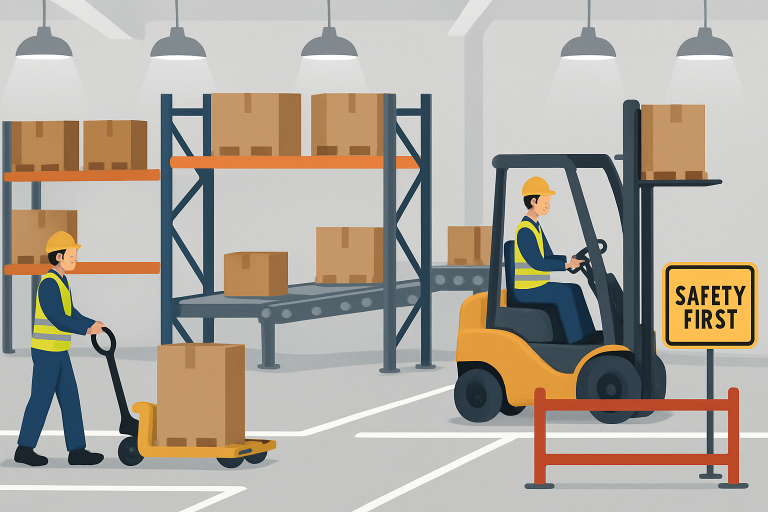
Equipment, such as lift trucks, automated pallet jacks, and smart conveyors, now features enhanced safety features. OSHA cites improper material handling as a leading cause of workplace injuries. To address this, the industry has introduced anti-slip platforms, auto-braking systems, and stability controls, thereby reducing hazards. These innovations lower insurance costs, reduce injuries, and increase workforce confidence. Safer equipment also means fewer disruptions, lower absenteeism rates, and improved profits. As demand for quick order fulfillment grows, scaling safely offers a competitive advantage.
Key Hazards That Modern Equipment Helps Prevent
- Musculoskeletal Injuries: Ergonomic controls and customizable interfaces are designed to support user comfort and minimize strain on the operator’s body.
- Falls: Components like sturdy guardrails, auto-locking gates, and anti-slip surfaces reduce the risk of falls for those working at heights or with elevated platforms.
- Equipment Failures: Integrated sensors provide real-time feedback and early warning alerts, helping prevent sudden breakdowns that could cause injury or property damage.
- Repetitive Stress: Automated lifts, conveyors, and robotic handling systems alleviate workers from repetitive manual labor, significantly reducing the incidence of repetitive strain injuries.
Recent industry research indicates that facilities upgrading to safer equipment experience fewer musculoskeletal disorders and higher employee retention rates. Proactive hazard identification and the use of equipment to mitigate risks are key distinguishing features of modern warehouses.
What to Look for in Safe Material Handling Equipment
Choosing the right equipment requires more than examining specifications; effective managers focus on features designed to save lives and prevent injuries. Core attributes include prominently placed emergency stop buttons, advanced stability controls, and visual or audible alert systems that notify operators of approaching obstacles or system malfunctions. Assessing how new equipment integrates with existing safety protocols and whether it is designed in accordance with the latest industry standards is vital. For those seeking operational excellence, collaboration with equipment partners who offer ongoing support and upgrades is essential.
Training: The Overlooked Safety Factor
Even the most sophisticated equipment cannot replace comprehensive, hands-on training. Routine and up-to-date training, including emergency shutdown procedures and daily inspection routines, has proven to significantly reduce mishaps. Companies that incorporate certification programs and offer frequent refresher courses report lower incident rates, benefiting from a culture of safety awareness that extends from the warehouse floor to management. Industry experts advise that a strong safety record starts with standardized onboarding and continues with ongoing learning for all personnel.
The Role of Automation and Smart Technology
Automation has shifted from being a competitive differentiator to a standard safety measure in modern warehouses. Intelligent forklifts and robotic systems can navigate dense traffic zones and execute repetitive or hazardous operations more effectively and safely than ever before. With built-in camera systems, advanced collision sensors, and data analytics, smart material handling technology not only minimizes the risk of human error but also provides management with meaningful insights for continuous improvement. This evolution in warehouse functionality frees human workers to take on higher-value tasks while reducing accident rates across the board.
Best Practices for Maintaining Safe Equipment
- Schedule regular inspections, preventative maintenance, and thorough audits to ensure all safety systems are operational.
- Replace any worn or faulty components immediately to prevent malfunctions that could lead to injuries or operational downtime.
- Encourage operators to complete pre-shift equipment checks and report any anomalies promptly.
- Keep detailed records of all repairs, upgrades, and safety incidents for regulatory compliance and continuous learning.
- Stay up-to-date on evolving industry regulations and best practices through trusted sources, such as EHS Today.
Looking Forward: Warehouse Safety as a Strategic Advantage
Embracing the latest safety technologies and custom material handling solutions is about much more than compliance it’s a strategic move that fosters resilience, operational consistency, and workforce satisfaction. Warehouses that make ongoing investments in both equipment and employee training see substantial returns through lower costs, improved morale, and faster, safer order fulfillment. As supply chains become increasingly complex and consumer expectations accelerate, prioritizing safety is a decisive factor in achieving long-term business success and industry leadership.