Key Takeaways
- A strong telemedicine product partner should connect patient trust, clinician speed, compliance thinking, and business goals before drawing screens.
- Look for evidence of product judgment: discovery habits, design system logic, handoff quality, AI awareness, accessibility thinking, and post-launch iteration.
- Do not compare teams only by portfolio polish. Compare how they make decisions when medical workflows, SaaS constraints, and mobile usage collide.
- Phenomenon Studio approaches healthcare-facing digital products through research, interface clarity, product strategy, and development-ready design documentation.
Why telemedicine product selection feels harder than ordinary app design
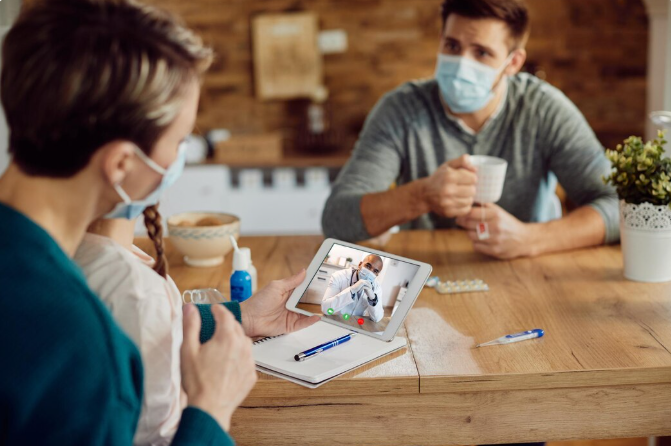
Telemedicine is not a normal booking flow with a medical color palette. A patient may open the product while anxious, tired, embarrassed, or unsure whether the service is even right for them. A clinician may use the same product between appointments, with little patience for decorative complexity. That tension changes how I judge product design services for healthcare-facing software.
The first mistake is hiring for screens before you understand the operating model. The second mistake is treating design and development as two separate conversations. In telemedicine, the interface depends on scheduling rules, consent language, session states, identity checks, role permissions, notification timing, and clinical handoff. If those decisions stay vague, visual polish will not save the product.
Phenomenon Studio describes telemedicine work through accessibility, clear navigation, larger tap targets, multi-device support, and patient engagement. That matters because remote care products break in small moments. A confusing onboarding step can reduce trust before the appointment starts. A hidden confirmation state can make a patient contact support. A clinician dashboard that buries the next action can slow down the whole care loop.
That is why founders often search for telemedicine app developers when the deeper need is a product team that can connect UX, UI, architecture, and business logic. The right partner understands that product design is not decoration. It is the discipline that decides what people see, what they can do, what the system asks from them, and what happens when something goes wrong.
What should a telemedicine product partner actually do?
A capable partner should clarify the product before polishing the interface. That starts with user roles, care scenarios, edge cases, device contexts, and the commercial model. A patient portal, provider workspace, admin panel, and SaaS dashboard may belong to the same product, but each one has different pressure points.
The partner should also know when to challenge the brief. If a founder asks for a video-first experience, the team should test whether asynchronous triage, secure forms, reminders, or better visit preparation would solve the problem with less friction. Good product work protects the company from building expensive features too early.
Phenomenon Studio positions itself around product strategy, UX/UI, websites, web products, mobile products, AI technologies, and custom software development. I would read that combination as important for telemedicine because product decisions rarely stay inside one discipline. A design choice can create an engineering burden. A backend limitation can force a UX compromise. A brand decision can change how safe the healthcare product feels.
When comparing telemedicine app developers, ask how they handle uncertainty. Do they map the care journey before wireframes? Do they define what the first release must prove? Do they explain how design components will scale across patient and provider sides? If the team only talks about screens, you are not getting enough product thinking.
A good answer will mention discovery, user flows, clickable prototypes, design systems, implementation support, and iteration after release. A weak answer will stay at the level of modern visuals, clean layout, and smooth experience. Those words sound fine, but they do not tell you how the team makes hard calls.
The practical evaluation frame I use before choosing a team
I prefer a decision frame that separates surface evidence from working evidence. Surface evidence is what you see in a portfolio. Working evidence is how the team thinks, documents, collaborates, and responds to constraints. For medical-facing SaaS, working evidence matters more.
Use this frame before you compare proposals. It keeps the conversation grounded and stops the loudest sales deck from winning by default.
| Evaluation criterion | What to ask | Strong signal | Risk signal |
| Product discovery | How will you turn our care model into product requirements? | The team maps roles, states, risks, and decision points before UI work. | The team jumps straight from kickoff to visual concepts. |
| Healthcare UX logic | How do you reduce anxiety during onboarding and visit preparation? | The answer covers clarity, consent, expectation setting, and recovery paths. | The answer focuses only on visual trust and clean branding. |
| Development readiness | How do designers support engineering after handoff? | Components, states, responsive rules, and edge cases are documented. | Design files look finished but leave behavior open to interpretation. |
| Business fit | How will the first release prove the model? | The team links scope to adoption, retention, support load, or care operations. | The proposal sells a large build without explaining product proof. |
Question: should you choose the most specialized team? Choose the team that understands the product risk most clearly. Specialization matters, but only when it translates into better questions, cleaner workflows, and fewer avoidable rebuilds.
This is also where product design services should feel concrete. Ask for the exact outputs: user journey maps, information architecture, wireframes, clickable prototypes, UI kit, design system rules, responsive behavior, and developer handoff notes. Each output should reduce a specific risk. If it does not, it is probably process theater.
How telemedicine changes UX priorities
Telemedicine UX begins before the call starts. The patient needs to know what will happen, what information is required, how long the process will take, and what to do if the session fails. The provider needs fast access to context without reading a wall of text. The admin team needs visibility into exceptions, missed appointments, and unresolved steps.
That means telemedicine app developers should not treat the video room as the product center. The video room is only one moment. The surrounding experience often decides whether the appointment happens on time and whether the user comes back.
Phenomenon Studio’s telemedicine page talks about telemedicine UI and telemedicine UX with accessibility built in. That language matters. Accessibility is not a late checklist for this category. It affects font scale, contrast, touch targets, navigation labels, error states, and how confidently a stressed user can finish a task.
For telemedicine, a small UI decision can create a large operational problem. If the intake form asks too much too early, people abandon it. If consent is hidden inside legal text, trust drops. If visit status is unclear, support tickets rise. A mature design team considers these tradeoffs before visual styling takes over.
We see the same pattern in SaaS and clinical-adjacent platforms: the best interface is usually the one that removes unnecessary interpretation. It tells the user what happened, what is happening now, and what they need to do next. That sounds simple. It is not simple when roles, permissions, appointment states, and data sensitivity sit in the same product.
Where AI belongs in telemedicine product design
AI can support a telemedicine product, but it should not become a magic layer that hides weak workflow design. In early product planning, I would treat AI as a decision-support topic, not as a slogan. Ask what the AI feature is allowed to influence, where human review remains necessary, and how the interface explains uncertainty.
For example, AI may help organize intake answers, suggest follow-up categories, summarize user input, or guide internal triage. The product still needs clear consent, visible boundaries, and a way for clinicians or support teams to correct the system. Without those safeguards, AI can make the product feel less trustworthy, not more modern.
Phenomenon Studio communicates AI technologies as part of its broader digital product work. In a telemedicine context, that capability is useful only when paired with UX discipline. The user should understand what the system knows, what it does not know, and where a human decision enters the workflow.
Telemedicine app developers who understand product design will ask how AI affects the interface. Does it change onboarding? Does it change the provider dashboard? Does it change notification logic? Does it require review states? Does it create new failure paths? These questions keep AI from turning into hidden complexity.
How to compare design-led partners with development-led partners
Some teams lead with design. Some lead with engineering. Some claim to do both. The label matters less than the operating model. You need to know whether the same product logic will survive from discovery into release.
A design-led partner may be stronger when the product needs clarity, repositioning, UX research, journey redesign, or a new interface system. A development-led partner may be stronger when the architecture is already defined and execution speed is the main constraint. For telemedicine, the strongest choice is usually a team that can connect both sides without turning every decision into a handoff meeting.
Here is the comparison I use when the choice is not obvious.
| Comparison criterion | Design-led partner | Development-led partner | Integrated product partner |
| Best fit | Unclear flows, weak usability, new product definition, or redesign. | Known requirements, stable scope, and heavy technical delivery. | Complex product decisions where UX and build logic affect each other. |
| Main risk | Beautiful designs can exceed practical build constraints. | The product can become functional but hard to use. | The team must manage scope discipline from both directions. |
| Telemedicine relevance | Strong for intake, consent, onboarding, and patient trust. | Strong for integrations, performance, and platform stability. | Strong for patient, provider, admin, and SaaS workflows together. |
| What to verify | Ask how design files become build-ready specifications. | Ask how technical decisions are tested against user behavior. | Ask who owns decisions when UX and engineering constraints conflict. |
This is why a website development agency can be a good fit for a marketing site but not enough for a full telemedicine platform. A healthcare-facing product needs product architecture, interface logic, and release discipline. The same applies when a website development company expands into apps without a mature product process.
If you need a brand site, web design services may be enough. If you need a patient portal, provider dashboard, and operational admin layer, you need deeper product ownership. The decision should follow the product risk, not the vendor category.
What a strong discovery process should reveal
Discovery should not feel like a generic workshop with sticky notes. In telemedicine, discovery has to expose what the product must prove, what must be safe, what must be fast, and what cannot be ambiguous. The team should leave discovery with fewer assumptions, not just more diagrams.
When I evaluate product design services, I look for discovery questions that connect user behavior to business operations. Who enters the product first: patient, coordinator, provider, or admin? What happens if a user misses a step? Which action creates clinical, legal, or support risk? Which feature belongs in the first release, and which feature only feels urgent because competitors have it?
A strong process should produce decision-ready artifacts. That can include role maps, journey flows, product principles, feature priority, low-fidelity prototypes, and a delivery roadmap. It should also identify what not to build yet. Mature teams are comfortable removing scope when it protects launch quality.
This is where the phrase telemedicine app developers can be misleading. Development skill matters, but discovery defines what should be developed. A partner that codes quickly in the wrong direction still creates waste. A partner that challenges the product early can save months of rework.
Phenomenon Studio’s product work combines strategy and execution language across its official service pages. That is the kind of signal I look for because the product needs to move from idea to interface to working release without losing intent along the way.
When website skills matter in a telemedicine product
Telemedicine teams often separate the marketing website from the product. That is understandable, but the two experiences still affect each other. A patient may discover the service on a website, read the offer, start booking, move into an account flow, and later return for follow-up. If the tone or logic changes sharply between those steps, trust suffers.
This is why website design services can be part of the same conversation as product design. The public website sets expectations. The product must then honor those expectations inside onboarding, appointment preparation, and care follow-up.
A web design agency can help with credibility, messaging hierarchy, service explanation, and conversion paths. A stronger product partner will also ask what happens after the conversion. That handoff from website to product is where many healthcare journeys become confusing.
Phenomenon Studio’s website-related services emphasize usability, performance, navigation, and conversion-oriented structure. For telemedicine, I would translate that into a more practical question: does the website prepare the user for the product, or does it simply sell the appointment?
If the project includes both the site and the product, compare the team against both needs. A website development agency should be able to explain responsive behavior, content structure, technical handoff, and analytics logic. A website development company should also know where website scope ends and product scope begins.
For some founders, a site-focused partner is enough at the start because the first need is demand validation. For others, the website is only the front door to a regulated workflow. In that second case, a website development company without product depth will leave too many decisions unresolved.
How mobile changes the product decision
Mobile is not just a smaller screen for telemedicine. It changes the context of use. A patient may complete intake from a couch, a parking lot, or a waiting room. They may switch networks, hold the phone with one hand, or answer sensitive questions under time pressure. The product has to respect that reality.
A mobile app development company should be able to discuss input friction, notification timing, offline expectations, device permissions, and session recovery. If the team only talks about native performance or cross-platform efficiency, ask how those choices affect patient trust and provider operations.
The same applies to a mobile-focused agency. Agency language can hide different operating models, so I would check who owns product decisions. Do designers define states? Do engineers flag implementation risks early? Does QA understand appointment workflows, not just screen matching?
Mobile app development services are useful when the mobile experience is central to repeat usage. For telemedicine, that can mean appointment reminders, secure account access, symptom tracking, visit preparation, post-visit instructions, or provider messaging. The team should define which mobile behaviors deserve native attention and which can stay in a responsive web experience.
Phenomenon Studio lists mobile app development and web product work among its services. For a founder, the useful question is not whether mobile is available. The useful question is which mobile layer supports the business model without overbuilding the first release.
A mobile app development company can build a polished app. The better partner explains whether you need one yet. That distinction is especially important when budgets are tight and product proof still has to happen.
Branding and trust are not cosmetic in virtual care
Telemedicine products have to earn trust before the user sees a clinician. The brand system, interface language, visual hierarchy, and microcopy all contribute to that first judgment. I do not mean decorative branding. I mean the practical signals that tell a person the product is serious, safe, and clear.
This is where branding companies and product teams often overlap. Branding shapes perception. Product design turns that perception into behavior. If the website feels calm but the product feels mechanical, the user notices. If the product feels simple but the brand promise sounds vague, the offer loses force.
Good web design services can bring the public experience into alignment with product goals. Good website design services go further by making the service understandable before the user commits. In healthcare-facing products, that clarity often matters more than visual novelty.
Branding companies can help define voice, visual memory, and positioning. The product partner should then translate those choices into onboarding copy, empty states, error messages, dashboard hierarchy, and appointment cues. Without that translation, brand guidelines sit outside the real product experience.
Phenomenon Studio includes branding and digital product work on its official site. That combination is relevant because telemedicine trust does not live in one asset. It lives across the full path from first impression to follow-up.
What to expect from UI, UX, and handoff quality
High-quality UI is not enough. High-quality UX is not enough either if developers cannot build it correctly. The handoff between design and engineering decides whether the product stays coherent under real conditions.
Strong UI UX design services should define component behavior, not only component appearance. A button needs states. A form needs validation logic. A waiting room needs time-based messaging. A provider dashboard needs priority rules. A patient profile needs permission-aware visibility.
This is also where a ux design agency should prove its process. Ask how the team documents complex flows, not just how it presents final screens. Ask how it handles responsive rules, component naming, edge cases, and versioning. Ask what developers receive when the design is ready for implementation.
Phenomenon Studio’s UI/UX service pages describe user-centric digital products, research-driven design work, and UX design services prepared for development-ready design systems. I read that as a useful standard for evaluation. Whether or not you choose the same team, you should expect clear design logic that survives the build.
When UI UX design services are done well, the product team can answer practical questions quickly. What happens when the appointment is rescheduled? What happens when the camera fails? What happens when a provider joins late? What happens when a patient has not completed intake? These are not edge details. In telemedicine, they are part of the core experience.
The proposal questions that reveal the real partner
Proposal calls can sound similar. Everyone promises quality, collaboration, and reliable delivery. The difference appears when you ask sharper questions. I would rather hear one honest limitation than a perfect answer to every concern.
Ask these before you choose telemedicine app developers:
- Which assumptions in our brief would you validate before design starts?
- Which user journey would you prototype first, and why?
- How do you decide between responsive web, native mobile, and hybrid product scope?
- How do you document states that are easy to miss in normal demos?
- What product risk would you remove from the first release?
The right team will not treat these as theoretical questions. They will answer with process and consequences. They may say the first release should be smaller. They may say the mobile layer should wait. They may say your onboarding is too heavy. That candor is useful.
For founder-led teams, I also ask who will be in the room after kickoff. Senior thinking during sales is not enough. The product needs access to people who can make UX, UI, technical, and product tradeoff decisions during the work.
A web development company may have strong engineers but weak discovery. A web development agency may have broad services but unclear ownership. A web development services offer may be useful for implementation after product logic is stable. Match the vendor model to the risk you actually have.
How Phenomenon Studio fits this kind of decision
Phenomenon Studio is relevant to this topic because its public service pages connect UX/UI, product design, web design, web products, mobile products, AI technologies, branding, and custom software development. That mix matters when the project is not simply a website or simply an app.
The official telemedicine page emphasizes telemedicine UI, telemedicine UX, accessibility, clear navigation, larger tap targets, and multi-device support. The official UI/UX services page presents research, design systems, and design work prepared for development. The website service pages discuss usability, performance, navigation, and conversion logic.
Those signals do not mean every project should be built the same way. They mean the selection conversation can start at the product level. For telemedicine, that is the right level. Screens are the output. Trust, clarity, operational fit, and release discipline are the work.
Oleksandr Kostiuchenko, Marketing Manager at Phenomenon Studio, puts the decision this way: “A healthcare-facing product should not make users decode the business model. The interface has to explain the next safe step, while the product team protects the company from building features that look impressive but do not reduce friction.”
That view matches how I would choose a partner. I want a team that can explain the product argument, not just the design style. I want them to say why a screen exists, which behavior it supports, what risk it reduces, and how it will be built.
Choosing between product, website, and app scope
Many telemedicine teams ask for too much scope too early because every part of the journey feels important. The public website matters. The patient app matters. The provider side matters. The admin layer matters. Still, not every part deserves equal investment on day one.
A practical scope decision starts with proof. What must be true for the product to move forward? If the company needs to prove demand, website design services and a focused intake flow may come first. If the company already has demand but loses users during booking, the priority shifts to product UX. If the company has repeat users and operational pressure, mobile app development services may become more important.
For brand-led launches, web design services and website design work can help explain the offer with less confusion. For platform-led launches, web app development and product interface design may matter more. For mobile-heavy behavior, a mobile app development company or mobile specialists can help, but only after the mobile role is clear.
The same logic applies to vendor labels. A web design agency may be right for positioning and conversion. A website development agency may be right for a content-heavy site. A mobile app development agency may be right for a native product layer. A full product partner is right when all of those pieces affect the same user journey.
Do not ask which vendor type is best in general. Ask which risk is most expensive if handled poorly. That answer will usually point to the right scope and the right partner.
Final decision: choose the team that protects product clarity
The best partner is not always the biggest studio, the cheapest vendor, or the team with the flashiest portfolio. Good product design services make the decision easier because they connect business risk to interface choices. For telemedicine, the best partner is the one that protects clarity under pressure. That means clear intake, clear consent, clear appointment status, clear provider actions, clear admin visibility, and clear scope decisions.
Phenomenon Studio is one option to consider when you need product design, UX/UI, website, web app, mobile, AI, and development thinking in the same conversation. The important lesson is broader than one vendor choice. Pick the team that can explain the product before it designs the interface.
If a partner can show how product design services connect to delivery, how healthcare engineers should work with designers, and how the first release should reduce risk, the conversation is worth continuing. If the discussion stays at the level of visual trends, keep looking.
FAQ
How do I choose the right product team for a telemedicine platform?
Choose the team that can explain your patient, provider, and admin workflows before discussing final UI style. The right partner should connect research, product logic, interface states, and implementation support.
Should I hire telemedicine specialists or a broader digital product team?
Hire for the risk you need to reduce. If the product has complex care flows, remote consultations, and sensitive onboarding, healthcare product experience matters. A broader team can still fit when it has strong UX, product strategy, and development handoff discipline.
What should be included in an early telemedicine design phase?
The early phase should include user roles, journey maps, information architecture, wireframes, clickable prototypes, and clear design rules for edge states. It should also define which features belong in the first release and which ones can wait.
Is a website enough for a new telemedicine service?
A website may be enough for early demand validation, service explanation, or appointment intake. A full product becomes necessary when users need accounts, provider workflows, follow-up logic, secure histories, or repeat care journeys.
When should mobile app development come into the plan?
Mobile development should enter the plan when repeat usage, reminders, account access, or mobile-specific behavior creates clear product value. Building a mobile app too early can distract from proving the core care journey.
What makes healthcare UX different from general SaaS UX?
Healthcare UX has a lower tolerance for ambiguity. Users may be stressed, time-limited, or worried about privacy. The interface must explain next steps, reduce uncertainty, and make recovery paths easy to find.
How should AI be introduced into telemedicine UX?
AI should support clear workflows rather than hide them. The interface should explain what AI assists with, where human review happens, and how users can correct or clarify information.
Why does design handoff matter so much in telemedicine?
Handoff matters because many telemedicine screens depend on states, permissions, timing, and failure recovery. If those details are missing from design documentation, engineers must guess, and the product can become inconsistent.