Table of Contents
- Introduction
- Why Choose a Whole Home Generator?
- The Importance of Professional Installation
- Proper Sizing and System Design
- Seamless Integration with Existing Systems
- Ongoing Maintenance and Support
- Conclusion
Introduction
Power interruptions are becoming increasingly common across the country, often leaving homeowners without electricity for hours or even days. During these outages, everything from food preservation to medical devices is at risk, and daily routines can be upended in an instant. Choosing a Raleigh, NC whole home generator installation by licensed electricians provides peace of mind, ensuring that your family has uninterrupted power and is protected from the unpredictability of the grid.
Unlike portable alternatives, a whole-home generator seamlessly powers every essential system in your home. Quick and reliable backup power is an answer to storms, utility failures, or blackouts especially for those who depend on the consistent operation of appliances, security systems, and computers. As these systems instantly engage when the primary grid fails, homeowners benefit from automated transition and a worry-free backup source, enabling comfort and safety even in adverse conditions.
Why Choose a Whole Home Generator?
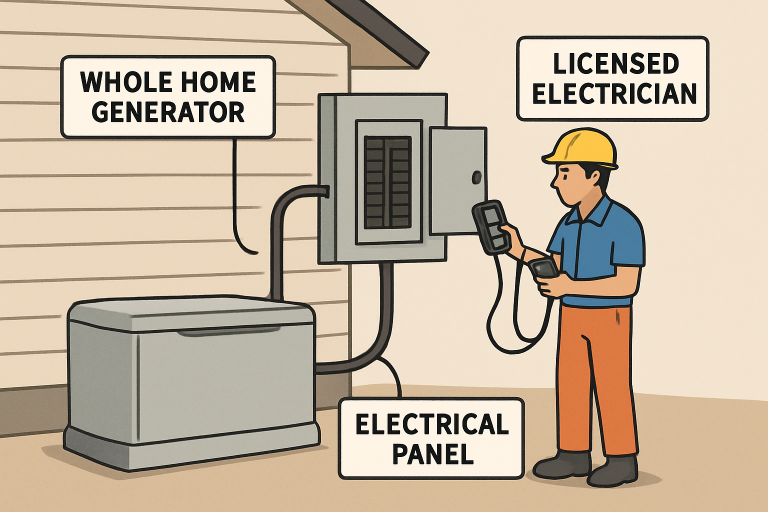
A whole home generator delivers more than convenience; it’s a comprehensive solution that protects your property and well-being. The generator is hardwired into your electrical panel and automatically senses when utility power is lost. This allows it to activate within seconds, supplying electricity seamlessly to your entire house from heating and cooling systems to refrigeration, lighting, and critical health equipment.
According to This Old House, understanding how these systems operate and what features to prioritize can help homeowners make informed decisions about installation, capacity, and maintenance.
The differences in reliability and efficacy between whole home generators and portable units are significant. Portable generators typically provide limited, temporary relief and require manual setup and monitoring. In contrast, whole home generators are permanently installed, weather-resistant, and robust enough to keep your home fully operational, making them a wise investment for homeowners looking to eliminate downtime and prevent costly damage during outages.
The Importance of Professional Installation
Installing a whole-home generator is a technical project that should be handled by skilled professionals. Inspection, sizing, wiring, and seamless integration into your home’s existing electrical system require the expertise of licensed electricians. Attempting a DIY installation or hiring an unqualified contractor can lead to hazardous mistakes, such as miswiring, fire risks, and dangerous backfeeding.
Licensed electricians have not only the technical knowledge but also the experience to troubleshoot challenges unique to your property. They take into account proper ventilation placement, ensure fuel-source compatibility, and adhere to mandated installation codes. This thorough approach guarantees both safety and efficiency for homeowners.
Proper Sizing and System Design
Choosing the correct generator size is crucial for both performance and cost-effectiveness. An undersized generator may struggle or fail when powering the entire home, while an oversized unit results in wasted energy and unnecessary expense. According to Consumer Reports, proper sizing depends on understanding your total wattage requirements and how different appliances draw power during use. Licensed electricians perform detailed load calculations to determine your exact power needs, taking into account appliances, HVAC, water heater, sump pump, and critical systems requiring backup. This ensures your generator meets your real needs without exceeding them, providing optimal efficiency and reliability.
Seamless Integration with Existing Systems
Professional installation prioritizes the seamless integration of your generator so it will function as an extension of your home’s electrical system. The cornerstone of this process is the automatic transfer switch, which detects an outage and instantly shifts your power source from the utility supply to the generator with no manual effort required. When the main power is restored, the switch safely reconnects your home to the grid and shuts down the generator. This sophisticated setup eliminates the risk of power surges or power interruptions, protecting sensitive electronics and ensuring continuous comfort.
Ongoing Maintenance and Support
Ongoing maintenance extends the life of your whole home generator and ensures it operates when you need it most. Licensed electricians provide regular inspections, oil and filter changes, transfer switch testing, and battery checks. Early identification of issues prevents costly breakdowns and gives you confidence that your generator will perform during emergencies. In addition to installation, these professionals provide troubleshooting and repair services, delivering long-term support and reliability.
Conclusion
A whole-home generator offers unmatched protection, ensuring your household remains safe, comfortable, and productive during power outages. The key to realizing these benefits lies in hiring licensed electricians for installation and maintenance. Their expertise guarantees compliance, efficient power delivery, and peace of mind for your family through every storm or blackout.