Table of Contents
- Start with Bath Time
- Engage in Sensory Water Play
- Attend Parent-Child Swim Classes
- Introduce Water Toys and Games
- Practice Water Safety at Home
- Gradual Introduction to Pools
- Use Positive Reinforcement
- Be Patient and Attentive
Start with Bath Time
Introducing your baby to water can be a magical experience that lays the groundwork for confidence, skill development, and family fun in the pool or at the beach. The journey begins at home, with the daily routine of bath time. Creating a relaxed and playful atmosphere helps your child become comfortable with water at their own pace. Simple routines, such as gently pouring water over their hands and feet, build familiarity. Incorporating playtime and singing songs can help create happy, safe associations with water from the start. If you’re ready to explore further, learn about quality infant swim school programs that provide structured, professional aquatic introductions for babies and parents.
As you introduce your baby to the water, let them splash and play freely. Use brightly colored bath toys to stimulate their senses and encourage movement, making the experience both fun and soothing. For more guidance on best practices at home, parents can explore resources such as the Parents Bath Safety Tips to ensure safety while supporting their baby’s positive water experiences.
Engage in Sensory Water Play
Beyond the tub, water playtime can be extended with creative sensory activities. Setting up a small water sensory bin with floating toys, cups, and gentle utensils lets babies explore the sounds, sights, and feel of water in a low-pressure environment. These activities help develop motor skills, hand-eye coordination, and comfort with water by making playtime interactive and engaging babies learn best through play and exploration.
Try adding everyday safe household items like plastic cups or sponges for different tactile experiences. Ensure the water temperature is warm but not hot, and always supervise your infant closely. Numerous expert tips on infant sensory play can help parents introduce a variety of water activities that promote curiosity and confidence in their children.
Attend Parent-Child Swim Classes
Structured swim classes designed for babies and their parents offer a supervised, safe environment for infants to become more comfortable in the water. Good programs focus on water safety, gentle submersion exercises (when appropriate), and fun games that help babies explore aquatic movement at their own pace. Certified instructors guide families in learning to hold and support babies in water, while also encouraging floating and kicking through playful routines.
Parent-child swim classes do more than teach foundational swimming skills — they allow babies to socialize, build trust, and learn from peers in a fun, group setting. Many aquatic centers, YMCAs, and community pools have beginner lessons specifically for infants, making it easy to find a class that matches your needs and comfort level.
Introduce Water Toys and Games
Making water fun and engaging is key to developing a lifelong comfort with aquatic environments. Introducing water-friendly toys, such as floating animals, stacking cups, or boats, encourages your baby to interact with water through play. Simple games such as guiding toys to “swim” across the tub or pool, or dropping and retrieving objects create opportunities for learning basic water concepts like floating, sinking, and splashing.
These playful experiences help strengthen your baby’s fine and gross motor skills while fostering excitement and curiosity about the water. Make sure all toys are age-appropriate and free from small, removable parts that could pose a choking hazard.
Practice Water Safety at Home
Water safety is at the heart of every aquatic adventure. Always supervise your child within arm’s reach, even for short moments. Keep bathroom doors and toilet lids closed, and use anti-slip mats in bathing areas to prevent accidental falls. Regularly check the water temperature before placing your baby in it lukewarm is safest.
Remove water from tubs and buckets immediately after use and ensure there’s no standing water in or around your home. Practicing vigilant safety habits fosters both confidence and trust, building the foundation for positive water experiences now and in the future. For comprehensive safety guidelines, review resources provided by organizations such as the American Academy of Pediatrics.
Gradual Introduction to Pools
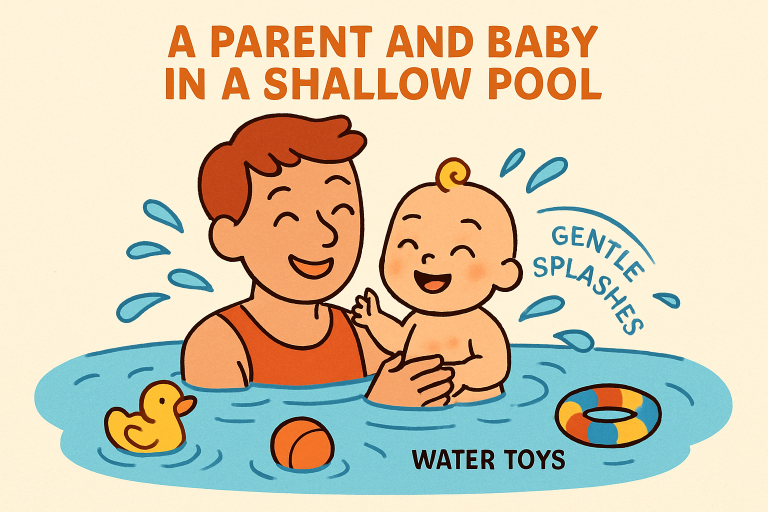
As your baby grows more comfortable, consider gradually introducing them to pools or other larger bodies of water. Begin in shallow sections so your child can become accustomed to the new environment without feeling overwhelmed. Short sessions are best ten to fifteen minutes is sufficient for most babies. Hold your little one securely in your arms, allowing them to feel supported while trying gentle kicks and splashes.
Ensure the water is clean and at the correct temperature (approximately 85–87°F for infants), and remain attentive to your baby’s cues at all times. If your child shows any sign of discomfort, don’t hesitate to end the session early and try again another day.
Use Positive Reinforcement
Celebrate every small step your child takes in the water, from first splashes to floating on their back. Positive reinforcement, including gentle praise and a broad smile, reassures your baby and helps make each new encounter something to look forward to. Maintain an upbeat and calm atmosphere, ensuring your child associates water with fun and safety.
Document milestones and share them with your child over time to build their sense of pride and accomplishment.
Be Patient and Attentive
Every child develops water confidence at their own pace. Some may take to water instantly, while others need more time and reassurance. Always pay close attention to your baby’s mood and reactions, and never force them to participate. A patient approach, responsive to your child’s comfort level, lays the groundwork for a lifelong enjoyment of aquatic activities.
Introducing babies to the water is a joyful bonding experience for families. Combining fun, safety, and patience creates positive associations and builds the foundation for future swimming adventures.