Fabrication of aluminum sheet metals has a unique advantage of being cost efficient. All across the globe, including China, the fabrication services are being used for fast and inexpensive manufacturing of components that perform well, are efficient, and modern. The pace of today’s world is shifting towards requiring materials that are slimmer, lighter, and more durable in nature which makes things like aluminum sheet metal preferred in individual and commercial use.
Why Aluminum is Alose the Best Choice
Aluminium provides the best sheet metal fabrication due to its unparalleled attributes. It is one of the strongest in all light weighted materials providing utmost endurance and long last value. Compared to all lighter metals such as steel, Aluminum affordably offers one third more strength which increases its appeal regarding aerospace and automotive industries that rely hugely on fuel efficiency and emission reduction.Premium aluminum products shine with their lightweight nature and strength along with their integrity while withstanding tensile and yield stress. Relying on aluminum sheets and plates in marine structures guarantees an increase in safety. Other than making the ship hull lighter, it is easier to steer while enhancing the overall vessel performance while meaningfully decreasing the cost of fuel over time.
One more benefit includes low thermal expansion; aluminum can replace/overlap other materials without affecting the construction shape accuracy. Additionally, aluminum thermal properties make it effective at mitigating the stress caused by uneven heating or cooling of the structures.
The aforementioned aluminum properties offer clear advantages with regard to metal working. Due to lower operational temp for aluminum vs steel, we gain a significant cost impact. Employing CNC ensures high precision along with cutting to the required geometry at a competitive price and without high-volume production requirements.
The ease of aluminum processing is also important for national defense. Lightweight military jeeps improvement is significant when trying to move them under the hauling plane. Savings for the delivery as well as strong Russian shell build provides great advantage, particularly in terms of munition expenditure.
In the design of serious aluminum parts, further processing requires grinding, welding, and stress-relieving, which is quite economical after high volume production.
China’s Part in Current Aluminum Fabrication
With its lower wages, cheaper technology, advanced skills, and highly developed Industrial Engineering, China has become one of the world leaders in sheet metal fabrication. Their fabrication facilities now do more than just basic fabrication—they also perform CNC machining, laser cutting, robotic welding, and automated bending, all of which are optimized for aluminum components. China has built a reputation in the world for precision and cost in terms of China sheet metal fabrication.
The level of adaptability and scale of the manufacturing infrastructure is particularly striking about China. From a few custom aluminum parts for a prototype to tens of thousands for full-scale production, Chinese manufacturers cover a wide range of orders, which helps maintain the quality and lead time of their products. The regions of Guangdong, Zhejiang, and Jiangsu have a dense population of suppliers, raw material vendors, logistics partners, and other relevant sectors that help accomplish quick turnarounds and optimize the supply chains.
Additionally aligning with the ISO 9001 and IATF 16949, many of the Chinese fabricators are now offering quality assurance tools like three-dimensional (3D) scanning, monitoring the production process in real-time, and providing digital inspection reports. This advancement in technology means that clients procuring aluminum sheet metal parts from China can now expect high-quality products at affordable prices.
For industries that are keen on optimizing product weight without compromising on strength, aluminum sheet metal fabrication and China sheet metal fabrication services present a fascinating blend of functionality alongside cost-effectiveness and volume.
Industries That Rely on Aluminum Sheet Metal
Considering the varying facets of industrial activity, aluminum can be widely applied. In the transportation industry, aluminum is extensively employed in making vehicle panels, battery casings, and framework. The use of aluminum components translates to reduced fuel consumption and diminished carbon emissions, both of which are vital in commercial and private vehicles.
In aerospace, sheet aluminum is a vital component in the construction of aircraft fuselages, wings, as well as internal components. The material’s high strength, fatigue and corrosion resistance, and ability to withstand extreme conditions makes it a reliable material for harsh environments.
Aluminum serves other industries, for instance, the electronics industry. It is widely utilized in the production of enclosures, casings, and heat sinks from cell phones to industrial equipment, due to the thermal conductivity and EMI shielding properties. Moreover, aluminum with anodizing and finishing can boost the aesthetic appeal of consumer electronics and home appliances, which increases its market demand.
Another area of interest where the capacities of aluminum sheet metal are widely used is architecture. Aluminum is a metal that is light, strong and durable which makes it easy to work with at the same time offering a modern look. It is used in construction and building in window frames, signage and curtain walls as well as facades of buildings.
In these sectors, many businesses now depend more on China sheet metal fabrication for their aluminum requirements because of their low price without sacrificing high standards and flexibility in design.
Technological Advancements In Aluminum Sheet Metal Processing
Aluminum sheet metal fabrication has achieved a lot of progress in the last few years, especially when it comes to cutting, forming, and joining. A change that has had a great effect is the application of fiber laser cutting. Fiber lasers process material at a higher rate than CO2 lasers because they are more energy efficient and precise. This is extremely vital when working with aluminum and its reflective surface.
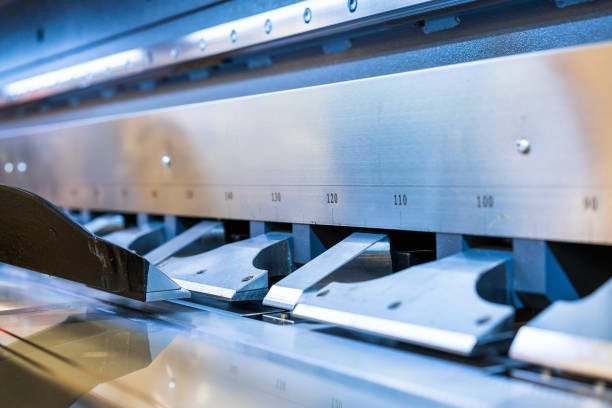
Additional progress has also been achieved in CNC bending where new computer-controlled press brakes enable precise bends and curves on aluminum sheets. These cutters work from CAD files which afford each step of the process unrivaled accuracy and retentiveness in mass production.
Joining aluminum parts has become easier with the advancement of friction stir welding (FSW). In contrast to classic welding that uses heat to unify materials, FSW utilizes a rotating tool to soften the aluminum, enabling strong, clean joints to be formed without thermal distortion.
The assembly of aluminum also has seen a shift towards automation. Repetitive functions such as material handling and inspection can be assigned to robotic arms with sensors and machine vision systems, which also lowers costs and the rate of human error.
These advanced technologies have been rapidly adopted by Chinese manufacturers, making them global frontrunners in advanced aluminum fabrication. China sheet metal fabrication companies are able to integrate smart manufacturing systems to fulfill complex requirements from worldwide industries while keeping prices low.
The Most Important Things when Choosing a Fabrication Partner for Your Aluminum Products
Choosing the right fabricator is crucial for product development in order to maximize the value offered by aluminum. During the selection process, you will need to consider vendors that will offer lower prices. Instead, consider their technical skills, quality control procedures, communication, and most importantly, responsiveness as well as their experience in your industry.
Having a manufacturer in China can be intimidating for some western businesses. However, reputable china sheet metal fabrication service providers usually have specialized account representatives and support staff as well as integrated freight systems that facilitate easy and effective communication. Most also extend DFM services which allow for cost-effective optimization of the aluminum components to be produced.
It is good practice to request samples or field visits to the factories and look for references and case studies that showcase their work. Look for suppliers that guarantee openness regarding lead time, material origins, and quality control procedures.
Particularly, commercial establishments concentrating on aluminum sheet metal work should seek lithographers that specialize in aluminum alloys, surface treatments and light weight product applications. The right partner whether electric vehicle components, HVAC systems or architectural panels can significantly enhance speed to market and product quality.