Key Takeaways
- Reliable time and attendance systems are essential for managing today’s diverse and distributed workforce.
- Automation reduces manual errors, improves compliance, and enhances operational efficiency.
- The right system elevates employee trust, streamlines processes, and supports long-term scalability.
- Prioritizing features such as real-time tracking, mobile access, payroll integration, and strong compliance tools ensures accurate and accountable workforce management.
Choosing a reliable time and attendance system is more crucial than ever, as businesses adopt diverse work styles and locations. Modern workplaces, spanning remote, hybrid, and on-site environments, require robust technology to accurately track, integrate, and report employee hours and attendance. The right solution enhances efficiency by automating tedious time-tracking tasks, reducing manual administrative errors, and ensuring compliance with both local and federal labor standards. When a business selects a system tailored to its needs, it directly influences employee morale, trust, and overall operational agility. Understanding how time and attendance systems function and what to prioritize in your selection makes all the difference in achieving accuracy and compliance across various business scenarios.
These modern systems empower organizations to monitor attendance and scheduling in real-time, enable remote access, and automate compliance tracking for various labor laws and regulations. From seamless mobile check-ins for field workers to shift-swapping features for hourly staff, the technology supplements every aspect of workforce management. Whether you’re managing a small team or a large multisite organization, investing in proper technology can have a direct impact on productivity and morale. Moreover, the ability to access analytics, manage exceptions, and stay compliant with evolving legislation underscores the transformative power of these tools in shaping an efficient workplace culture.
Real-Time Attendance Tracking
Instantaneous attendance monitoring enables businesses to respond proactively to issues such as employee tardiness and absenteeism. As a core component of employee time tracking, real-time visibility allows managers to oversee workforce activity with precision and accuracy. Instead of waiting for daily or weekly reports, managers can access up-to-the-minute data on who is currently clocked in, on break, or absent. Real-time data enables managers to make informed decisions and quickly identify attendance trends, which in turn positively influences scheduling and resource management. By identifying attendance anomalies as they happen, businesses can contact staff immediately to resolve issues, reassign shifts, or approve last-minute schedule changes, promoting continuity in daily operations. Issues can be resolved before they snowball, supporting operational agility and reducing unnecessary costs such as overtime or temporary staffing expenses.
Biometric Authentication
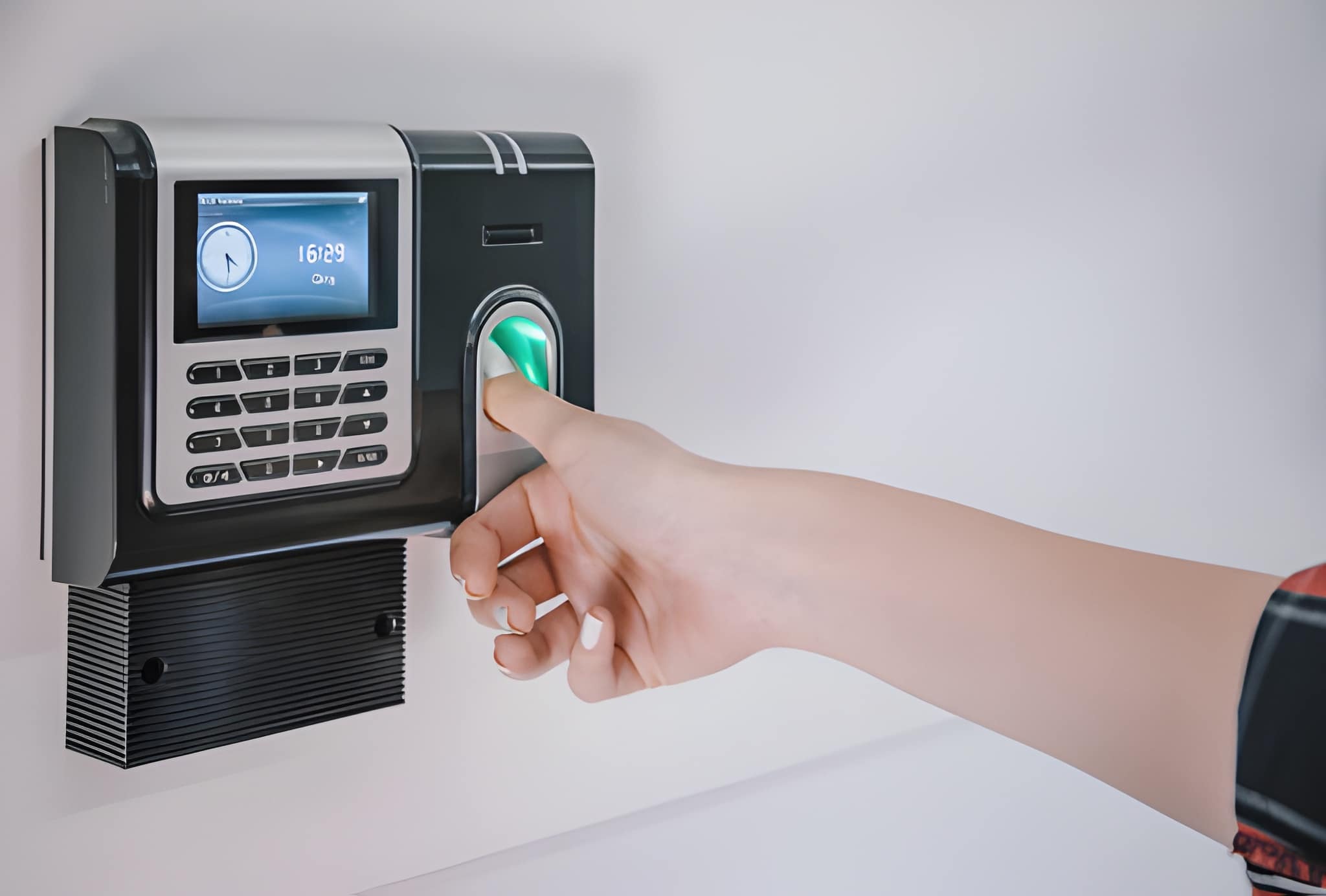
Biometric features, such as fingerprint scanning, facial recognition, and eye scanning, secure access by ensuring only authorized employees can clock in or out. These technologies are highly effective at preventing “buddy punching,” where one employee records time for another. This deters time fraud and delivers not only more accurate data but also a higher sense of accountability and trust within your team. By eliminating the potential for shared credentials or paper punch cards, biometrics promote a fair workplace while streamlining the authentication process for the entire workforce. In high-security or regulated environments, biometric authentication provides an additional layer of security, ensuring compliance and reducing the liability associated with unauthorized access to sensitive work areas.
Mobile Accessibility
Mobile-enabled systems empower employees to record hours from any location, which is crucial for remote teams, field workers, or organizations with flexible schedules. Mobile apps enable employees to clock in and out, request time off, and view their work schedules directly from their smartphones, making it easy to stay compliant with company policies outside the main office. Both management and staff benefit from immediacy and convenience, making attendance routines seamless and accommodating varying work patterns. GPS-enabled location tracking and geofencing ensure employees are at the correct place during clock-ins, adding an extra layer of verification for distributed or mobile workforces. This flexibility accommodates the evolving needs of businesses in today’s economy, from construction sites to retail stores and home offices.
Integration with Payroll Systems
Automating the connection between your timekeeping and payroll eliminates manual entry errors, significantly reduces payroll processing time, and ensures timely compensation for your team. Seamless integration ensures that data flows automatically from tracked hours to payroll, reducing the need for double-checking and manual data re-entry, which can introduce costly mistakes. Integration simplifies compliance reporting and guarantees data consistency, which is essential for audits and financial planning. With payroll sync, deductions for absences, overtime, and special pay rates can be calculated in real time, keeping employees satisfied and administrators free to focus on higher-value tasks. This feature becomes even more vital as companies grow in size, add new locations, or employ more complex pay structures.
Compliance Management
Changing regulations make labor law compliance an ever-evolving challenge. Advanced time and attendance systems handle overtime, mandated breaks, and various leave types, minimizing legal risks and automatically generating proper documentation for audits. This is a key ingredient for businesses in regulated industries or those managing a diverse and multi-location workforce. Automated alerts and compliance dashboards keep HR and management informed of approaching rule violations, allowing them to address potential issues before they become costly infractions. The ability to adjust policies such as those for meal breaks, night shifts, or statutory holidays protects companies from the risk of fines and legal disputes. Built-in reporting tools also make it easier to demonstrate compliance in the event of employee disputes or regulatory investigations.
User-Friendly Interface
A straightforward, intuitive system lowers the learning curve, boosts adoption rates, and minimizes user errors. Well-designed dashboards streamline time entry and approvals, and reduce the reliance on training or written instructions for daily use. User-friendly dashboards save managers and employees both time and frustration, ensuring focus remains on productive work instead of troubleshooting technology. Customization options, such as language preferences, accessibility features, and adaptable workflows, further ensure a smoother transition to new systems for organizations of all sizes. As a result, workforce productivity increases as employees spend less time wrestling with confusing software and more time on their main responsibilities.
Comprehensive Reporting and Analytics
Data-driven insights enable employers to track attendance trends, identify absenteeism, and pinpoint productivity bottlenecks. Robust analytics inform strategic decisions on scheduling, overtime management, and workforce planning. With extensive reporting options, HR can dig into granular details such as hours worked by department, frequency of missed punches, and cost breakdowns making it easier to optimize workforce allocation and reduce unnecessary labor costs. Detailed reports enable businesses to enhance operational efficiency and pinpoint opportunities for growth or improvement. Automated reporting also facilitates the preparation of compliance documentation and supports strategic planning efforts across the business.
Scalability
Growing businesses require flexible solutions that can accommodate additional locations, employees, and changing shift patterns. Scalability ensures that features and data storage can grow in tandem with the business, protecting your software investment as headcount and complexity increase. A scalable time and attendance platform reduces the need for frequent system changes or upgrades, providing stability as your organization evolves. Whether rolling out to new regions or onboarding seasonal staff, a scalable solution effortlessly absorbs growth without performance or cost bottlenecks. Planning for scalability from the outset avoids disruptive migrations or expensive licensing surprises as your needs change.
Final Thoughts
Time and attendance systems play a pivotal role in modern workforce management, shaping not just compliance and payroll, but also the overall efficiency of your business. Evaluate these core features real-time tracking, biometric security, mobile access, payroll integration, compliance, usability, in-depth reporting, and scalability when choosing a solution that matches your operational needs. Thoughtful adoption will pay dividends in productivity, accuracy, and employee satisfaction for years to come.