Table of Contents
- Smart Fencing Systems
- Sustainable Materials
- Integrated Surveillance
- Aesthetic Integration
- Advanced Access Control
- Modular and Customizable Solutions
- Conclusion
As property security requirements grow more demanding, today’s solutions must offer more than just a barrier they need to combine technology, aesthetics, and sustainability. Modern security fencing and access control are evolving, giving property owners better ways to protect their spaces while simplifying management and monitoring. Working with a trusted security fence company Austin can help property owners take advantage of these cutting-edge solutions.
Alongside technological advancements, there’s a strong movement toward smarter systems, modularity, and eco-friendly practices in fencing. Contemporary options are designed not just to guard property but also to complement its design and minimize environmental impact.
Smart Fencing Systems
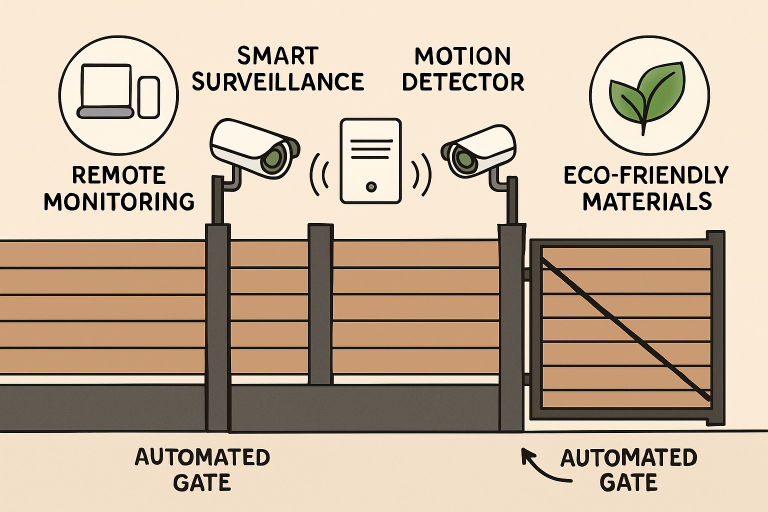
The latest generation of security fences trades traditional passive protection for smart capabilities. Features such as Wi-Fi-enabled motion detectors, automated gates, and mobile device integration let property owners remotely monitor perimeters in real time. Now, fences can instantly detect suspicious activity, trigger alarms, and alert property managers or law enforcement offering far more proactive protection than traditional fencing.
Integration with smart home systems also means fences can work seamlessly with lighting, CCTV systems, and access points. Whether it’s homeowners away on vacation or businesses after hours, these systems extend oversight beyond what human presence alone can provide.
For more information on tailored solutions and versatile installation, partnering with an experienced fencing company Austin can ensure the best results for complex site requirements and evolving security goals.
Sustainable Materials
As sustainability becomes a global priority, building materials for security fencing now reflect this trend. Eco-friendly fencing, including recycled metals, composite woods, bamboo, and even reprocessed plastics, is now widely available. These materials are not only durable and low-maintenance but also help reduce a project’s carbon footprint.
Sustainable fencing aligns with wider green building practices, supporting energy efficiency and environmentally conscious construction. Selecting materials that can be recycled or that last for decades means fewer replacements, saving resources and expense while still providing top-tier security performance.
Integrated Surveillance
Security fencing solutions are increasingly combined with advanced surveillance systems. Cameras with night vision, thermal imaging, and intelligent recording can identify threats in complete darkness or harsh weather, turning a fence from a static barrier into an active security feature that provides 24/7 protection. For more on how steel fencing fits into this comprehensive approach, see Security Magazine. Additionally, motion-activated deterrents such as floodlights and sirens can deter intruders from attempting to breach the perimeter. Modern surveillance, enhanced with analytics, alerts, and mobile app remote access, enables property managers to respond quickly and make informed decisions. Whether managing commercial or residential properties, integrating these systems offers both security and peace of mind.
Aesthetic Integration
No longer are robust security fences an eyesore. Today’s trends emphasize architectural harmony. Ironwork, laser-cut steel, decorative panels, and color finishes are just some of the options owners use to complement the character and landscape of their property. These elements ensure that security installations enhance curb appeal rather than diminish it.
From modern minimalist lines to traditional ornamental styles, new generations of fencing are as passionate about form as they are about function. This balance is especially important for commercial and residential developments, where aesthetic value contributes to the property’s desirability and market value.
Advanced Access Control
Access control systems are now more sophisticated, relying on technologies such as fingerprint recognition, RFID badges, and encrypted remote access. These innovations reduce the vulnerabilities inherent in simple key-and-lock arrangements and offer reliable protection for sensitive or high-traffic areas.
However, integrating such solutions especially into legacy infrastructure can create compatibility and budgetary challenges. Consulting with specialized professionals ensures that systems meet current requirements and can scale easily for future needs. Integrating access control with other security components provides a cohesive defense strategy that streamlines management and improves incident response.
Modular and Customizable Solutions
Flexibility is a cornerstone of modern security strategy. Modular fence systems can adapt to changes in property lines, building expansions, or evolving risk assessments without requiring a complete overhaul. They allow owners to add or remove sections with minimal disruption, and to customize gates, access points, and technology integrations to meet unique property requirements.
Ensuring modular solutions are designed and installed to preserve the overall integrity of the security system is vital. Modular design not only supports short-term needs but also long-term adaptability as threats, technology, and business operations continue to change.
Conclusion
In conclusion, the landscape of security fencing and access control is transforming rapidly. Smart technology, sustainable practices, integrated surveillance, tailored aesthetics, advanced access controls, and modular solutions are all driving a new era in property protection. By staying informed about these modern trends and consulting with local experts, property owners can make informed decisions that reinforce security, sustainability, and long-term value.