What Are Tankless Water Heaters?
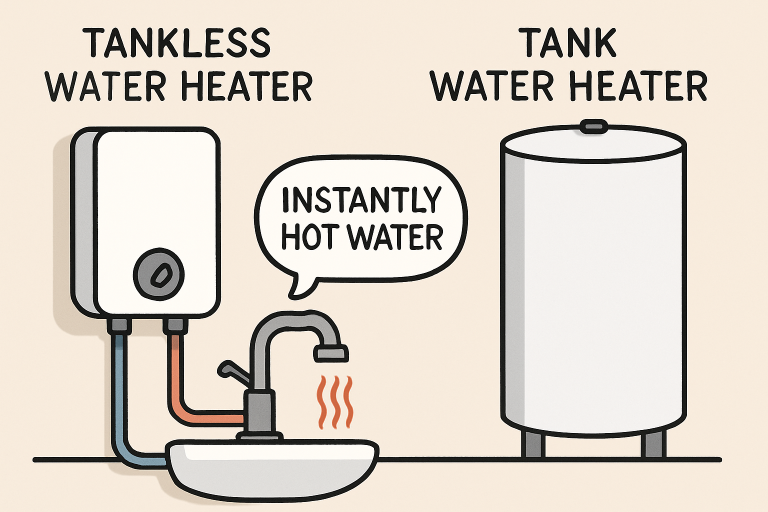
Tankless water heaters, often called on-demand water heaters, provide hot water only when needed, eliminating the need for a bulky storage tank. Unlike traditional systems that constantly heat and store water, these units activate only when a faucet or appliance is turned on, delivering a continuous hot water supply. This efficient approach reduces energy usage and lowers utility costs, freeing up space in your home. Additionally, tankless water heaters tend to last longer and require less maintenance than conventional units, making them a practical choice for many households.
Tankless water heaters, often called on-demand water heaters, provide hot water only when needed, eliminating the need for a bulky storage tank. Unlike traditional systems that constantly heat and store water, these units activate only when a faucet or appliance is turned on, delivering a continuous hot water supply. This efficient approach reduces energy usage and lowers utility costs, freeing up space in your home. Additionally, tankless water heaters tend to last longer and require less maintenance than conventional units, making them a practical choice for many households. For those living in smaller homes or apartments, understanding which water heater is best for small homes or apartments can be crucial in optimizing space and efficiency.
For homeowners looking to upgrade, professional installation ensures optimal performance and safety. Many turn to trusted services for tankless water heater installation Santa Monica to guarantee the system is correctly set up and operating efficiently. Proper installation helps maximize the unit’s lifespan, providing reliable hot water without the energy waste or delays associated with traditional tank systems.
How They Work and Why They Matter
The main distinction between tank and tankless models is how water is heated and stored. Traditional tanks continuously heat and reheat a large supply of water to maintain a consistent temperature, leading to what is known as standby heat loss—even when you’re not using hot water. Tankless heaters sidestep this inefficiency by only consuming energy when hot water is requested, whether for a shower, washing dishes, or laundry. This on-demand style can increase efficiency, especially in homes with moderate daily hot water needs.
Because these systems don’t rely on a storage tank, homeowners benefit from greater space efficiency, easier placement, and the assurance of always having hot water available. This is particularly valuable in busy households, where back-to-back showers or multiple appliance demands can quickly deplete a conventional tank.
Energy Savings Explained
- Reduced Standby Losses: With no tank keeping water hot around the clock, energy is conserved during periods of inactivity.
- On-Demand Heating: Water heats only as needed, without wasted energy from unnecessary reheating.
- Lower Utility Bills: Reports indicate that, for certain homes, tankless heaters can cut water heating costs by up to 34% if multiple point-of-use systems are installed.
While exact savings depend on household size, demand, and fuel sources, tankless water heaters typically use 24–34% less energy in homes with moderate hot water use. For larger families or simultaneous multi-fixture demands, appropriately sizing the unit—or installing more than one—helps maximize energy efficiency and satisfaction.
Debunking Common Myths
Several persistent myths surround tankless water heaters. One misconception is that tankless systems can’t meet household hot water demands, leading to cold showers or interruptions. In practice, modern units—when correctly sized—deliver steady, limitless sizzling water. Another myth is that they are never cost-effective due to higher upfront costs. While installation usually requires a greater initial investment, the reduced energy use and longevity often balance or exceed the upfront expense over time. Choosing the right system for your specific usage is key to unlocking the full cost-saving benefits.
Maintenance and Longevity Tips
Proper maintenance ensures your tankless water heater operates at peak efficiency and lasts for decades. Unlike tank-style heaters that typically last 10–12 years, tankless systems can endure for 20 years or longer when properly cared for. Essential steps include regular descaling to counteract mineral buildup (especially critical in areas with hard water), checking air and water filters, and inspecting venting and gas lines for safety. Annual professional inspections help prevent small issues from becoming costly repairs.
Environmental and Financial Benefits
Saving energy lowers bills and reduces carbon footprint, helping sustainability. Tankless systems decrease environmental impact with less ongoing energy use, especially with green power. Many homeowners recover higher upfront costs with lower energy bills over time. Local incentives and rebates make switching more economical; check programs before upgrading.
When Tankless Makes Sense for Your Home
Tankless water heaters are ideal for households with moderate, staggered hot water usage throughout the day—think morning routines or staggered showers. Space-conscious homeowners appreciate their compact design, freeing up valuable square footage. However, in homes with simultaneous, high-volume hot water demands (such as multiple showers running simultaneously), the best results are achieved by installing multiple units or supplementing with point-of-use tankless heaters.
Choosing and Installing Smartly
- Evaluate your household’s typical daily hot water consumption and peak usage times.
- Research available models to choose between gas or electric, whole-house or point-of-use systems.
- Consider practical installation factors like space, venting requirements, and electrical or gas supply.
- Consult with licensed professionals for proper sizing, code compliance, and correct placement to ensure maximum efficiency and longevity.
Adopting tankless technology is a forward-thinking approach that enhances comfort, reduces month-to-month expenses, and aligns with sustainable living goals. With the right planning and routine maintenance, a tankless water heater will provide reliable, efficient hot water for years, adding long-term value and modern convenience to your home.