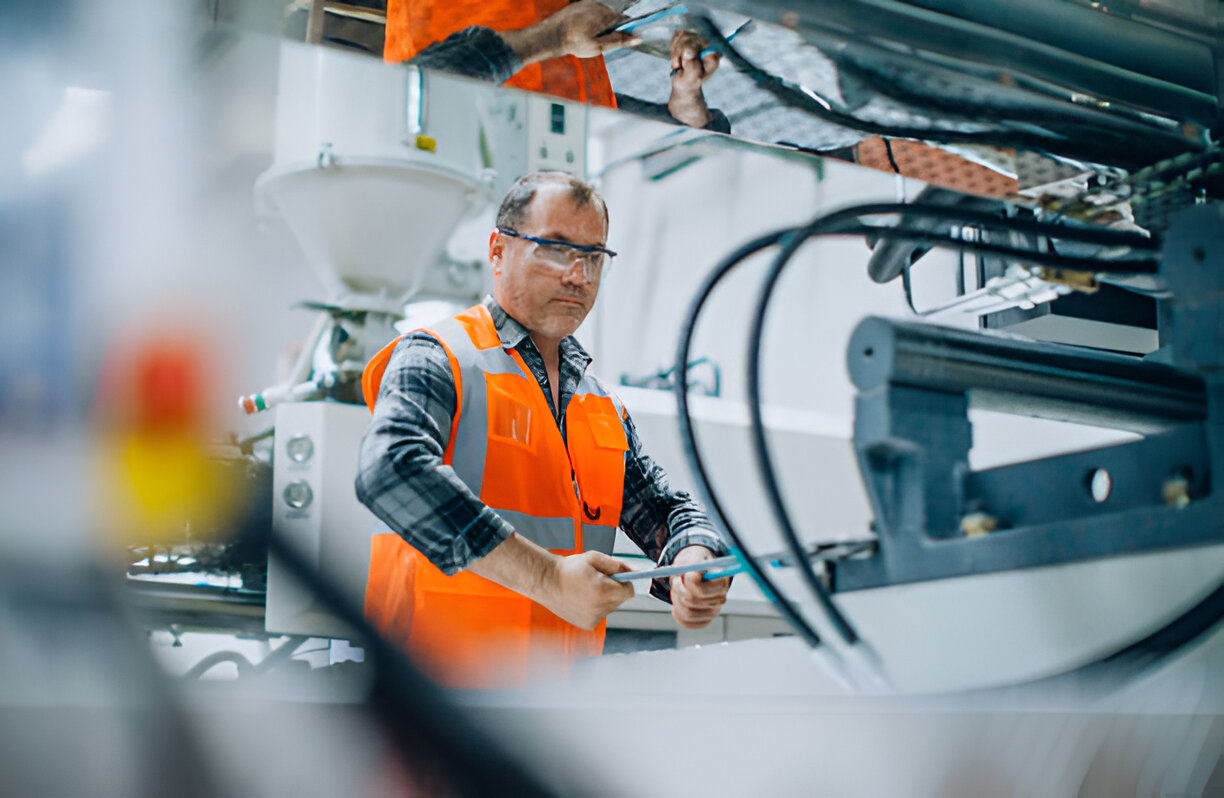
Metal fabrication is essential to modern manufacturing, transforming raw metals into components used in everything from smartphones to skyscrapers. It involves processes like cutting, bending, and assembling, combining traditional methods with advanced technology. Vital across industries, metal fabrication links raw materials to finished goods, enabling mass production while maintaining quality.
Key Metal Fabrication Processes
Modern metal fabrication encompasses several fundamental processes, each serving specific purposes in creating finished products.
Cutting Technologies
Metal cutting has advanced dramatically from basic sawing and shearing methods. Laser cutting now offers precision down to fractions of millimeters, allowing manufacturers to create intricate patterns and shapes with minimal material waste. Plasma cutting excels at handling thicker materials, while waterjet cutting can slice through virtually any metal without generating heat-affected zones.
These cutting technologies enable manufacturers to optimize material usage and achieve consistent results across large production runs. Computer-controlled systems ensure repeatability, reducing human error and improving overall product quality.
Forming and Shaping
Metal forming processes reshape materials without removing material, making them highly efficient for mass production. Press brakes bend sheet metal into precise angles, while roll forming creates consistent profiles for construction and industrial applications. Stamping operations can produce thousands of identical parts per hour, making this process ideal for automotive and electronics manufacturing.
Advanced forming techniques like hydroforming and electromagnetic forming allow manufacturers to create complex geometries that would be difficult or impossible with traditional methods. These processes expand design possibilities while maintaining structural integrity.
Welding and Assembly
Welding remains one of the most critical aspects of metal fabrication, permanently joining components to create finished products. Modern welding techniques include TIG (Tungsten Inert Gas), MIG (Metal Inert Gas), and specialized processes like friction stir welding for aerospace applications.
Robotic welding systems have revolutionized production efficiency, delivering consistent weld quality while reducing labor costs. These automated systems can operate continuously, making them essential for high-volume manufacturing operations.
Materials That Drive Innovation
The choice of metal materials significantly impacts both the fabrication process and the final product’s performance characteristics.
Steel: The Workhorse Metal
Steel remains the most widely used metal in fabrication due to its strength, versatility, and cost-effectiveness. Carbon steel provides excellent weldability and machinability, while stainless steel offers corrosion resistance for demanding applications. Advanced high-strength steels enable manufacturers to create lighter components without sacrificing durability.
Aluminum: Lightweight Solutions
Aluminum’s combination of light weight and corrosion resistance makes it indispensable for aerospace, automotive, and marine applications. Its excellent thermal conductivity also makes it ideal for heat exchanger components and electronic housings. While aluminum requires specialized welding techniques, its benefits often justify the additional process complexity.
Specialty Alloys
Titanium, nickel alloys, and other specialty metals serve critical roles in extreme applications. These materials command higher prices but deliver exceptional performance in challenging environments where standard metals would fail.
Applications Across Industries
Metal fabrication touches virtually every aspect of modern life through diverse industrial applications.
Automotive Manufacturing
The automotive industry relies heavily on metal fabrication for body panels, chassis components, and engine parts. Advanced forming techniques enable the creation of lightweight yet strong vehicle structures that improve fuel efficiency while maintaining safety standards. Precision stamping operations produce millions of identical components with tight tolerances.
Aerospace Engineering
Aerospace applications demand the highest levels of precision and material performance. Metal fabrication processes create aircraft frames, engine components, and control surfaces that must withstand extreme temperatures and stresses. Specialized techniques like chemical milling remove material with exceptional precision to minimize weight while maintaining structural integrity.
Construction Industry
Construction applications range from structural steel beams to architectural elements and specialized systems like metal roofing, like those in Utah, where environmental conditions demand durable, weather-resistant solutions. Fabricated steel components enable the construction of tall buildings, bridges, and industrial facilities that define modern infrastructure.
Medical Device Manufacturing
The medical industry requires fabricated components that meet strict biocompatibility and sterilization requirements. Precision machining and forming processes create surgical instruments, implants, and diagnostic equipment components with tolerances measured in micrometers.
Technological Advancements Reshaping the Industry
Modern metal fabrication continues evolving through technological innovation and process optimization.
Automation and Robotics
Robotic systems now handle tasks ranging from material handling to complex welding operations. These systems improve consistency while reducing labor costs and enhancing workplace safety. Collaborative robots work alongside human operators, combining automation efficiency with human flexibility and problem-solving capabilities.
Digital Manufacturing
Computer-aided design (CAD) and computer-aided manufacturing (CAM) systems enable seamless transitions from concept to finished product. Digital twins allow manufacturers to simulate and optimize processes before physical production begins, reducing waste and improving quality.
Additive Manufacturing Integration
While 3D printing cannot replace traditional metal fabrication for most applications, hybrid approaches combine additive and subtractive processes to create complex geometries that would be impossible with conventional methods alone. This integration expands design possibilities while maintaining production efficiency.
Industry 4.0 Implementation
Smart manufacturing systems integrate sensors, data analytics, and machine learning to optimize production processes in real-time. Predictive maintenance reduces downtime, while quality monitoring systems detect defects before they impact finished products.
Benefits of Modern Metal Fabrication
Contemporary metal fabrication offers numerous advantages that make it essential for modern manufacturing.
Precision and Consistency: Computer-controlled processes deliver repeatable results with tight tolerances, ensuring product quality across large production runs.
Material Efficiency: Advanced cutting and forming techniques minimize waste while optimizing material usage, reducing both costs and environmental impact.
Design Flexibility: Modern fabrication processes can create complex geometries and intricate details that expand product design possibilities.
Scalability: Fabrication processes adapt to production volumes ranging from prototype quantities to millions of units, supporting businesses at every growth stage.
Cost Effectiveness: Efficient processes and material utilization keep fabrication costs competitive while maintaining quality standards.
Conclusion
Metal fabrication is evolving with advancements in AI, materials science, and sustainable practices, enabling lighter, stronger, and more complex components while reducing environmental impact. These innovations ensure metal fabrication remains a key driver of manufacturing innovation and efficiency.