Table of Contents
- Sustainable Building Practices
- Modular and Prefabricated Construction
- Smart Buildings and IoT Integration
- AI and Automation in Construction
- Wellness-Centric Designs
- Adaptive Reuse and Renovation
- Advanced Construction Materials
- Enhanced Safety Protocols
The landscape of commercial construction is rapidly evolving, influenced by a blend of technological advancement, sustainability commitments, and changing market expectations. For developers and project owners who want to remain competitive and capture new opportunities, recognizing and adapting to these trends is essential. That’s why working with an experienced general contractor Fort Lauderdale can be a critical step for any major project in South Florida or beyond. As the industry transforms, the ability to integrate new practices and adapt to regulatory shifts is more important than ever.
Commercial developers, architects, and stakeholders are navigating an environment shaped by climate concerns, digital integration, and a renewed focus on occupant well-being. Innovative construction techniques alongside sophisticated project management technologies are redefining what is possible for office buildings, retail centers, hotels, and mixed-use developments. Successful projects stand out by anticipating these shifts, leveraging efficiency, and aligning with the demands of an increasingly conscious market.
Sustainable Building Practices
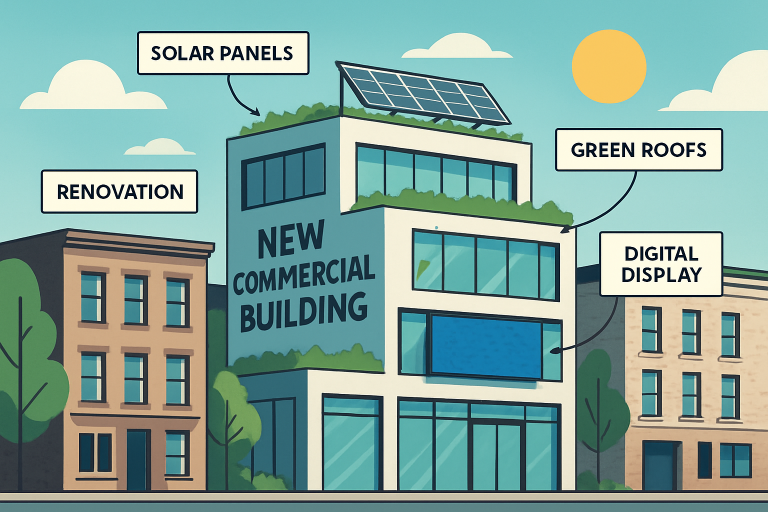
Sustainability has evolved from a trend to a necessity in commercial construction. Environmental regulations and rising consumer expectations are making sustainable practices like using recycled materials, installing solar panels, and creating green roofs cornerstones of project planning. Developers are also embracing rainwater harvesting, daylighting strategies, and energy-efficient MEP systems to reduce operational costs and meet tightening regulatory standards. According to the U.S. Environmental Protection Agency, green building practices play a key role in promoting smarter, more sustainable community development. These steps don’t just protect the planet; they appeal to both investors and tenants who value corporate responsibility.
Modular and Prefabricated Construction
To combat rising project costs and tight delivery schedules, the industry is turning to modular and prefabricated building components. These systems, assembled in controlled environments and rapidly installed on-site, offer superior quality control and dramatically cut both waste and build time. Modular construction isn’t just reserved for hotels or student housing; commercial offices, retail, and healthcare spaces increasingly benefit from these efficient methods, which can shrink project timelines by nearly half and cut costs by up to 20%. Read more about how modular construction is impacting the sector on Building Design + Construction. These techniques also improve safety by minimizing on-site labor and exposure to weather delays. With advances in technology, combining digital design tools with modular construction allows for even greater accuracy and customization.
Smart Buildings and IoT Integration
The integration of innovative technologies, especially the Internet of Things (IoT), is reshaping facility management and enhancing building performance. Real-time sensors manage HVAC, lighting, and security systems, optimizing energy usage and providing immediate feedback to building managers. With these integrations, property owners cut operating costs and boost tenant satisfaction. The adoption of smart infrastructure is poised to accelerate as commercial tenants increasingly expect seamless, intelligent environments.
AI and Automation in Construction
Artificial intelligence and automation tools are quickly becoming indispensable in modern construction. AI-driven project management platforms analyze data to predict and prevent potential schedule delays, support resource management, and enhance collaboration across project teams. Furthermore, the growing use of robotics on job sites from autonomous equipment to brick-laying robots improves safety and productivity, allowing skilled labor to focus on higher-value tasks and innovative problem-solving.
Wellness-Centric Designs
Health and wellness are gaining traction as essential elements in commercial construction. Wellness-centric design uses biophilic elements like natural light, indoor greenery, and advanced air and water filtration systems to enhance commercial environments. Such features are proven to increase employee satisfaction, boost productivity, and position buildings favorably in a crowded market. Additionally, standards such as WELL and Fitwel certifications are raising the bar, ensuring that indoor environments promote overall occupant health.
Adaptive Reuse and Renovation
Adaptive reuse of existing structures offers a sustainable alternative to demolition and new construction. By repurposing outdated buildings whether warehouses, retail spaces, or historical landmarks developers can reduce environmental impact while preserving cultural significance and revitalizing neighborhoods. Renovation projects benefit from modern materials and technology, blending the charm and character of the past with up-to-date building codes and performance standards. Adaptive reuse is gaining momentum, especially in urban markets where land is scarce and regulatory incentives are strong.
Advanced Construction Materials
Commercial construction is adopting game-changing materials. Self-healing concrete and 3D-printed components not only increase building longevity but also slash maintenance costs. Lightweight composites and high-strength alloys offer superior durability under seismic or high-load conditions, while alternatives such as cross-laminated timber (CLT) combine sustainability with performance, creating versatile solutions for a variety of project types. The adoption of these materials is pushing the boundaries of what architects and engineers can design.
Enhanced Safety Protocols
Job site safety remains a top priority, with cutting-edge technologies driving unprecedented advances. Wearable sensors for workers, real-time communication devices, and drone surveillance all help minimize risk and promptly alert managers to hazards. Automated equipment handles the most dangerous tasks, reducing occupational injuries and streamlining site operations. Companies investing in safety innovation consistently report improved compliance and reduced incident rates, setting new benchmarks for site safety.
Embracing new technology, focusing on wellness, and prioritizing sustainability are not just aspirational goals–they are strategic imperatives for businesses looking to stand out in the changing world of commercial construction. These trends help industry professionals create projects that are not only viable today but also ready for the future.