Key Takeaways
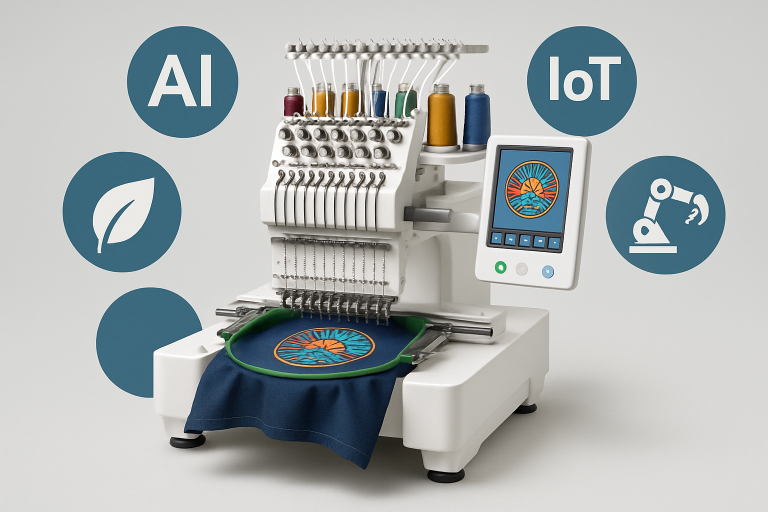
- Integration of AI and IoT is enhancing embroidery machine capabilities.
- Sustainability practices are becoming central to embroidery operations.
- Customization and personalization are driving consumer preferences.
- Automation and robotics are improving efficiency and precision.
- Advancements in software are expanding design possibilities.
Introduction
As technology advances rapidly, the commercial embroidery industry is undergoing significant transformation. Innovative trends such as automation, artificial intelligence, eco-friendly practices, and more fundamentally alter how businesses approach embroidery production and customer engagement. Understanding these changes is crucial for companies striving to thrive in this dynamic landscape. Organizations looking to remain competitive must leverage the latest innovations and adapt their business models. Whether considering upgrading your production capabilities, increasing your creative offerings, or launching a new embroidery venture, choosing the right commercial embroidery machine online is essential for boosting productivity and profitability as the industry evolves and demand for high-quality results rises.
Today’s leading businesses are increasingly adopting digitally connected embroidery equipment and advanced design platforms. These breakthroughs make streamlining workflows easier, cutting operating costs, and offering products that resonate with modern consumers seeking unique, personalized, and sustainable items. In a market where customer experience and branding matter more than ever, keeping pace with technology means constantly reassessing which advancements deliver the most value. Ultimately, being informed and proactive about emerging technology is a key factor in successfully positioning your business for long-term growth as the future of commercial embroidery takes shape.
Integration of AI and IoT in Embroidery Machines
Artificial Intelligence (AI) and the Internet of Things (IoT) are driving a revolution in embroidery production, making processes smarter, faster, and more responsive. Newer commercial embroidery machines equipped with AI can learn from user behavior, analyze textile properties in real time, and shift stitch patterns for optimal performance. This means operators can trust machines to flag issues early, correct errors, and even optimize for speed or detail depending on the design, saving time and reducing material waste. Innovative, AI-driven systems can predict when maintenance might be required or even order supplies automatically, extending machine lifespan and reducing costly downtime. With IoT connectivity, these machines provide insights and performance analytics that help managers monitor production remotely and react quickly to issues. Together, AI and IoT support streamlined workflows, maintain high-quality output, and set new standards for what’s possible in scalable embroidery production, helping businesses of all sizes compete globally.
Sustainability in Embroidery Practices
Increasingly, sustainability is an aspiration and a core requirement in apparel and merchandise production. Commercial embroidery follows suit, with manufacturers and brands doubling on environmental stewardship by integrating green technologies and processes. Modern embroidery machines are now designed to operate with greater energy efficiency, incorporate recycled parts, and feature sustainable construction materials. Many companies are also shifting to threads made from recycled plastics or organic cotton and using water-based, low-impact dyes to reduce chemical runoff. Innovative production lines employ closed-loop water systems, reduce packaging waste, and automate scrap collection for recycling. This shift helps protect the environment and appeals strongly to eco-conscious consumers who increasingly expect ethical standards from the brands they support. Focusing on sustainability is crucial for future-proofing embroidery operations, ensuring compliance with evolving environmental regulations, and building a brand that stands out for its values.
Customization and Personalization Trends
Customization and personalization have become central motivators behind consumer purchases, especially in the fashion, accessory, and promotional products sectors. Customers now look for items that express individuality, commemorate milestones, or strengthen team identity, driving demand for unique, made-to-order products. Commercial embroidery machines are rising to the challenge, offering easy-to-use interfaces and fast design changes, making small or even one-off orders profitable. Advanced on-screen editing and digital previewing features enable operators or customers to tweak colors, add names, and experiment with motifs before stitching begins. These powerful tools minimize setup delays and open new opportunities in direct-to-consumer sales, e-commerce, and corporate merchandising. Businesses that embrace flexible, modular machine designs can scale up or down quickly, responding to shifts in the market while giving customers exactly what they want—a key advantage in today’s increasingly personalized marketplace.
Automation and Robotics Enhancing Efficiency
The influence of automation and robotics is unmistakable in contemporary embroidery. Automated embroidery systems now take on repetitive, time-consuming tasks such as needle threading, bobbin changing, thread cutting, and even precise pattern alignment all while requiring minimal human supervision. This not only accelerates throughput but also slashes the margin for error and ensures more consistent product quality. Robotics, meanwhile, is being used to manage fabric handling and even complex spatial adjustments mid-embroidery, boosting operational speed and minimizing physical strain on workers. Adopting these technologies allows embroidery companies to increase output and respond flexibly to customer demand without sacrificing craftsmanship. It also frees up skilled staff to focus on creative, high-value work, enhancing employee satisfaction and the business’s ability to innovate in a competitive field.
Advancements in Embroidery Software
Embroidery software has quickly become a game changer, with next-generation tools reshaping what’s possible in design, efficiency, and customer service. Leading programs now use AI to automatically interpret artwork and convert it into stitch files, recognizing different textures, styles, and material requirements. Predictive analytics can forecast thread consumption and recommend the best color combinations for durability and effect, saving time and eliminating costly guesswork. These platforms often offer cloud-based collaboration, making it easier for teams to work from multiple locations and for customers to submit custom designs for instant feedback. User-friendly, drag-and-drop design environments democratize embroidery by lowering barriers for entry-level users while offering robust tools for seasoned professionals. Fast updates, built-in design templates, and seamless integration with online storefronts help businesses deliver better outcomes in less time and with fewer errors, ensuring a strong competitive edge as customer expectations evolve.
Embracing a Data-Driven and Creative Future
With the sharp rise in data-centric decision making, embroidery businesses are refining every workflow stage. Cloud-connected machines and platforms compile extensive real-time metrics, tracking everything from machine uptime to customer order trends and design popularity. This actionable data supports better inventory control, more innovative marketing strategies, and targeted product development that aligns precisely with consumer insights. Automated pattern suggestions and design trend forecasting harness this data to keep offerings fresh and relevant. The ability to anticipate shifts in demand and optimize resource allocation through analytics increases profitability and boosts customer satisfaction, laying a strong foundation for long-term growth and creativity.
Conclusion
Technological innovation and commitment to innovation, sustainability, and personalization are shaping the next wave of commercial embroidery. Integrating AI, IoT, robotics, and sophisticated software solutions enables embroidery businesses to achieve new levels of creativity, agility, and eco-responsibility. By keeping a close eye on these influential trends and remaining proactive about adopting new technology, embroidery companies can keep pace with rising consumer expectations and tap into new revenue streams and market segments. Staying up to date with the latest commercial embroidery machine online options is an impactful way to ensure your operation remains relevant and resilient in this rapidly changing environment.