Trevor Lunsford is a finance professional with experience spanning mergers and acquisitions, capital markets, and private equity–backed growth strategies. Currently serving as a Director of M&A, Trevor Lunsford oversees transaction execution, origination, and relationship management, drawing on a background that includes advising software companies across a wide range of deal mandates. His work has involved raising debt and equity, managing investor and lender relationships, and mentoring analyst and associate teams.
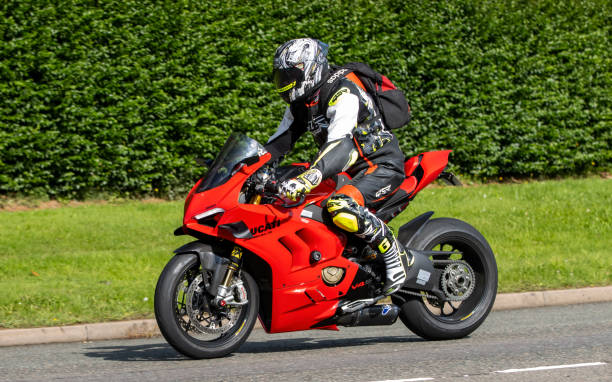
Alongside his professional focus, Trevor Lunsford maintains a strong interest in performance engineering, design, and motorsports culture. Among these interests is Ducati, a brand recognized for its blend of Italian design, racing heritage, and mechanical innovation. Ducati motorcycles are often associated with emotional appeal as much as technical performance, attracting riders who value craftsmanship, responsiveness, and community. Exploring what defines Ducati helps explain why the brand inspires strong loyalty and immediate fascination among enthusiasts around the world.
Love at First Sight
Ducati is an Italian motorcycle manufacturer under Audi, a company within the Volkswagen Group. Its story began in 1926 when three brothers, Adriano, Bruno, and Marcello Ducati, along with their father Antonio, set out to meet Italy’s growing need for communication technology. They formed Societa Scientifica Radio Brevetti Ducati to produce radio components and other electrical parts, some of which were based on the father’s patents. The factory suffered heavy damage during World War II, which pushed the company to shift toward motorcycle production. Ducati built its first bicycle engine in 1946, and released its first complete motorcycle in 1949. It has since grown into a major global motorcycle brand that produces high-performance machines.
Many design choices set Ducati motorcycles apart. The steel trellis frame, one of its most recognizable elements, gives the motorbikes strong structural support and sharp handling. The frame’s open layout also highlights the mechanical parts. Ducati pairs this with smooth and functional bodywork. The Ducati 916 – a 1990s creation of Italian designer Massimo Tamburini – became a benchmark for motorcycle styling and is one of the most admired production motorcycles. Its sharp lines, underseat exhaust, and compact shape set a clear design direction for the brand.
The brand maintains a strong racing record and produces high-performance machines. Ducati bikes have won several manufacturers’ championships in World Superbike competition as well as MotoGP constructors’ titles. Ducati also builds production models noted for their power. The Diavel V4 (1,158 cc engine), for instance, generates 168 hp. The DesertX uses a 937 cc Testastretta engine designed for off-roading, while the Scrambler offers a simple retro form with the brand’s V-twin character. In handling, these motorbikes respond well to rider input. Their chassis geometry supports tight cornering on tracks and in city traffic.
Engineering advances give Ducati motorcycles a strong performance profile. A key performance feature is the desmodromic valve system, which uses mechanical parts to open and close each valve without the use of springs. The system keeps valve timing stable at top engine RPM and supports precise throttle control. Ducati also installs systems such as cornering ABS Evo, quick-shifters, and Ducati Traction Control, which help riders manage grip, braking, and gear changes with greater clarity and control. The brand further equips its models with on-board diagnostic functions that run routine checks and identify faults so riders receive early warnings before issues develop.
Ducati’s modern V4 engine architecture also makes it stand out. The manufacturer designed these compact engines based on its racing program, and they now power the Panigale, Streetfighter, and Multistrada lines, as well as the Diavel Power Cruise. Adventure and touring lines such as the Multistrada Enduro use semi-active Ohlins suspension that adjusts damping in real time to keep the motorcycle stable on different surfaces and at different speeds. Modern Ducatis also show improved durability compared to past generations. Manufacturing tolerances have tightened, and electronic systems function more reliably. Service intervals now stretch from 7,500 up to 15,000 miles for certain models.
Besides performance and design, Ducati positions its bikes as premium products. Many models offer adjustable ergonomics, carbon fiber components, advanced safety features, and full-color displays. These elements create a refined riding experience aligning with the brand’s image as a builder of high-quality and top-performing machines. Moreover, Ducati keeps its production volumes lower than those of mass-market manufacturers. This approach preserves brand exclusivity and strengthens its connection with enthusiasts. Owners gain access to a distinct community centered on performance motorcycles.
This passionate community also sets Ducati apart. The brand has a global network of riders who support one another and form a close group. Ducati strengthens this network through official clubs and organized events where riders meet and share experiences.
About Trevor Lunsford
Trevor Lunsford is a Director of M&A with a background in advising private equity–backed software companies on transactions, capital raising, and strategic growth initiatives. He holds bachelor’s and master’s degrees in finance from Georgia State University and has been recognized with the M&A Advisor’s Emerging Leaders Award. Outside of his professional work, Trevor Lunsford’s interests include fitness, hiking, fly fishing, international travel, motorsports, and Ducati motorcycles.